NNE Customer Relationships: Commercial Traction, Contracts, and Investment Implications
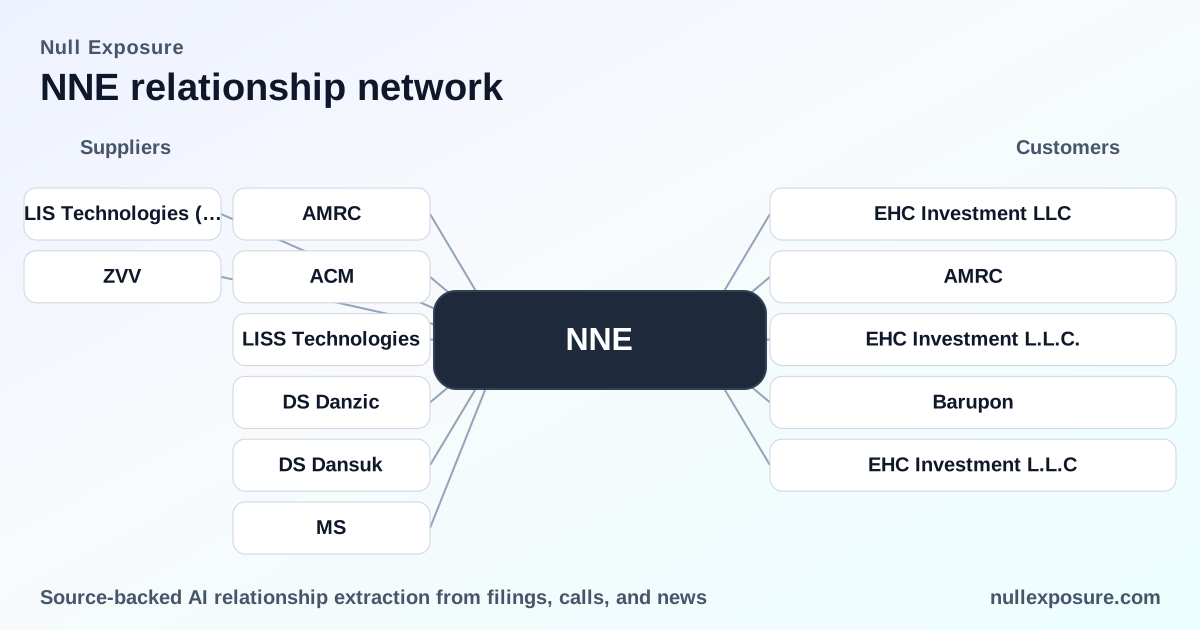
Nano Nuclear Energy (NASDAQ: NNE) develops the KRONOS micro modular reactor (MMR) and monetizes through a mix of hardware sales (microreactors), consulting and advisory services, and strategic deployment partnerships that convert technology into deployed energy capacity for commercial, industrial and governmental customers. Early commercial activity is dominated by MOUs and feasibility studies — agreements that position NNE as both a technology supplier and a service provider while the company advances regulatory approvals and pilot deployments. For an investor-eye view of partner risk and upside, see the detailed relationship briefs below; for additional company signals and context visit https://nullexposure.com/.
Quick take: what matters for investors
- Commercial stage: NNE is in early commercial rollout — the pipeline consists of MOUs, feasibility studies and limited consulting work rather than recurring, volume sales.
- Revenue profile: Public filings show RevenueTTM = 0 and negative operating results, underscoring that current partner activity is value-creating in option terms rather than in immediate cash flows.
- Strategic posture: The company is positioning for global deployment and supply-chain partnerships via joint ventures and EPC integrations rather than standalone turnkey construction.
- Key risk drivers: regulatory approval timelines, project execution complexity, and customer concentration across a relatively small roster of early partners.
Deal roster: who NNE is actively engaging
Below are concise, investor-oriented summaries of every customer relationship surfaced in public reporting and press coverage.
Digihost Technology Inc. (DGHI)
NNE executed a December 2024 Memorandum of Understanding with Digihost to explore integrating KRONOS microreactors at Digihost’s 60 MW power plant in North Tonawanda, New York, and subsequently provided consulting services that included regulatory advice, site assessment, roadmap development and stakeholder engagement. According to a GlobeNewswire release (Dec. 13, 2024) and NNE’s own site posts, the collaboration progressed into consulting work between April and June 2025. (Sources: GlobeNewswire Dec. 13, 2024; NANO Nuclear press release on company website.)
Ameresco, Inc. (AMRC)
NNE signed a Memorandum of Understanding with Ameresco to explore integrating KRONOS MMR units with Ameresco’s EPC capabilities for federal and commercial deployments, creating an installation pathway that pairs NNE technology with established project delivery capacity. The company announced the MOU in early 2026 via market releases (January 2026) and reporting outlets that described the strategic intent to pair NNE reactors with Ameresco’s construction and procurement footprint. (Sources: Newsfile/Markets — Jan. 12, 2026; Finviz coverage.)
EHC Investment L.L.C. (Abu Dhabi)
NNE entered an MOU with Abu Dhabi-based EHC Investment to explore a joint venture focused on deploying KRONOS units and associated supply chains across the UAE and the broader Gulf region, signaling regional market entry and localization plans. The agreement was detailed in an NNE press release and supporting newswire coverage in March 2026 that framed the deal as a pathway to scale in the Middle East. (Sources: NANO Nuclear press release March 10, 2026; Newsfile release.)
BaRupOn / Barupon (AI data center and manufacturing campus)
NNE signed a feasibility study agreement with BaRupOn to evaluate KRONOS reactors supplying up to 1 GW of power to an AI data center and manufacturing campus project, representing a high-demand use case that aligns microreactors with intensive compute and industrial customers. The feasibility arrangement was announced in NNE’s Q1 FY2026 results and referenced in earnings materials and press transcripts. (Sources: NANO Nuclear Q1 FY2026 business update; The Globe and Mail earnings transcript.)
DS Dansuk
DS Dansuk appears in coverage as another strategic MOU counterpart cited alongside Ameresco and BaRupOn in commentary about early commercial traction, tying NNE’s technology to data center and industrial power demand trends. The reference appears in analytical write-ups assessing NNE’s commercial pipeline in mid‑2026 commentary. (Source: SimplyWall.st analysis — May 2026.)
How NNE’s operating model shows up in practice
Investors should read these deal types as a coherent commercial approach rather than isolated items:
- Contracting posture: NNE is executing MOUs, feasibility studies, and limited consulting engagements rather than multi-unit purchase orders. This reflects an emphasis on de‑risking site selection, permitting and stakeholder engagement before volume sales.
- Customer concentration and maturity: The partner list is small and concentrated — early traction is with a handful of strategic partners and investors rather than broad market penetration; this is typical of capital‑intensive, highly regulated energy technologies in pilot stage.
- Service vs. product balance: Public disclosures show NNE providing consulting services (for example, to Digihost) in addition to preparing to sell microreactors; the business model therefore blends product sales with professional services to accelerate first deployments.
- Criticality to customers: Partners include data center operators, energy EPCs, and sovereign/regional investors, all of which would treat on-site reliable power as mission-critical if projects proceed to operation — that increases the potential value of successful deployments but also raises contract and warranty expectations.
Constraints and company-level signals investors should weight
NNE’s public disclosures and the relationship evidence support several company-level characteristics:
- Geographic ambition is global. NNE positions its services and deployments for domestic and international markets.
- Role flexibility. The company acts as both a seller of microreactors and a service provider handling consulting, regulatory support and stakeholder engagement.
- Product / services mix. Customers must secure permits and licenses for reactor installations, which increases transaction complexity; NNE markets both core hardware (KRONOS) and ancillary services to manage that complexity.
These constraints explain why early commercial activity focuses on MOUs, feasibility studies and advisory engagements rather than immediate large-scale hardware revenue.
Risks and upside — direct investment implications
- Upside: Partnerships with established EPC providers (Ameresco), regional sovereign capital (EHC), and high-demand users (BaRupOn) create credible pathways to deployment and potential revenue capture if regulatory, licensing and supply-chain milestones are met.
- Risks: Execution risk across licensing and construction, concentrated early‑stage counterparties, and the gap between MOUs/feasibility studies and firm offtake contracts are the principal near-term hazards to valuation. Current financials reflect pre-revenue status (RevenueTTM = 0 and negative EBITDA), so investor returns hinge on successful conversion of pipeline agreements into financed, built projects.
For a focused analysis of partner-level counterparty risk, project timing and regulatory milestones, visit https://nullexposure.com/ for deeper coverage and model-ready summaries.
Bold relationships and high-profile MOUs are real value drivers, but investors must treat them as optional claims on future cash flows until contracts progress to signed purchase orders and funded project builds.