National Retail Properties (NNN): Tenant Relationships and What They Mean for Investors
National Retail Properties operates as a capital-intensive, income-focused REIT that acquires, owns and manages single-tenant retail properties and monetizes through long-term, triple-net leases that shift operating costs to tenants while generating predictable base rent. NNN’s economic model centers on lease duration, tenant credit and portfolio diversification across trade lines and U.S. geography — factors that together drive cash yield stability and disposal activity when portfolio optimization is required. For a concise dashboard of the firm’s investor-facing positioning, visit https://nullexposure.com/.
How NNN’s model translates into counterparty risk and cash flow
NNN structures leases with initial terms commonly between 10 and 20 years under a triple-net format, which means tenants bear real estate taxes, insurance and capital expenditures; this contracting posture reduces landlord capex volatility and makes base rent the primary cash driver. The firm’s scale — 3,692 properties across all 50 states (weighted average remaining lease term 10.2 years as of 12/31/2025) — delivers geographical diversification, while industry concentration in a few trade lines concentrates operational exposure. According to NNN’s 2025 Form 10‑K, approximately 63.0% of base rent is generated from six lines of trade and the top five tenants represent 17.8% of annual base rent. At the same time, no single tenant accounted for 10% or more of rental income as of year‑end 2025, which positions the company between tenant-level immateriality and portfolio-level concentration.
Key operating constraints and portfolio signals
- Long-term, triple-net contracting is core to the business model and underpins cash flow predictability (NNN 2025 10‑K).
- U.S.-only, nationwide footprint concentrates macro and state-level retail cycles but benefits from broad market coverage (NNN 2025 10‑K).
- Industry concentration in automotive service, convenience stores, restaurants, entertainment and dealerships is material to portfolio performance even though no single tenant exceeds the 10% threshold (NNN 2025 10‑K).
- Active asset rotation occurs — dispositions were reported in the most recent periods — reflecting portfolio management and liquidity generation (NNN filings and earnings commentary).
Tenant and counterparty snapshot: each relationship explained
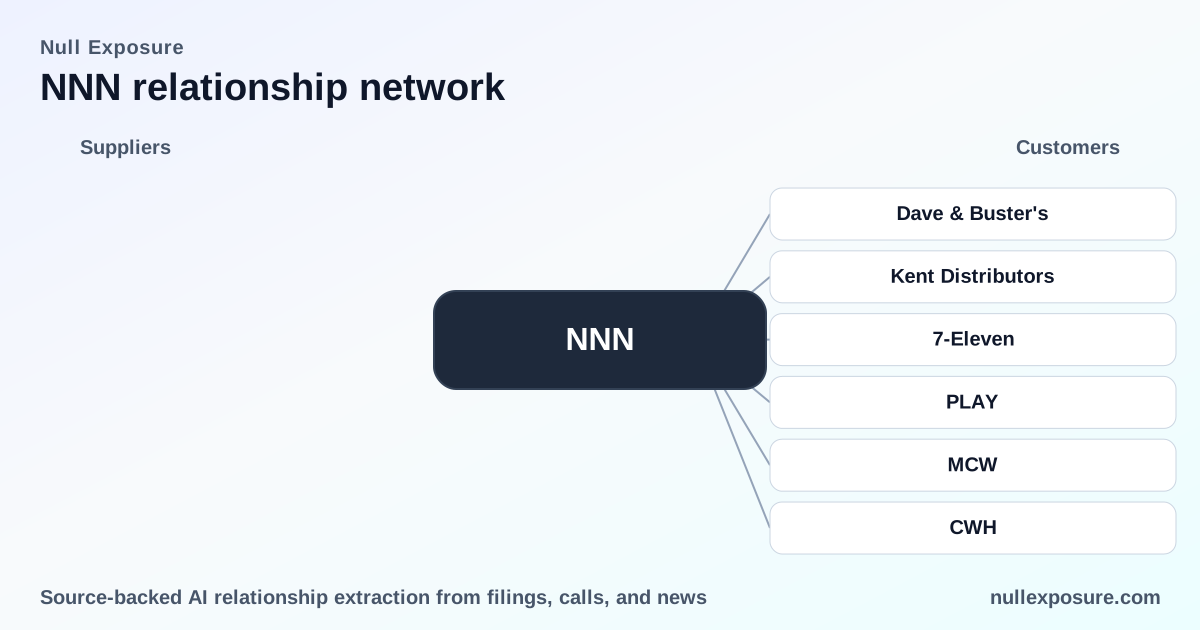
Below I cover every relationship pulled from filings and contemporaneous reporting, with a short, source‑attributed description for investor due diligence.
-
7‑Eleven — 7‑Eleven contributes 4.3% of NNN’s annual base rent and completed a significant renewal in 2025, with an average lease term to NNN of about 8.5 years, signaling durable convenience-store exposure and renewed cash flow visibility. (Source: NNN 2025 Form 10‑K; Q1 2026 earnings call transcript reported by InsiderMonkey.)
-
Dave & Buster’s — Dave & Buster’s represents roughly 3.6–3.7% of base rent and sits in NNN’s entertainment line of trade, which is smaller but more cyclically sensitive than convenience or automotive. (Source: NNN 2025 Form 10‑K; Finviz report, March 2026.)
-
Kent Distributors — Kent Distributors accounts for about 2.6% of annual base rent, reflecting NNN’s exposure to distribution/wholesale tenants within the retail portfolio. (Source: NNN 2025 Form 10‑K.)
-
Palo Duro Commercial Partners — Palo Duro purchased Corpus Crossing Marketplace (55,632 sq ft) from NNN, an explicit disposition that demonstrates NNN’s active asset‑sale program and ability to monetize non‑core properties. (Source: MarketScreener report, May 2026.)
-
Mister Car Wash (MCW) — Mister Car Wash/MCW contributes roughly 3.8–3.9% of base rent, placing automotive service among the largest industry contributors to the portfolio; this tenant cluster supports steady rent with lower landlord capex given the triple‑net structure. (Source: NNN 2025 Form 10‑K; Finviz report, March 2026.)
-
MCW (separate entry) — The dataset lists MCW again; as the same corporate counterparty this reinforces that Mister Car Wash is a repeat, multi‑asset tenant generating material recurring rent across the portfolio. (Source: NNN 2025 Form 10‑K.)
-
AMC — AMC properties were included among dispositions disclosed in the quarter, indicating NNN has reduced exposure to at least some entertainment real estate holdings via sale. (Source: Q1 2026 earnings call transcript reported by InsiderMonkey.)
-
Badcock — Management reported near‑100% recovery on Badcock related items, reflecting successful rent/receivable remediation or remediation of vacated locations tied to that tenant group. (Source: Q1 2026 earnings call transcript reported by InsiderMonkey.)
-
Frisch — Management disclosed that Frisch properties are included among 53 vacant assets, signalling that Frisch‑related locations currently sit in the vacant pool and are candidates for re‑letting or disposition. (Source: Q1 2026 earnings call transcript reported by InsiderMonkey.)
-
Camping World — Camping World comprises about 3.5% of base rent, contributing to the dealership/large-format retail component of the portfolio. (Source: NNN 2025 Form 10‑K.)
-
(Duplicate news entries for 7‑Eleven, Dave & Buster’s, Mister Car Wash, etc.) — Multiple news outlets echoed the 10‑K concentration figures and recent renewal activity; these corroborate the 10‑K data and management commentary across reporting channels. (Sources: Finviz March 2026; MarketScreener May 2026; NNN 2025 Form 10‑K.)
What these relationships imply for investors
-
Stability driver: The triple‑net structure and long lease terms deliver predictable base rent, with renewals (e.g., 7‑Eleven) reinforcing cash flow durability. This supports dividend coverage given NNN’s steady operating margins and occupancy (98.3% leased as of 12/31/2025). (Source: NNN 2025 Form 10‑K.)
-
Concentration risk: Although no single tenant exceeds 10% of rent, 17.8% of base rent is concentrated among five tenants and 63% by trade line; investor returns are therefore sensitive to sector dynamics (convenience, automotive service, restaurants, entertainment). (Source: NNN 2025 Form 10‑K.)
-
Active portfolio management: Recent dispositions (including AMC and Corpus Crossing Marketplace) and commentary on recovered Badcock balances indicate management uses sales and leasing actions to reallocate capital and preserve income quality. Disposition capability is an important optionality for shareholders. (Sources: InsiderMonkey Q1 2026; MarketScreener May 2026.)
-
Geographic exposure: With properties across all U.S. states but 40.9% of base rent concentrated in five states, investors should monitor state‑level retail cycles and tax/regulatory variations that can affect collections and re‑leasing economics. (Source: NNN 2025 Form 10‑K.)
For deeper portfolio analytics and ongoing relationship monitoring, explore more research at https://nullexposure.com/.
Bottom line for allocators
NNN’s tenant roster provides a blend of predictable, lease‑driven income and manageable but real trade‑line concentration risk. The firm’s demonstrated ability to renew anchor convenience relationships, recover receivables, and execute dispositions supports a stable dividend profile, while the portfolio’s sector and state concentration warrant active monitoring by credit and real‑asset investors. For investors focused on income with operational downside mitigation, NNN’s counterparty mix and contracting posture make it a core candidate for continued coverage.