Inotiv (NOTV): Customer relationships, contract posture, and what one disclosed transaction reveals
Inotiv operates as a contract research organization (CRO) and specialty laboratory supplier, monetizing through fee‑for‑service nonclinical and analytical drug discovery work, recurring sales of research‑quality animals and diets (Teklad), and the sale of scientific instruments and software (BASi). The business mixes short‑term purchase‑order work and terminable fee‑for‑service engagements with a smaller base of longer‑standing RMS customers; this hybrid model concentrates revenue around a few large clients while maintaining broad geographic distribution across North America, EMEA and other markets.
For a quick company overview and related intelligence, see NullExposure’s homepage: https://nullexposure.com/
One visible customer transaction: what was announced and why it matters
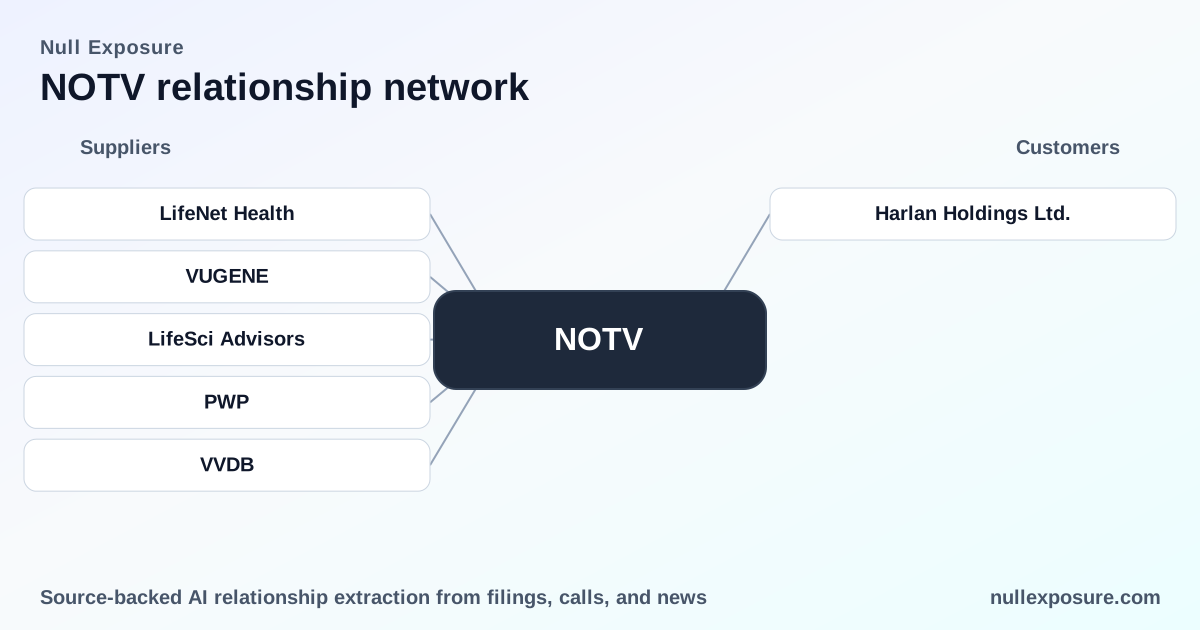
Harlan Holdings Ltd.
- In March 2026 Harlan Holdings announced an acquisition of Inotiv’s Israeli businesses for $3.7 million. This transaction suggests tactical portfolio adjustments by Inotiv and an execution of non‑core divestiture in EMEA. The disclosure was reported via Simply Wall St in March 2026. (Source: SimplyWallSt news, March 10, 2026: https://simplywall.st/stocks/us/pharmaceuticals-biotech/nasdaq-notv/inotiv)
This is the only customer‑scope relationship disclosed in the public signals available for NOTV in this review. The divestiture should be read as a business‑level repositioning rather than evidence of a particular customer failure: the sale is small relative to Inotiv’s reported trailing revenues but indicates active management of geographic and product footprints.
How Inotiv sells: segments, customers, and contract posture
Inotiv’s revenue mix and contractual approach create a predictable, service‑oriented cash flow profile with concentrated tail risk.
- Service revenue dominates through the DSA segment (discovery, safety assessment and analytical services) where Inotiv provides GLP and non‑GLP studies, translating into fee‑for‑service contracts billed per study or milestone. Company filings for the fiscal year ended September 30, 2025 describe these arrangements as terminable by clients with generally 30 days’ notice and often structured around purchase orders.
- RMS (research model supplies) delivers a complementary recurring revenue stream—animals, diets and related supplies distributed through company‑owned networks in the U.S., U.K. and Europe. The RMS business historically sustains longer relationships with clients that prefer consistency in supplies, per the FY2025 filing.
- Hardware and software (BASi instruments and associated software) create product revenue and aftermarket service opportunities, adding margin diversification but slower recurring cash than services.
Collectively, these lines make Inotiv both a seller of products and a provider of regulated scientific services, exposing the firm to operational demands of manufacturing, GLP compliance, and client‑directed study delivery.
Company‑level constraints and what they signal for customers and investors
The public filings and extracted constraints present coherent, investor‑relevant signals about how Inotiv runs customer relationships.
- Contracting posture: predominantly short‑term fee‑for‑service with pockets of longer RMS loyalty. The company explicitly notes that many RMS orders are purchase‑order based and that DSA/fee‑for‑service contracts are generally terminable on short notice. This creates revenue flexibility but higher churn and the need for continuous sales engagement to replace lost studies.
- Customer concentration is material. In the fiscal year ended September 30, 2025, one RMS client accounted for 16.6% of total revenue, indicating single‑client dependency risk in that segment.
- Counterparty mix is broad and institutionally weighted. Filings identify clients ranging from small biotech startups to global pharmaceutical companies, academic centers and government research organizations—this diversity supports demand resilience but concentrates value in the largest enterprise relationships.
- Criticality and maturity. The RMS relationships are described as historically stable and long‑term, implying operational criticality for certain clients that require repeatable supplies. Meanwhile, DSA engagements are project‑centric and shorter, requiring steady inbound project flow.
- Geographic footprint and channel control. Inotiv manufactures in the U.S. and operates company‑owned or managed distribution across North America, the U.K. and Europe, with explicit revenue originated in the U.S. and the Netherlands for FY2025—this supports global regulatory coverage but introduces cross‑border execution complexity.
- Segment mix implies multi‑discipline execution risk. The business spans manufacturing (Teklad), services (DSA, GLP studies), hardware and software (BASi), which forces the company to maintain regulatory quality systems, manufacturing scale and technical product support simultaneously.
These constraints collectively define Inotiv as a CRO whose revenue predictability rests on winning a steady cadence of short‑term studies while relying on a smaller set of longer‑lived RMS clients for concentrated revenue.
Risks and investment implications for customer relationships
- Revenue volatility risk is elevated because a meaningful share of revenue is generated by short‑term, terminable studies; the firm must replace completed or cancelled studies frequently.
- Concentration risk is non‑trivial. One RMS client representing 16.6% of revenue creates downside sensitivity if that relationship renegotiates pricing or switches suppliers.
- Geographic divestitures like the March 2026 sale of the Israeli businesses for $3.7m indicate active portfolio pruning; this reduces localized exposure but can temporarily depress revenue and complicate client continuity in the affected region.
- Operational complexity is high due to the combination of GLP services, manufacturing and instrument/software support; this requires consistent capital allocation to compliance, facilities and aftermarket service.
- Counterparty profile supports runway for new business—large pharma and government customers underpin demand for regulated studies, while broad small‑biotech engagement provides deal flow for discovery work.
Key takeaways:
- Short‑term contracts drive revenue churn; RMS relationships anchor recurring cash.
- Single‑client concentration in RMS is material and should be monitored.
- Global footprint and multi‑segment execution create both opportunity and execution risk.
Actionable next steps for investors and operators
- Review the company’s FY2025 and subsequent quarterly filings for updated details on the RMS client that accounted for 16.6% of revenue and for management commentary on client retention strategies.
- Track post‑transaction client continuity in Israel after the Harlan sale to evaluate any knock‑on effects on EMEA service bookings and Teklad distribution.
- Monitor backlog and new study bookings disclosures as leading indicators for near‑term revenue given the high share of short‑term, terminable contracts.
For additional context on counterparties, contracts and portfolio signals for NOTV, visit NullExposure’s research hub: https://nullexposure.com/
Bottom line
Inotiv’s customer base and contract structure present a blend of recurring supply revenue and project‑based services. The company’s operational model requires continuous study generation to sustain revenue while a small set of long‑standing RMS customers provide concentrated but critical cash flow. The March 2026 sale of Israeli businesses to Harlan is a tactical shift in footprint rather than a fundamental change to the service model; investors should watch concentration metrics and booking cadence to assess near‑term revenue durability.