NPK International (NPKI): Rental-led access business with concentrated customers — what investors should know
NPK International operates a focused business: it manufactures, sells and—critically—rents recyclable composite matting and delivers site planning, logistics and restoration services to energy and heavy-infrastructure customers. The company monetizes primarily through short-term rental agreements (67% of 2024 revenue from rentals) and related services, creating recurring utilization-driven cash flow that scales with project activity across utilities, oil & gas and construction. For a quick gateway to the primary source material and ongoing signal tracking, visit https://nullexposure.com/.
How NPKI makes money and why that matters to shareholders
NPKI’s core revenue engine is equipment rental complemented by site services. That operating model yields two defining financial realities: revenue is cyclical with project cadence and sensitive to contract cancellations, and profitability benefits from asset utilization and scale in logistics and restoration. Company filings show NPKI generated $287.3M in trailing twelve‑month revenue and reported EBITDA of roughly $77.0M, delivering healthy margins for an equipment-rental business. Analyst coverage is constructive, with an average target around $19.25 and a buy-leaning consensus.
Key structural characteristics that investors must incorporate into valuation and risk assessments include short contract tenure, geographic concentration in North America, and customer concentration among the top 20 clients. These characteristics create both upside from efficient fleet utilization and downside vulnerability if a handful of large projects pause.
Operating constraints and business-model signals investors should price in
- Short-term contracting posture. The company discloses it primarily operates under short-term contracts and rental service agreements that are cancellable on short notice; as a result, NPKI reports limited backlog. This is a company-level signal that revenue is inherently volatile from period to period and that forecasting depends more on near-term demand than on long-term contracted revenue.
- High customer concentration. For 2024, the 20 largest customers represented about 67% of consolidated revenues, with the single largest customer at 19%. This is material concentration and requires monitoring of customer health and contract renewal patterns.
- Geographic skew to North America with an EMEA presence. The company reported 94% of revenues domestically in 2024, with the United Kingdom representing the primary international market (disaggregated revenue tables show the UK contribution). Investors should assess U.S. infrastructure and E&P activity as primary demand drivers.
- Sector focus on infrastructure and services. NPKI derives significant revenues from utilities and related infrastructure customers and labels its business as temporary worksite access solutions—rentals plus planning and site services. That positioning ties the firm to multi-year trends in transmission upgrades, pipeline work and energy transition projects where temporary access is a recurring need.
- Limited government revenue exposure. The company states it does not derive a significant portion of revenue from government contracts, which reduces policy-driven revenue tailwinds but also lowers dependence on single-source public tenders.
These constraints combine to produce a business that is operationally efficient when utilization is high but sensitive to single-customer and regional demand shocks; investors should model cyclicality and concentration risk into multiples and scenario tests.
Public relationships uncovered in the search results
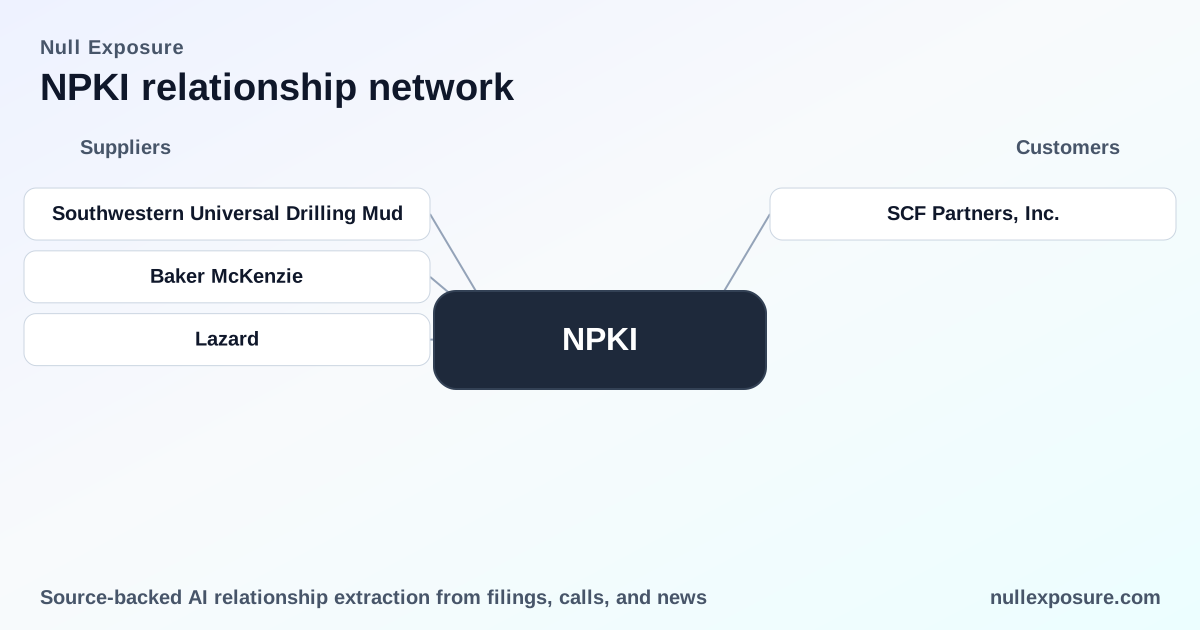
The records returned for NPKI’s customer-scope search include two news items linking SCF Partners, Inc. to industry activity. Both items are news reports; neither article documents direct transactional terms between NPKI and SCF.
SCF Partners, Inc. — MarketScreener report (March 2026)
MarketScreener reported on March 10, 2026 that SCF Partners, Inc. acquired the Fluids Systems segment of Newpark Resources for approximately $85.2 million. The article describes the private-equity acquisition but does not detail commercial contracts or customer-supplier agreements involving NPKI. Source: MarketScreener news item published March 10, 2026.
SCF Partners, Inc. — Oilfield Technology coverage (May 2026)
Oilfield Technology ran a similar piece on May 3, 2026 noting that SCF Partners acquired Newpark Fluids Systems (NFS), a global fluids solutions business; the article positions NFS as a leader in drilling and geothermal fluids solutions. The coverage again describes an acquisition by SCF without specifying any supplier or rental relationship with NPKI. Source: Oilfield Technology, May 3, 2026.
(Each of the two items above is included because it was returned in the customer-focused results set; the articles themselves document SCF’s acquisition activity rather than a direct commercial agreement with NPKI.)
What these relationship signals imply for commercial exposure
The presence of private-equity activity in adjacent oilfield services markets should be treated as a sector-level signal rather than proof of a direct NPKI contract. Private equity consolidation (SCF buying fluids operations) can change competitive dynamics, potentially shifting where large energy customers source bundled site services or access equipment. For NPKI, that could influence bidding behavior on turnkey projects or affect timing of large capital programs that drive rental demand.
Investment implications: the upside and the risks
- Upside: Rental-led margins, high asset utilization and services cross-sell create durable economics when infrastructure and E&P activity are expanding. NPKI’s gross profit and operating margins (reported in recent results) support a premium multiple when utilization is strong.
- Key risks: customer concentration (top customer 19%), short-term cancellable contracts, and domestic demand dependency (94% U.S. revenue). Any prolonged slowdown in utilities or E&P project spend would pressure utilization and short-cycle revenue recognition.
- Monitoring: keep close watch on the company’s largest customers and major project awards, quarterly utilization rates, and any disclosures of longer-term rental commitments or strategic partnerships that would increase revenue visibility.
How investors should monitor the story going forward
- Track quarterly customer concentration metrics and any movement in the share of revenue from the single largest customer. Company filings and quarterly reports will show whether concentration is expanding or contracting.
- Watch utilization and fleet reinvestment notes in earnings calls to assess margin durability. Rental businesses that can maintain utilization while controlling maintenance and logistics costs protect EBITDA.
- Monitor sector M&A and private-equity moves—such as the SCF transactions noted above—for signs of competitive consolidation that could compress pricing or reallocate large project procurement.
- For a centralized source of ongoing relationship and signal monitoring related to NPKI and peers, see https://nullexposure.com/.
Bottom line
NPKI is a rental-first infrastructure access company whose earnings profile is driven by asset utilization, short-term contracting and a concentrated customer roster. That mix creates attractive upside in a positive activity cycle and elevated sensitivity in a downturn; investors should value the company with scenario-driven multiples that reflect concentration and contract tenor. Regular monitoring of the top customers, utilization metrics and sector consolidation events will be decisive in assessing risk-adjusted returns.