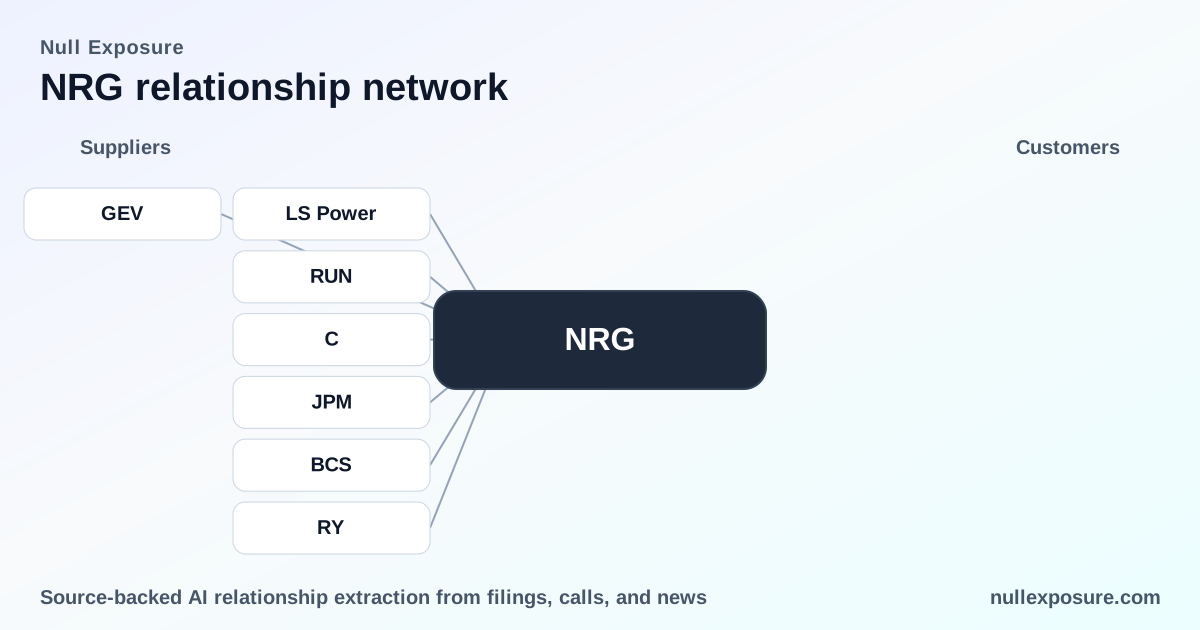
NRG’s customer footprint: what investors should know about counterparties, contracts and concentration
NRG Energy operates as an integrated power company that monetizes through two parallel engines: wholesale generation and retail energy & services. The company owns and dispatches roughly 13 GW of generation capacity while selling electricity, natural gas and smart‑home services to about 8 million residential customers and a broad set of commercial, industrial and wholesale customers under brands such as NRG, Reliant, Direct Energy, Green Mountain and Vivint. Investors should evaluate NRG as a retailer with large, dispersed retail exposure supported by long‑dated wholesale forward contracts and periodic asset sales that reshape its retail asset base. Learn more at https://nullexposure.com/.
A concise operating thesis: integrated scale with retail diversification and contracted wholesale tailwinds
NRG’s revenue model is anchored in retail customer billing and wholesale power sales. Retail margins are driven by customer acquisition/retention across multiple brands and value‑added services (including smart home offerings), while the wholesale side stabilizes cash flows through load‑following forward electric sale contracts that extend well into the 2030s. The combination produces a mix of recurring consumer cash flows and contracted wholesale revenue that investors should treat differently for credit and margin analysis.
One explicit external relationship in the record — and what it signals
-
Spruce Finance (SPRU): In November 2020 Spruce Finance acquired two residential solar portfolios that included the balance of NRG’s residential holdings, indicating NRG has monetized at least a portion of its residential solar assets through third‑party portfolio sales. This transaction is documented in a Solar Power World article covering the Spruce acquisition (November 2020).
According to that report, the deal transferred ownership of specific residential solar assets away from NRG and into Spruce’s portfolios, a move consistent with NRG’s broader strategy to optimize asset mix through targeted disposals.
How the documented constraints shape a practical risk view
The company‑level signals extracted from filings and disclosures produce a clear, actionable picture of NRG’s customer relationships and contractual posture:
-
Long‑term contracting posture: NRG reports load‑following forward electric sale contracts extending through 2037, which provides multi‑year revenue visibility on the wholesale side and reduces near‑term merchant exposure. This is a company filing disclosure covering contractual maturity characteristics.
-
Retail customer base is individual‑heavy and operationally dispersed: NRG states it serves approximately 8 million residential customers (about 6 million retail energy and 2 million smart home customers), creating a high volume, low concentration receivables profile on the retail side. The filing language identifies these customers as a mix of end‑use individuals and small businesses.
-
Government counterparty exposure exists but is not dominant: Filings note retail credit exposure is diversified across many customers and includes government entities among other counterparties; government exposure is present but not singled out as a dominant counterparty type.
-
Geographic concentration in North America: NRG operates across the U.S. and Canada, delivering services under multiple brand names; investors should treat regulatory and market risk as North American in scope.
-
Low revenue concentration risk: The company disclosed that no single customer comprised more than 10% of consolidated revenues for the year ended December 31, 2024, signaling limited dependence on any single large counterparty.
-
Dual commercial roles — seller and service provider: NRG is principally a seller of electricity, gas and related services, but also functions as a servicer in structured receivable arrangements (for example, a Receivables Sale Agreement dated September 22, 2020, names NRG Retail LLC as Servicer). This structure shifts operational collection risk to the company even when receivables are securitized or sold.
-
Active, mature customer base: The company reports the customer base and generation fleet as of Dec 31, 2024, indicating active, ongoing customer relationships and a mature retail footprint that includes core product sales and incremental services such as smart‑home offerings.
Taken together, these constraints define a business that is retail‑concentrated by count but retail‑diversified by revenue, supported by contractually stabilized wholesale sales and occasional asset monetizations.
Practical implications for investors and operators
-
Credit and volatility profile: The long‑dated wholesale contracts reduce short‑term merchant volatility, but the retail business is sensitive to customer churn, regulatory changes in local retail choice markets, and receivable performance. Assess credit through two lenses: wholesale contract counterparty strength and retail receivables performance under securitizations or servicing arrangements.
-
Concentration and scale: With no customer exceeding 10% of revenue and an 8 million residential base, NRG’s revenue concentration is low, but operational complexity is high — multiple brands, jurisdictions and product lines increase execution risk for customer acquisition and retention.
-
Asset portfolio management: The Spruce Finance sale of NRG residential solar holdings is illustrative: NRG will use third‑party asset transactions to reshape risk and capital intensity. Investors should watch for further portfolio sales or sale‑leaseback structures that reduce capital employed but also remove future upside.
-
Regulatory and geography risk: North American regulatory regimes govern the majority of NRG’s retail business; changes in local retail competition rules or distributed generation incentives will have asymmetric effects across regions.
-
Service obligations post‑sale: Even when assets are sold, NRG’s role as servicer in receivable transactions means collection and operational processes remain important to credit performance; review receivables agreements for servicing covenants and termination triggers.
If you want a concise map of these relationships and constraints in investor‑friendly format, visit https://nullexposure.com/ for structured coverage and downloadable summaries.
What to watch next
- Trajectory of retail customer counts and churn across major brands (NRG, Reliant, Direct Energy, Vivint).
- Any new wholesale contract signings or early terminations that would shift merchant exposure.
- Additional asset sales similar to the Spruce transaction that change the mix of generation vs. purchased retail assets.
- Performance of receivable securitizations and servicer covenants, which directly affect near‑term liquidity under stress.
Bottom line: steady cashflow architecture with retail execution risk
NRG’s hybrid model combines long‑dated contract protection on the wholesale side with a large, diversified but operationally complex retail franchise. The company’s disclosures show low revenue concentration and a North American focus, and public transactions like the Spruce Finance purchase reflect ongoing portfolio optimization. Investors should value the stability that contract tenor brings while monitoring retail execution metrics, receivable servicing, and any further monetizations that materially change the company’s asset or cash‑flow profile.