NRX Pharmaceuticals (NRXP): Customer Relationships That Drive Commercial Pathways
NRX Pharmaceuticals operates as a clinical-stage biopharmaceutical company that combines proprietary neuroplastic drug candidates with clinic-based care delivery through its HOPE Therapeutics subsidiary. The company intends to monetize through product sales and distribution of approved therapeutics, plus revenue from clinic services and network-driven care models; in parallel it pursues partnerships and government contracting to accelerate adoption and coverage. For investors, the critical question is how these customer and partner relationships convert clinical progress into repeatable commercial channels and address payor access at scale. Learn more about how we map customer linkages at https://nullexposure.com/.
The operating model in plain English: how NRXP sells and services the market
NRX is structured to be both a developer and a direct-to-care operator. Company disclosures describe a dual revenue posture: the sale and distribution of product candidates through NeuroRx, Inc., and provision of clinical services via HOPE Therapeutics. That creates five practical characteristics for investors:
- Contracting posture: Company-level filings position NRX as both a seller and distributor, including plans to supply ketamine under 503b pharmacy licensure in response to national shortages—an operational stance that combines commercial sales with licensed dispensing and clinic support.
- Revenue concentration and timing: Until regulatory approvals occur, material revenue is forecast as contingent on product launches and clinic rollout, making near-term top-line growth service-driven and longer-term product-dependent.
- Customer criticality: Partnerships that secure government payors and large clinic networks are highly strategic because they directly affect patient access and reimbursement scale.
- Geographic and regulatory scope: The company signals active engagement with U.S. federal payors but also notes the requirement to authorize clinical trials separately across EMEA member states, introducing cross-border regulatory complexity.
- Maturity of channels: The model blends an immature product-commercial engine (clinical-stage therapeutics) with an emerging service network (HOPE and clinic partners), creating mixed operational risk and upside.
The partner roster — what each relationship contributes
This section covers every customer relationship surfaced in public reporting.
-
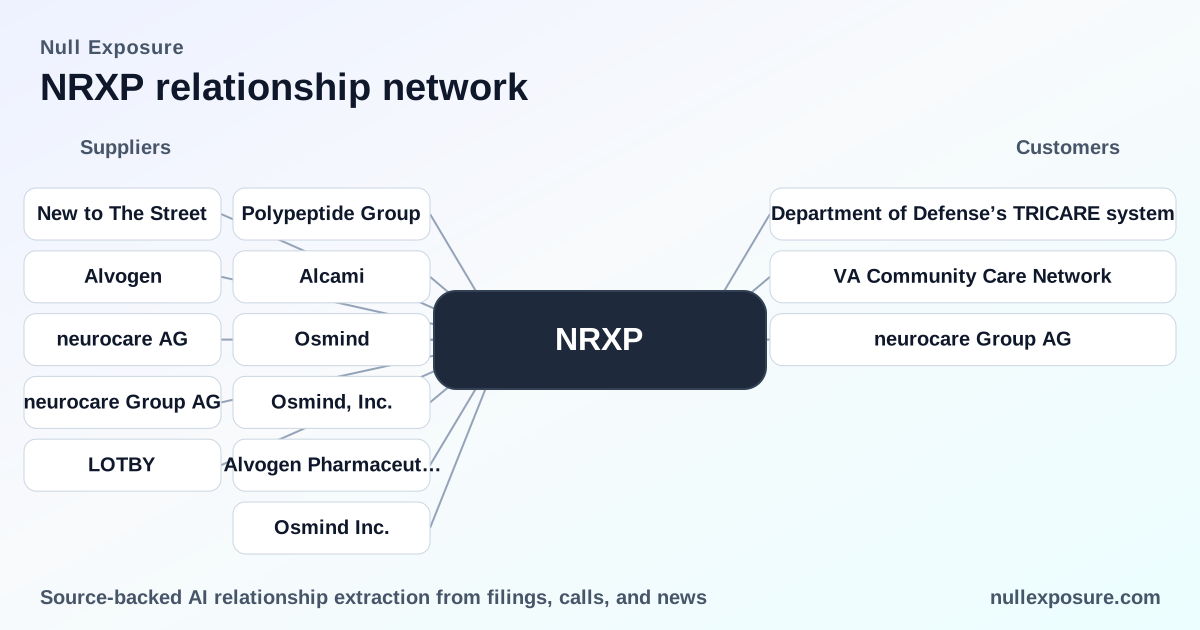
Department of Defense’s TRICARE system
NRX, through HOPE Therapeutics, holds contracting relationships with the Department of Defense’s TRICARE system, which grants direct access to military beneficiaries and creates a large institutional payor channel for clinic-based neuroplastic therapies. Source: MyChesco regional report (Mar 10, 2026) — https://www.mychesco.com/a/news/regional/a-high-stakes-alliance-aims-to-standardize-mental-health-care-at-scale/. -
VA Community Care Network
HOPE Therapeutics already contracts with the VA Community Care Network, enabling care delivery to veterans and establishing an institutional pathway for adoption of NRX’s clinic-enabled treatments. Source: MyChesco regional report (Mar 10, 2026) — https://www.mychesco.com/a/news/regional/a-high-stakes-alliance-aims-to-standardize-mental-health-care-at-scale/. -
neurocare Group AG
NRX announced a partnership with neurocare Group AG to build a nationwide clinic network offering integrated neuroplastic care for Depression, PTSD, and related disorders, positioning NRX to scale service delivery through an established clinical operator. Source: openPR announcement (Jan 5, 2026) — https://www.openpr.com/news/4351548/milestone-patient-data-eclipsing-70-000-on-real-world-use. -
Alvogen Pharmaceuticals
NRX has a development and marketing collaboration with Alvogen around NRX-101 for suicidal bipolar depression, creating a co-commercialization pathway for that candidate and leveraging Alvogen’s marketing footprint for specialty distribution. Source: FinancialContent markets article (May 3, 2026) — https://markets.financialcontent.com/stocks/article/getnews-2026-4-15-military-and-first-responder-opportunity-for-robotic-enabled-transcranial-magnetic-stimulation-via-neuroplastic-therapy-from-nrx-pharmaceuticals-inc-nasdaq-nrxp.
Why these relationships alter the investment case
Together the relationships convert clinical assets into potential recurring revenue streams in three distinct ways:
- Large payor access: Contracts with TRICARE and the VA Community Care Network insert NRX’s clinic delivery model directly into government payor ecosystems, which significantly increases eventual addressable patient volume for covered indications. Government contracting is a high-leverage route to scale.
- Network expansion through partners: The neurocare partnership builds operational capacity and geographic reach without NRX carrying the full clinic opening burden, improving roll-out speed and reducing capital intensity for service expansion.
- Product commercialization support: The Alvogen collaboration brings commercial expertise and distribution depth for NRX-101, decreasing execution risk for bringing that candidate to market.
Key takeaway: these relationships transition NRX from a pure R&D organization toward a hybrid commercial operator with real payor touchpoints and external distribution supports.
Risks and concentration vectors investors must watch
- Regulatory and approval timing drives revenue: NRX’s financials show clinical-stage status with limited current revenues (Revenue TTM $1.225M; Market Cap ~$99M), so material upside is contingent on approvals and payer coverage.
- Operational execution risk in clinic rollout: Running or partnering on clinics is different from drug development; success depends on operational excellence, licensing (including 503b pharmacy activities), and reimbursement negotiations.
- Concentration in institutional payors: While contracting with VA and TRICARE is a strategic positive, dependency on a small number of large institutional relationships concentrates commercial exposure and creates single-counterparty risk if policies change.
- Regulatory geography constraints: The company’s need to secure clinical trial authorizations in each EMEA member state increases complexity for European expansion.
What to watch next — milestones that will change the valuation equation
- Regulatory progress and approval timelines for NRX’s lead candidates, which unlock core product revenue.
- Evidence of revenue contributions from HOPE clinic services and quantified uptake under VA/TRICARE pathways.
- Execution metrics from the neurocare partnership (clinic openings, patient throughput) and commercialization milestones from Alvogen (launch plans, territory coverage).
For a concise, investor-focused mapping of these customer linkages and their materiality to NRX’s commercial plan, visit https://nullexposure.com/.
Bottom line
NRX’s customer relationships are purposeful and strategic: government payor contracts and clinic-network partners materially de-risk market access, while the Alvogen relationship strengthens product commercialization capacity. The company’s dual seller/distributor and clinic operator posture creates a hybrid business model with high upside if clinical approvals and execution milestones are met, and concentrated counterparty exposure that investors must monitor closely.