Intellia Therapeutics (NTLA) — Customer relationships that shape near‑term economics
Intellia Therapeutics develops CRISPR‑based genome editing therapeutics and monetizes primarily through collaborations, license agreements, cost‑reimbursements and milestone payments, with eventual upside from direct commercialization of approved products. For investors, the company’s revenue profile is heavily driven by a small set of strategic partners and episodic contract events rather than recurring product sales, so understanding counterparty dynamics is central to any valuation or operational due diligence.
Visit https://nullexposure.com/ for more company relationship intelligence.
How partnerships determine Intellia’s cash flow profile
Intellia’s operating model is partner‑centric. The company structures research and development through collaborative agreements that produce three distinct revenue types: cost reimbursements, license or milestone receipts, and occasional one‑time recognition events such as payments arising from terminated agreements. This posture produces revenue that is valuable but inherently lumpy and contract‑dependent.
Key operating model characteristics to weigh:
- Contracting posture: Predominantly collaboration and licensing arrangements rather than direct commercialization today; Intellia often shares development obligations and cost exposure with partners.
- Concentration: A small number of partners drive a meaningful share of accounts receivable and collaboration revenue. That elevates counterparty risk and linkages to partner execution.
- Criticality: Some collaborations are strategic to product commercialization (notably the Regeneron relationship around nex‑z) and therefore carry outsized operational importance beyond the immediate revenue line.
- Maturity: The revenue base remains early‑stage and volatile—comprised of reimbursements and milestones rather than stable product sales—so short‑term results reflect contract timing as much as program progress.
- Payor / regulatory signal: Intellia’s filings explicitly flag that governmental and commercial third‑party payors are intensifying cost controls, which is a company‑level constraint that influences long‑term reimbursement and commercial planning.
Customer relationships: the counterparties you need on your model
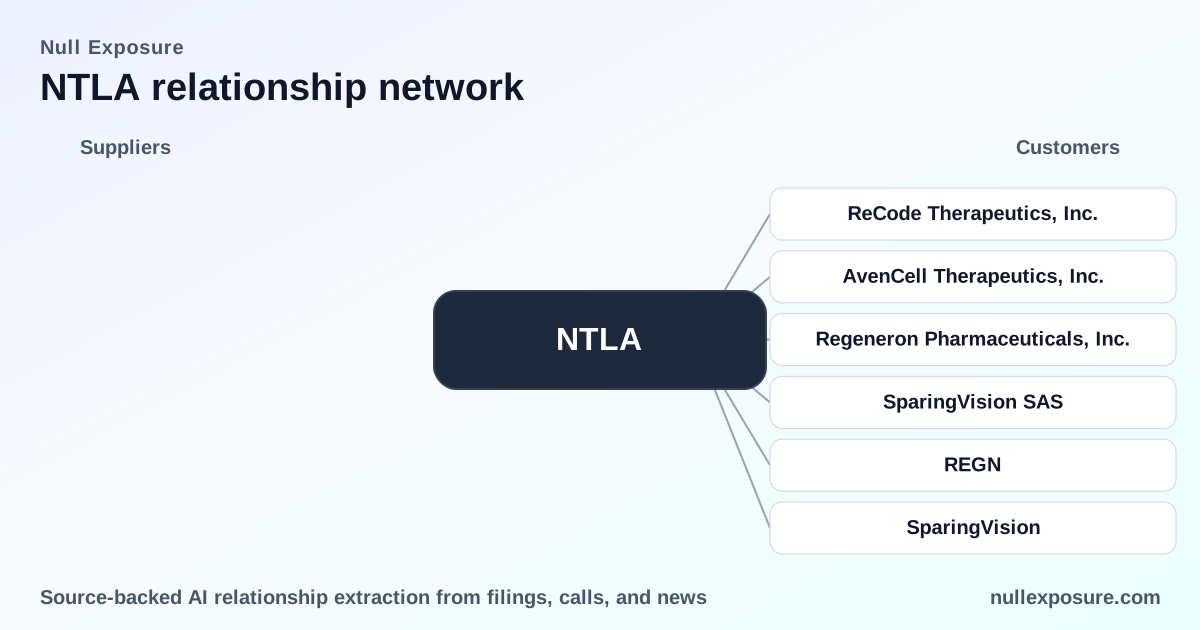
Below I summarize every customer/collaborator mentioned in Intellia’s public results and filings, with the specific source cited for each relationship.
Regeneron Pharmaceuticals, Inc. (REGN)
Intellia collaborates with Regeneron on development and commercialization of the lead program nex‑z, and Regeneron has been a source of cost reimbursements that materially increased collaboration revenue in Q4 2025. According to Intellia’s February 26, 2026 press release, Intellia leads development and commercialization of nex‑z in collaboration with Regeneron, and trading‑coverage of Q4 2025 results noted an increase in cost reimbursements from Regeneron that helped drive collaboration revenue to $23.0 million in Q4 2025. (GlobeNewswire press release, Feb 26, 2026; TradingView coverage of Q4 2025 results, Mar 2026.)
SparingVision SAS
Intellia recognized $9.0 million of revenue in connection with the termination of its license and collaboration agreement with SparingVision, an event recorded as a significant driver of Q4 2025 collaboration revenue. The company’s Q4 2025 disclosures and subsequent news coverage reported that termination proceeds accounted for part of the revenue increase reported for the quarter. (Intellia Q4 2025 press release on GlobeNewswire, Feb 26, 2026; Zacks/TradingView coverage, Mar 2026.)
AvenCell Therapeutics, Inc.
AvenCell appears as a counterparty in Intellia’s 2024 financial statements: accounts receivable as of December 31, 2024 included amounts related to collaborations with AvenCell, indicating active commercial or reimbursement flows as of year‑end. There is no public 2025 press disclosure expanding on the arrangement in the items reviewed. (Intellia Form 10‑K for year ended Dec 31, 2024.)
ReCode Therapeutics, Inc.
ReCode likewise shows up in Intellia’s 2024 filing: accounts receivable at Dec 31, 2024 included balances tied to the collaboration with ReCode, implying billed work or reimbursable costs outstanding at year‑end. The 10‑K is the primary public source for this counterparty mention. (Intellia Form 10‑K for year ended Dec 31, 2024.)
What these relationships mean for investors
Intellia’s customer map has three practical consequences for valuation and risk assessment:
-
Revenue quality is lumpy and contract‑linked. Q4 2025 illustrates the point: a combination of a one‑time license termination payment (SparingVision) and increased reimbursements from Regeneron produced a material quarter of collaboration revenue that does not imply recurring growth in the absence of similar contract events. (Intellia Q4 2025 disclosures, Feb–Mar 2026 media coverage.)
-
Counterparty concentration is high. A small number of collaborators account for accounts receivable and collaboration revenue; that creates exposure to partner execution, negotiation leverage, and timing risk. The 10‑K explicitly lists Regeneron, SparingVision, AvenCell and ReCode as counterparties tied to receivables at year‑end 2024. (Intellia Form 10‑K for year ended Dec 31, 2024.)
-
Commercial criticality centers on Regeneron. Regeneron’s role in the nex‑z program and its cost‑reimbursement profile make it structurally important to Intellia’s near‑term cash inflows and longer‑term commercialization pathway. Investors should model Regeneron interactions separately rather than aggregating all collaboration revenue. (GlobeNewswire and Q4 2025 reporting commentary, Feb–Mar 2026.)
-
Regulatory and payor pressure is a company‑level constraint. Intellia’s filings call out that governmental and commercial third‑party payors are imposing cost controls, which directly affects long‑term pricing power and reimbursement strategy for any commercialized gene‑editing therapy. This is a firm‑wide signal material to market forecasts and penetration assumptions. (Intellia Form 10‑K commentary on payors and healthcare cost controls.)
Key takeaways for investors:
- Treat collaboration revenue as event‑driven, not recurring.
- Place a premium on understanding Regeneron program cadence and reimbursement arrangements.
- Adjust valuation scenarios for counterparty concentration and for potential payor/headwinds described in the 10‑K.
For an on‑demand deep dive into how counterparties affect biotech cash flow and risk, see more at https://nullexposure.com/.
Short checklist before you update models
- Confirm whether the Regeneron cost‑reimbursement trend continues into FY2026 guidance.
- Treat the $9.0 million SparingVision recognition as non‑repeat unless new contracts indicate otherwise.
- Track AvenCell and ReCode billing patterns in quarterly filings to determine if they evolve into more material revenue streams.
- Incorporate government/payor constraint into long‑run pricing and market access assumptions.
Conclusion: Intellia’s monetization is partner‑driven and contract‑sensitive; Regeneron is the most consequential counterparty for both development and near‑term cash. Investors should weight partnership cadence, termination events and payor dynamics more heavily than short‑term headline revenue when projecting sustainable cash flows.