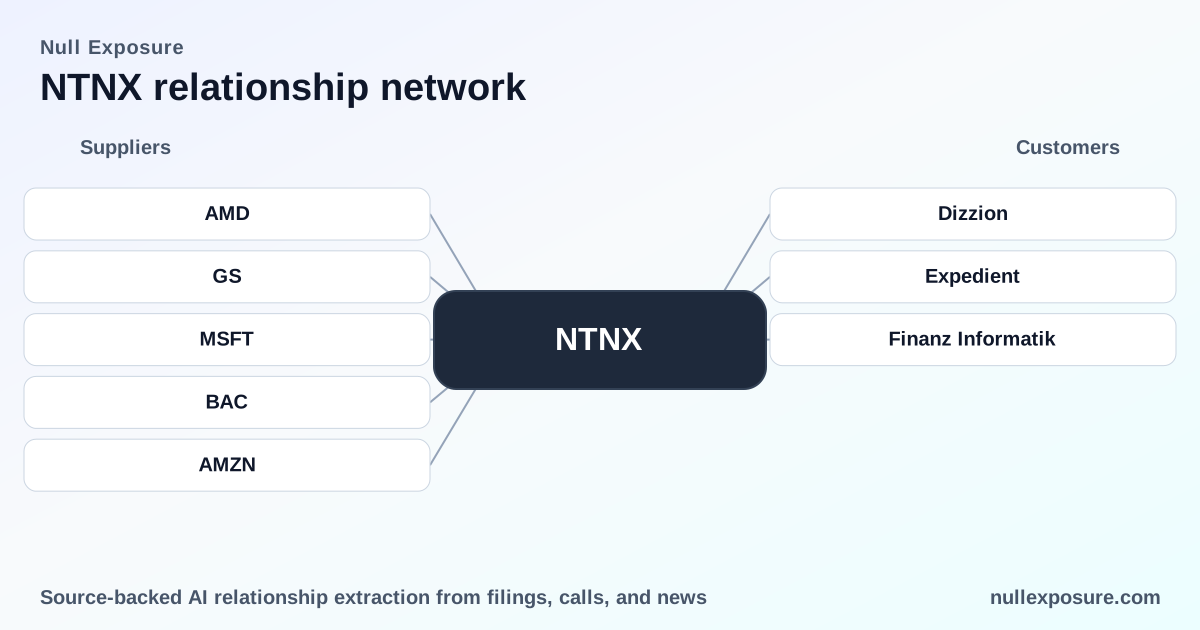
Nutanix (NTNX) — Customer Relationships That Define the Next Phase of Growth
Nutanix sells a hybrid multi‑cloud software platform to enterprises and service providers and monetizes primarily through multi‑year subscription licenses and cloud SaaS offerings that convert on recurring revenue. The company’s go‑to‑market mixes direct enterprise sales with channel and service‑provider partnerships; the most material financial signal is recurring revenue growth driven by renewals and new large‑account deals rather than one‑off hardware sales. For investors, the question is how recent customer wins—across service providers, financial services and regional systems integrators—translate into durable ARR and margin expansion. For background research and deal tracking, visit the Nutanix coverage hub at https://nullexposure.com/.
Recent customer announcements: who’s using Nutanix now
These relationship notes capture every reported customer mention in the recent data set.
Dizzion — Private Cloud PC launch powered by Nutanix
Dizzion teamed with Expedient to launch a Private Cloud PC offering running on Nutanix infrastructure, positioning Nutanix as the underlying platform for virtual desktop and private cloud workloads. This win showcases Nutanix’s traction in desktop virtualization and service‑provider solutions that convert platform usage into subscription revenue (Yahoo Finance, Mar 10, 2026).
Expedient — Partner in the Dizzion Private Cloud PC product
Expedient is a co‑partner on the Private Cloud PC service alongside Dizzion, using Nutanix infrastructure to deliver managed private cloud desktops to enterprise customers; this underscores Nutanix’s role as a backbone for managed‑service offerings sold by third‑party providers (Yahoo Finance, Mar 10, 2026).
Finanz Informatik — Long‑term strategic contract in European financial services
Finanz Informatik, the IT services organization for the German Savings Bank Finance Group, signed a long‑term contract and strategic collaboration with Nutanix, marking a significant European banking IT endorsement and a potential multi‑year revenue stream in a tightly regulated vertical (GlobeNewswire press release included in Nutanix FY2025 earnings commentary, Aug 27, 2025).
Maybank Shared Services Sdn. Bhd. (via Mesiniaga purchase order) — Malaysia subscription order
Mesiniaga Berhad reported a purchase order from Maybank Shared Services Sdn. Bhd. for Nutanix Cloud Infrastructure subscriptions, Ultimate software licenses and mission‑critical support valued at MYR 51,641,649.82, representing a sizable regional enterprise sale routed through a local systems integrator (MarketScreener report, May 3, 2026).
What these relationships collectively imply about Nutanix’s operating model
These customer ties illustrate several company‑level signals about how Nutanix contracts, sells and scales.
- Subscription‑first contracting posture. Nutanix has completed a shift to subscription licensing and sells term licenses from one to five years, with cloud SaaS subscriptions extending up to five years; customer wins reported above are framed as subscription and managed‑service deals rather than perpetual licenses, reinforcing recurring revenue economics.
- Service‑provider adoption drives indirect scale. The Dizzion/Expedient engagement is a clear example of Nutanix being consumed as an infrastructure layer by service providers, which amplifies reach into enterprise end customers through managed service packaging.
- Enterprise and public sector focus. The Finanz Informatik relationship and the Maybank order highlight sales into regulated financial services and large enterprise IT organizations, consistent with Nutanix’s stated emphasis on large‑account sales.
- Global geographic coverage with regional routes to market. Reported customers span North America, Europe and APAC, reflecting Nutanix’s global footprint; regional partners and systems integrators (for example, Mesiniaga) are core to executing local enterprise deals.
- Materiality profile: broad but not concentrated. Company disclosures show no end customer accounted for more than 10% of revenue in recent fiscal years, so individual wins are immaterial to total revenue on their own but contribute to ARR growth incrementally.
- Sales dependence remains critical. The business continues to rely heavily on a field sales organization to secure large enterprise and service‑provider contracts, which is a central operational constraint for scaling revenue.
Contracting posture, concentration and maturity — investor implications
Understanding these operating characteristics clarifies risk and opportunity:
- Contracts skew to multi‑year subscriptions. That structure increases revenue visibility and retention economics but requires strong execution on renewal and upsell. Investors should value Nutanix with forward ARR expansion and retention metrics in mind rather than one‑time license recognition.
- Customer mix reduces single‑counterparty concentration risk. Reported wins are diverse across service providers, regional integrators and large financial institutions, and company filings confirm no single customer exceeds a 10% revenue threshold—this lowers catastrophic counterpart risk but raises the bar on incremental growth from the enterprise channel.
- Sales execution is a gating factor. The company’s dependence on its sales force to close and expand large enterprise deals is a strategic constraint; scaling through service providers and channel partners is a hedge but requires continued partner enablement and competitive pricing.
- Geographic diversification is real but operationally complex. Nutanix operates across NA, EMEA and APAC; this drives opportunity but also requires localized compliance, support and partner programs for each region.
Risks worth watching and the opportunity vector
- Execution risk on conversion of platform wins to recognized revenue. Service‑provider launches (like the Dizzion/Expedient offering) can generate pipeline momentum but revenue recognition timing depends on contract structure and customer adoption. A recent equity market reaction referenced this dynamic when discussing guidance and analyst revisions (Yahoo Finance commentary, Mar 10, 2026).
- Vertical concentration dynamics. Financial services wins are strategically valuable for margin and stickiness, yet these customers impose long sales cycles and high support expectations—both increase near‑term operating costs but improve lifetime value if executed correctly.
- Channel and partner leverage. Partnerships with local systems integrators (Mesiniaga) unlock regional procurement and deployment scale; the Maybank purchase order reported via Mesiniaga illustrates the model that will drive incremental ARR in APAC.
Bottom line and recommended next steps for investors
Nutanix’s recent customer announcements reinforce a subscription‑led growth model with expansion through service providers and regional partners. The company demonstrates durable product demand across enterprise and financial services markets, and its operating model emphasizes recurring revenues and sales‑driven expansion. For investors focused on revenue quality and ARR trajectory, monitor (1) renewal and net retention rates, (2) the cadence of service‑provider deployments converting into billed subscriptions, and (3) regional sales momentum in EMEA and APAC.
For ongoing coverage, research resources and customer tracking, visit the Nutanix research hub: https://nullexposure.com/.
Bold customer wins and subscription economics position Nutanix for continued ARR growth if sales execution and partner monetization remain disciplined.