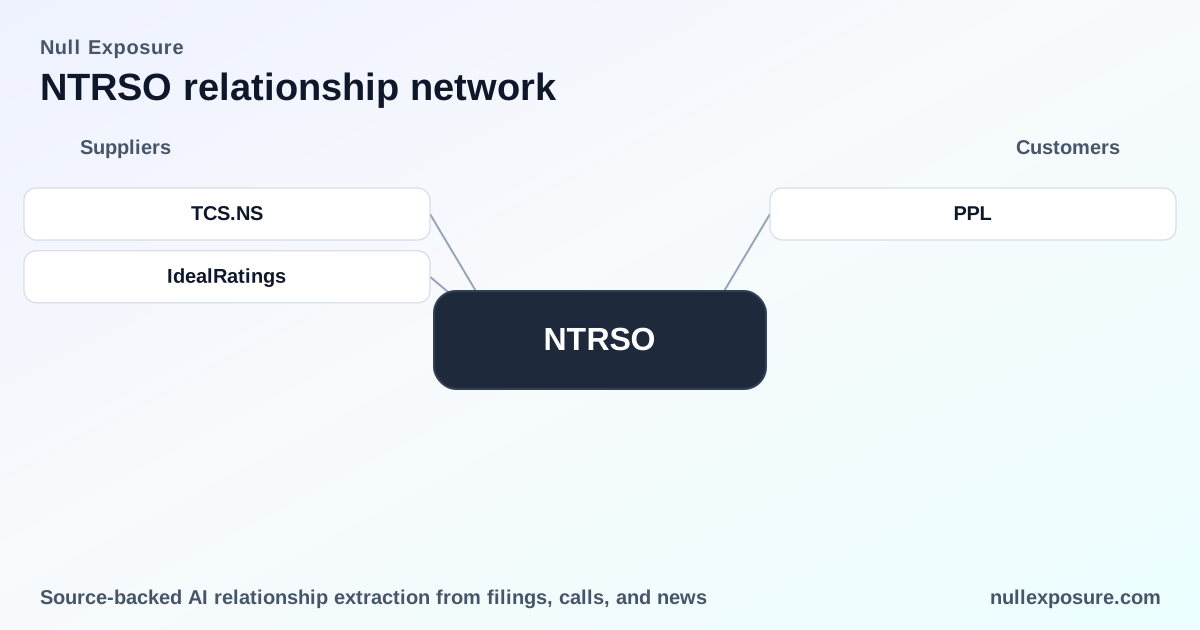
Northern Trust (NTRSO) — customer relationships that define a custody-first franchise
Northern Trust monetizes a diversified financial services platform by selling custody, asset servicing, asset management and wealth-management solutions to institutions and high‑net‑worth clients; revenue derives from fee income on custody and servicing mandates, investment-management fees and banking spreads on deposits. The firm’s commercial model is fee-for-service at scale, anchored by long-standing custody relationships that convert into recurring revenue and cross‑sell opportunities across wealth and banking services. For a concise view of client relationships and their strategic implications, see https://nullexposure.com/.
Why customer wins matter: custody economics versus contract posture
Northern Trust’s client flow largely validates a custody-and-services operating model: institutions pay recurring fees for recordkeeping, global custody and fund administration, while wealthy individuals and families pay for fiduciary and investment advisory services. The constraint signals indicate contracts are often treated as open‑ended (short‑term original duration less than one year) yet operationally sticky, meaning Northern Trust invoices on a recurring basis while client relationships persist through servicing complexity and regulatory demands.
- Contracting posture: The firm's contracts are described as open-ended with original durations under one year, which implies predictable short-term renewal cycles but also exposes revenue to periodic repricing and client mobility.
- Client mix and criticality: Northern Trust serves both individuals (wealth clients) and large institutional clients including pensions, endowments, sovereign and non‑profit investors—this dual base drives both fee stability and scale-dependent servicing margins.
- Geographic reach: Revenues and relationships are geographically diversified across North America, EMEA and APAC, with explicit presence in London, Guernsey, Singapore and Abu Dhabi; this supports global custody services and cross-border fund administration capabilities.
- Role and segment emphasis: The company predominantly acts as a service provider and seller of managed services—Asset Servicing and Wealth Management are the operational core, which concentrates business on recurring services rather than one‑off product sales.
What recent customer activity reveals about growth vectors
Northern Trust’s recent relationship activity highlights two growth vectors and one reputational/legal churn event. Institutional mandate wins in APAC and Australia point to international expansion in fund administration and custody, while litigation tied to target‑market product offerings underscores the reputational and operational risk that accompanies retirement‑plan visibility.
For additional context on customer relationships across other firms and sectors, visit https://nullexposure.com/.
Detailed client relationship notes
Igneo Infrastructure Partners
Northern Trust won an investment service mandate from Igneo Infrastructure Partners, a unit of First Sentier Investment Group, strengthening its infrastructure custody and servicing footprint. According to AsiaAsset (May 2026), the mandate reflects Northern Trust’s capability in servicing alternative‑asset managers across APAC. Source: https://www.asiaasset.com/post/29273-northern-trust-0206 (May 2026).
Brandes Investment Partners
Northern Trust expanded its relationship with Brandes Investment Partners to support the launch of the Brandes Global Value Fund in Australia by providing global custody and fund administration services, illustrating fund‑launch support as a near-term revenue driver. Investing.com reported the expansion in May 2026, indicating Northern Trust’s role in cross-border fund distribution and administration. Source: https://www.investing.com/news/company-news/northern-trust-stock-hits-alltime-high-at-1352-usd-93CH-4263892 (May 2026).
PPL (ERISA settlement)
PPL agreed to pay $8.2 million to settle an ERISA lawsuit related to offering Northern Trust target‑date fund series, a legal episode that highlights litigation and product governance risk for firms that participate in retirement-plan markets. Pensions & Investments covered the settlement in March 2026, signaling that Northern Trust‑branded products can draw plan sponsor litigation exposure even when the exposure is mediated through third parties. Source: https://www.pionline.com/defined-contribution/ppl-pays-82-million-settle-lawsuit-over-its-retirement-plans-offering-northern/ (March 2026).
How these relationships map to strategic strengths and risks
- Strength — Recurring, fee‑based revenue: Custody and fund-administration mandates (Brandes, Igneo) underpin predictable fee streams that scale with assets under custody and servicing complexity.
- Strength — Global execution capability: Wins in APAC and Australia confirm Northern Trust’s ability to service cross‑border funds and infrastructure investors, supporting growth outside North America.
- Risk — Contract flexibility equals churn risk: The company treats many client arrangements as open‑ended short‑term contracts, which produces renewal opportunities but increases sensitivity to service failures and competitive bids.
- Risk — Reputation and litigation exposure: The PPL settlement illustrates product governance risk and the reputational cost when retirement‑plan offerings attract ERISA litigation; such events can pressure selling activity into defined contribution channels.
- Concentration and maturity: The blend of institutional and individual clients provides revenue diversification, but the institutional asset‑servicing business is critical—loss of large mandates would have outsized impact on fee revenue.
Investment implications — what investors should watch
Investors and operators evaluating Northern Trust’s customer relationships should monitor three variables: AUM/custody flows in EMEA and APAC, retention rates on major fund‑administration mandates, and outcomes from product/governance litigation. If custody and administration wins continue in growth markets, fee momentum will offset short‑term legal noise; conversely, elevated client churn or adverse litigation precedents would pressure fee margins and increase client acquisition costs.
Key monitoring items:
- Asset flows and mandate renewals in APAC and EMEA.
- New fund‑launch activity that converts to multi‑year administration contracts.
- Litigation trends around retirement‑plan offerings and corresponding governance changes.
Bottom line
Northern Trust operates a custody‑centred, fee‑for‑service franchise with global reach and client diversity, supported by wins in infrastructure and fund administration but exposed to contract renewal dynamics and governance‑related litigation. Investors should treat custody mandate wins as durable revenue levers while factoring in the short‑term contracting posture that increases sensitivity to service quality and legal exposure.
For a deeper read on client relationship strategy and comparable custody plays, visit https://nullexposure.com/.