New Era Energy & Digital (NUAIW): Customer Relationships, Contracts, and What Investors Should Track
New Era Energy & Digital operates as an upstream exploration and production platform focused on helium, oil, natural gas and natural gas liquids in the United States. The company monetizes by selling produced helium under structured offtake agreements split between two buyers, by selling oil on a short-term purchaser arrangement, and by supplementing cash via structured financing that bundled a term loan with equity and warrant placements to institutional lenders. For a detailed view of the relationships and evidence cited in public filings and press coverage, visit https://nullexposure.com/.
Executive thesis — why customer relationships matter here
New Era’s commercial model relies on a concentrated helium-selling strategy: the Pecos Slope Plant’s helium output is contractually allocated 50/50 to two industrial gas buyers under 10‑year offtakes, creating predictable revenue potential once the plant is operational. That long-term backbone sits alongside month-to-month oil and marketing arrangements, producing an operational mix of durable helium commitments and short-duration cash flows that require active working-capital management. The company’s recent Macquarie financing introduced equity and warrant components that alter capital structure and institutional alignment.
Customer relationship map (each relationship in the record)
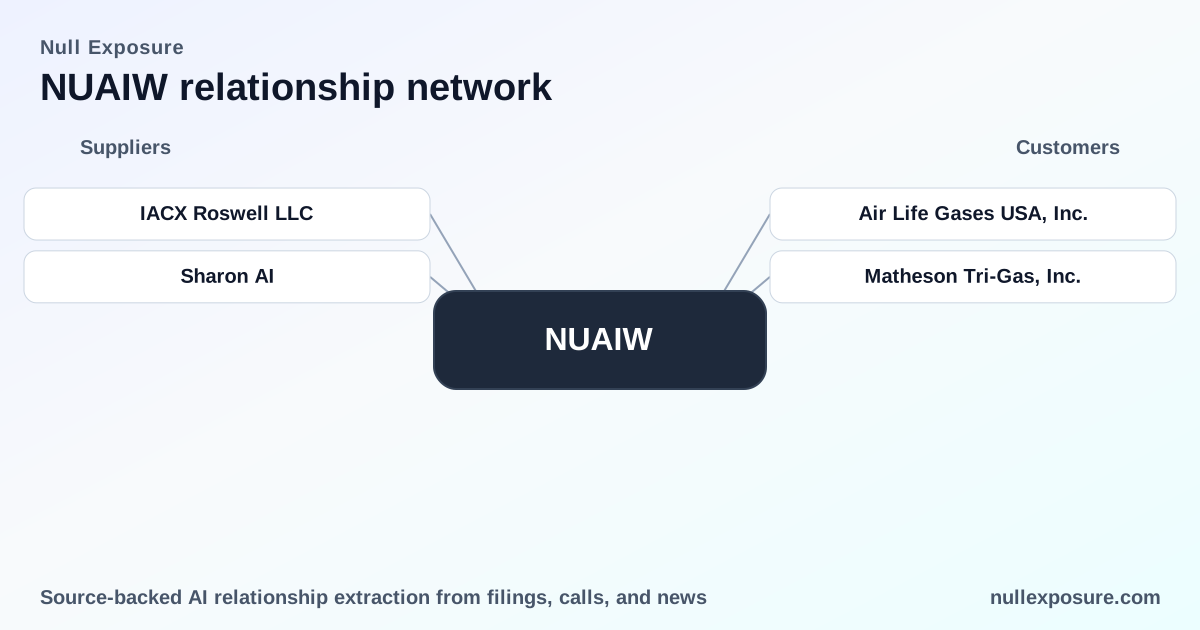
Air Life Gases USA, Inc.
New Era agreed to sell 50% of helium production from the Pecos Slope Plant to Air Life under the company’s Liquid Helium Agreement; this contract is specified in the FY2024 10‑K and is structured as a long-term 10‑year offtake tied to the plant’s commencement. According to the FY2024 10‑K filing, the company will allocate half of Pecos Slope helium production to Air Life under that agreement.
Matheson Tri‑Gas, Inc. (MTG)
Matheson Tri‑Gas is the counterparty for the other 50% of Pecos Slope helium under a Gaseous Helium Agreement; the FY2024 10‑K shows the company committed that volume under a 10‑year contract that runs from the plant’s commencement date. The FY2024 10‑K states that the company will supply 50% of helium production from the Pecos Slope Plant to Matheson.
Macquarie Group (MQG) — term loan and equity placement
New Era closed financing with Macquarie that included a term loan and an equity purchase, with Macquarie committing to purchase $5 million of common stock at $5.00 per share as part of the arrangement, a 20% premium to the five‑day VWAP measured around April 7, 2026, according to news coverage. A report on Investing.com covering the April 2026 financing described the equity purchase tied to the term loan.
Macquarie Equipment Capital — private placement and registration rights
As part of the financing package, New Era sold 1,000,520 shares at approximately $5.00 per share to Macquarie Equipment Capital and agreed to issue up to 1,164,144 warrants exercisable through 2031, supported by registration rights for resale. TradingView and The Globe and Mail reported on the private placement, the warrants and the related registration‑rights arrangement in April 2026.
How contracts and constraints shape the business model
New Era’s commercial posture reflects a mix of long-duration strategic offtakes for helium and flexible, short-duration arrangements for other products:
- Long-term offtakes for helium create a revenue foundation. The company’s Liquid Helium and Gaseous Helium Agreements each run 10 years from first fill; the 10‑K documents that buyers will receive 50% of Pecos Slope output, which establishes significant contractual shelf-life for helium revenues once the plant is online.
- Helium contracts are currently contingent on plant commencement. The company discloses that these helium agreements are conditioned on the Pecos Slope Plant beginning operations, placing those contracts in a prospect/near-development phase until first fill is achieved.
- Short-term oil and marketing arrangements increase operational flexibility but reduce revenue visibility. Oil sales and a marketing agreement are described as continuing on a month-to-month basis, exposing near-term receipts to index pricing and counterparty turnover.
- New capital partners shift counterparty profile and liquidity dynamics. The Macquarie financing bundles term debt, an equity purchase and warrants, altering shareholder composition and creating resellable instruments that affect dilution and liquidity for investors.
Collectively, these characteristics produce a business model with concentrated offtake concentration for the core product (helium), mixed maturity across contracts, and a contracting posture that balances multi-year commitments with short-term commercial arrangements.
Key investment implications and risk checklist
Bold signals for investors and operators:
- Concentration risk: Helium revenue is concentrated into two counterparties receiving 50% each; successful commercialization depends on Pecos Slope Plant achieving first fill and sustained production.
- Contract maturity mismatch: Long-term helium offtakes are paired with month-to-month oil sales, requiring disciplined cash flow and execution to bridge development timing.
- Counterparty scale exposure: New Era targets Tier‑1 and Tier‑2 industrial gas purchasers; company disclosures classify the helium supply chain as including very large integrated producers, underscoring the competitive and bargaining environment for helium buyers and sellers.
- Capital structure and dilution: The Macquarie financing includes an equity purchase and warrants exercisable through 2031, which introduces immediate cash and potential future dilution; transparency on use of proceeds and covenant terms is critical.
Actionable checklist for diligence:
- Confirm Pecos Slope Plant commissioning schedule and first-fill timing.
- Monitor monthly oil receipts and marketing counterparty continuity.
- Review the full financing term-sheet for covenants, prepayment terms, and registration‑rights timing.
- Track resales of the Macquarie-placed shares and warrant exercises for shareholder dilution impact.
For a deeper, referenced view of these relationships and supporting documents, see https://nullexposure.com/.
Bottom line
New Era’s customer landscape presents a clear strategic focus: long-term helium offtakes provide the core revenue promise, but that promise is contingent on plant commissioning and execution against operational milestones. Short-duration oil contracts and a recent Macquarie financing create near-term liquidity and flexibility while introducing dilution and counterparty complexity. Investors should prioritize operational milestones (first‑fill and ramp), covenant detail in the financing, and the timing of registration‑rights resales when assessing downside and upside scenarios.