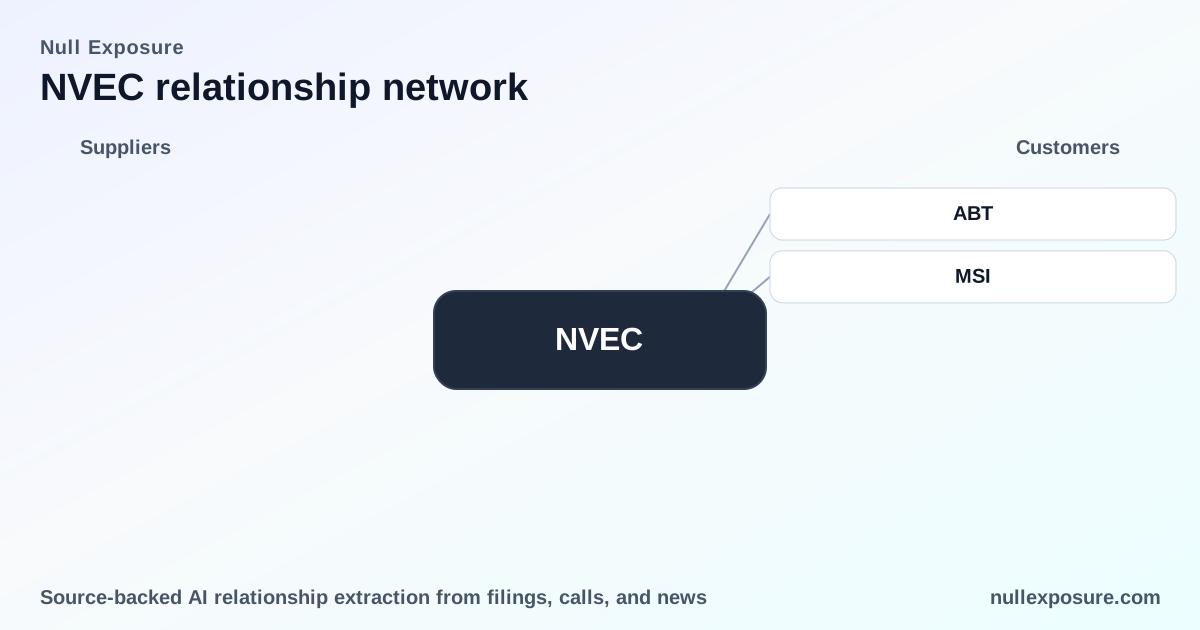
NVE Corporation (NVEC): Customer relationships that steer revenue and risk
NVE Corporation designs and sells spintronic sensors and related devices and monetizes through product sales to OEMs and global distributors, R&D contracts, and licensing of MRAM-related intellectual property. The company operates a mixed go-to-market model: direct supply to demanding end customers and broad reach via distributors and resellers; licensing and R&D work provide an incremental, higher-margin revenue stream. For investors, the combination of concentration on large customers and short-term distributor contracting drives both upside and event-driven volatility. Learn more at https://nullexposure.com/.
The operating picture investors should internalize
NVE runs a hybrid commercial model with four practical implications for valuation and risk:
- Contracting posture is short-term: distributor agreements renew on an annual cadence, which keeps pricing and placement flexible but elevates renewal risk in cyclical slowdowns.
- Customer footprint is global: the business sells worldwide, so macro and supply-chain swings across regions directly influence top-line variance.
- Revenue concentration is material: NVE relies on several large customers for a significant share of revenue, so single-account wins or losses create outsized P&L effects.
- Licensing and R&D are an active line of business: NVE acts as a licensor of MRAM technology and takes R&D contracts, offering episodic upside and margin expansion potential when IP deals close.
These factors make NVE a high-conviction small-cap semiconductor play where customer contracts, renewals, and licensing milestones are primary drivers of short-to-medium term performance.
Every named customer relationship in the filings and media
Below I cover each relationship referenced in the available results; each entry includes a plain-English summary and a concise source reference.
Abbott Laboratories (ABT)
NVE supplies components to Abbott and has an active supplier relationship that was extended for two years, signaling near-term revenue stability with one of its largest end customers. NVE’s management explicitly referenced Abbott as one of the company’s "most demanding customers" on the Q3 FY2026 earnings call, and public coverage noted the two-year supplier extension (Q3 FY2026 call transcript, Investing.com; March 2026 coverage on Yahoo Finance).
Source: Q3 FY2026 earnings call transcript (Investing.com, May 2026) and a Yahoo Finance report on NVE’s Q3 2026 results (March 2026).
Everspin Technologies
NVE has a licensing history tied to MRAM technology and has discussed licensing with successors to early MRAM players, including Everspin; management noted past licensing agreements with predecessors of Everspin. That positions NVE as a recurring licensor in the MRAM value chain rather than only a component supplier (Q3 FY2026 call transcript, Investing.com).
Source: Q3 FY2026 earnings call transcript (Investing.com, May 2026) and transcript coverage (InsiderMonkey, March 2026).
Motorola (and ticker/alias MSI)
Management referenced a longstanding licensing relationship with predecessors of Everspin that included Motorola, indicating legacy IP relationships that still inform current licensing conversations. The references to Motorola also appear under alternate tickers/labels in some transcripts, reflecting how legacy partner names surface in licensing disclosures (Q3 FY2026 call transcript; InsiderMonkey transcript).
Source: Q3 FY2026 earnings call transcript (Investing.com, May 2026) and InsiderMonkey's Q3 FY2026 transcript coverage (March 2026).
MSI (listed separately in media)
Media outlets transcribing the call occasionally tag Motorola-related comments with the ticker MSI; those entries reflect the same historical licensing context described above—i.e., references to license agreements with predecessor entities that later became part of the Motorola/Everspin lineage. Treat MSI references as synonymous with the Motorola legacy licensing discussion in the call transcripts (InsiderMonkey, March 2026).
Source: InsiderMonkey Q3 FY2026 earnings call transcript (March 2026).
What these relationships mean for revenue and valuation
- Abbott extension reduces short-term revenue tail risk. An explicit two-year supplier extension for a demanding OEM translates into predictable purchase patterns and smoother revenue recognition for the covered period.
- Licensing gives optional upside without equivalent production capital intensity. Historical license agreements with Motorola/Everspin predecessors validate NVE’s ability to monetize IP, which can produce high-margin revenue streams when contracts close.
- Concentration remains the central risk. Management’s own disclosure that NVE relies on several large customers for a meaningful share of revenue signals that single-account dynamics can swing margins and growth markedly.
- Annual distributor renewals create both flexibility and exposure. The distributor model supports global reach—NVE’s products are resold in more than 75 countries—but also means renewals and inventory positioning are key near-term drivers of sales momentum.
Monitoring checklist for investors
Focus on a small set of catalysts and risks that directly relate to the customer picture:
- Renewal announcements and order volumes from Abbott (near-term revenue and backlog signal).
- New or renewed licensing agreements with MRAM players or legacy partners (high-margin upside).
- Distributor agreement renewals and inventory adjustments across the >75-country footprint (visibility into global demand).
- Any change in customer concentration disclosed in filings or management commentary (material to earnings volatility).
If you want ongoing and structured coverage of NVE’s customer developments, see NullExposure’s research hub at https://nullexposure.com/.
Bottom line
NVE’s commercial model couples durable OEM relationships like Abbott with a dispersed distributor network and an active licensing pathway into MRAM. That mix delivers both predictable pockets of revenue and asymmetric, event-driven upside from IP deals—while leaving the company exposed to single-customer concentration and the renewal cycles inherent in short-term distributor contracts. For investors, the stock’s trajectory will track a small set of relationship-driven events: large customer order trends, distributor renewal activity, and licensing milestones.