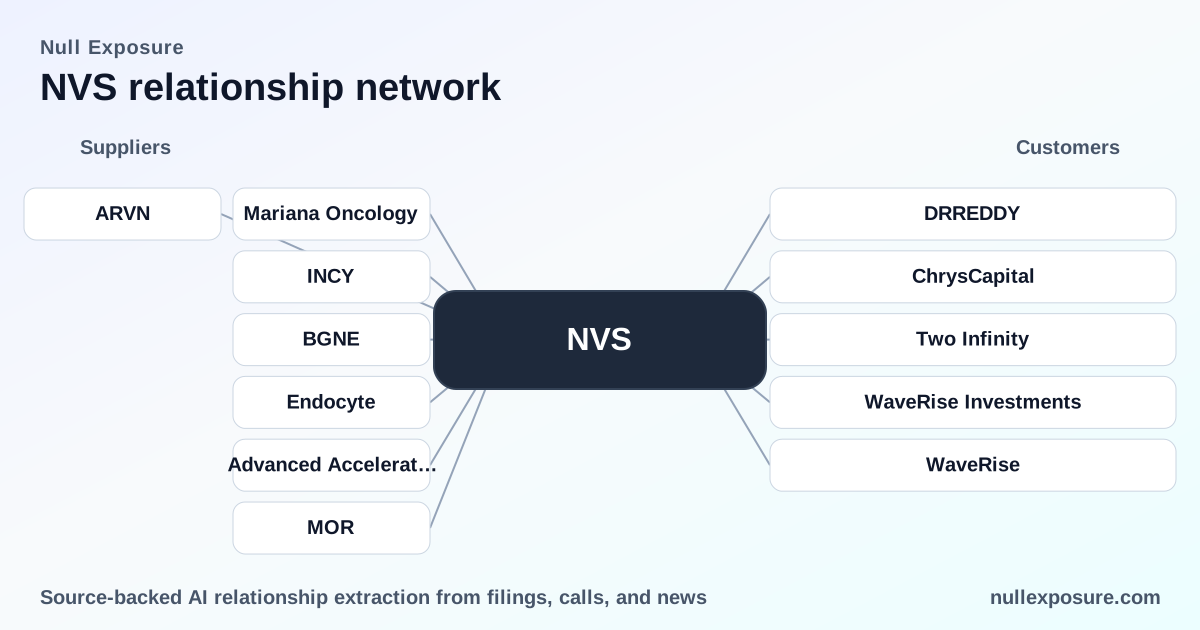
Novartis (NVS) — customer relationships that shape revenue optionality and portfolio pruning
Thesis: Novartis monetizes a global pharmaceuticals and medical devices portfolio through direct product sales, licensing and milestone/royalty streams, and selective divestments; customer and partner relationships in 2022–2026 reflect a deliberate shift toward licensing, selective asset sales, and royalty capture that support cash generation while shrinking non-core geographic exposure. For research clients and operators evaluating counterparty exposure, these relationships signal stable downstream cash flows from in‑licensed programs and recurring royalty lines, combined with one‑off proceeds from strategic divestitures. For a deeper read on customer signals, visit https://nullexposure.com/.
How to read these partner signals as an investor
Novartis’ customer and partner footprint in the recent record is a mix of:
- In‑licensing and out‑licensing arrangements that generate milestone and royalty income (examples: Pharming, third‑party licensees).
- Commercial rights sales that convert long‑term marketing obligations into near‑term cash (examples: Harrow acquisition of U.S. ophthalmic rights).
- Third‑party logistics and manufacturing relationships that support specialized products like CAR‑T (Cryoport, BioNTech facility sale).
Collectively, these relationships decrease operational complexity for Novartis while preserving recurring royalties and occasional milestone recognition, an approach that supports margins and frees capital for core R&D and M&A. For investors tracking counterparty risk and revenue sustainability, these items matter more than headline sale proceeds: they change the company’s contracting posture and revenue mix.
Portfolio of relationships — plain English notes for each counterparty
Below are the relationships found in the sample records, each summarized in one or two sentences with the cited source context.
ANL
Novartis licensed buparlisib to a biotech identified as ANL, demonstrating Novartis’ recurring role as a licensing originator for oncology assets. This activity was reported by BioCentury (article first seen March 9, 2026).
Pharming (PHAR)
Pharming licensed leniolisib (Joenja) from Novartis and is contractually obligated to milestone and royalty payments; Pharming’s first commercial shipments and milestone triggers generated a $10 million milestone obligation and recurring royalties to Novartis in FY2025–FY2026. These items were detailed in Pharming press releases and investor materials (PR Newswire and GlobeNewswire, 2025–2026) and cited in investor commentary (Yahoo Finance, March 2026).
Harrow Health (HROW)
Novartis sold U.S. commercial rights to five ophthalmic products to Harrow, converting marketed product responsibilities into an upfront/contingent consideration series and transferring U.S. commercialization risk. Multiple industry outlets reported Harrow’s acquisition of exclusive U.S. rights (MM&M, Pharmaceutical‑Technology, EyesOnEyecare, 2022/2024 coverage referenced in 2026).
Dr. Reddy’s Laboratories (DRREDDY)
Novartis India signed an exclusive sales and distribution agreement with Dr. Reddy’s for established brands, including Voveran, demonstrating an outsourcing of localized commercialization in India prior to Novartis’ later divestment of its India unit. This partnership was reported in Indian business press and referenced in divestment coverage (Economic Times, March 2026).
Cryoport (CYRX)
Cryoport secured logistics contracts for Novartis CAR‑T products (e.g., Kymriah), underscoring Novartis’ reliance on specialized cryogenic supply chains for cell therapies. BioSpace reported on Cryoport’s contract wins in the context of early CAR‑T commercial launches (coverage first seen March 2026).
OLEMA (OLMA)
An OPERA‑02 combination trial used Novartis‑supplied ribociclib, signaling ongoing clinical supply relationships where Novartis provides active drug product for partnered studies. The trial and Novartis’ supply were discussed in trading coverage and company trial updates (TradingView news item, May 2026).
Allarity Therapeutics (ALLR)
Novartis terminated a licensing agreement with Allarity for dovitinib due to a material breach tied to missed payments, illustrating Novartis’ contract enforcement on payments and the use of terminations to protect R&D/portfolio value. Pharmaceutical Executive covered the termination and related SEC filing (March 2026).
Third Harmonic Bio (THRD)
Third Harmonic launched with a Novartis‑originated drug and substantial VC backing, indicating Novartis’ role as a source of oncology/immune‑related assets for spinouts and new venture formation. Boston Business Journal covered the launch and financing details (2022 background noted in March 2026 aggregation).
JD Health (JD)
Novartis-listed innovative medicines (for example, Vanrafia) made their debut on JD Health’s platform in late‑2025, pointing to Novartis’ use of major digital pharmacy channels for product launches in China. JD Health’s Q4/2025 disclosure referenced these listings (GlobeNewswire, March 2026).
BioNTech (BNTX)
BioNTech acquired a Novartis manufacturing facility in Tuas Biomedical Park in 2022 and repurposed it as regional infrastructure, reflecting Novartis’ willingness to monetize manufacturing real estate through strategic divestment. Singapore media coverage discussed the facility sale and subsequent BioNTech plans (Straits Times, 2026 reference).
United Nations (public procurement)
WHO prequalification decisions for Novartis’ malaria treatment Coartem Baby feed into United Nations and other procurement lists, which institutional buyers use to inform public sector purchases—a critical pathway for broad public health revenue. Novartis announced WHO prequalification in April 2026 (GlobeNewswire).
ChrysCapital / Two Infinity / WaveRise Investments (consortium)
Novartis sold roughly 70–71% of its listed Indian unit to a consortium including WaveRise, ChrysCapital and Two Infinity for about $159M, reflecting strategic geographic divestiture that reduces direct India exposure and frees capital. MarketBeat and other financial outlets summarized the consortium transaction and implications (MarketBeat filings, March 2026).
Legend Biotech (LEGN)
Novartis remains a partner in certain cell therapy programs where Legend lists additional partnered programs such as LB2102 with Novartis, indicating ongoing co‑development or supply relationships in the cell therapy space. This was cited in analyst/trading coverage mentioning partnered programs (TS2/Trading commentary, 2025–2026).
What these relationships collectively tell investors
- Novartis is actively converting non‑strategic commercial responsibilities into cash while preserving downstream royalty and milestone economics (Harrow sale, Pharming royalties, India divestiture to a consortium). These actions improve near‑term free cash flow and trim operating complexity.
- Novartis continues to act as an originator and licensor of clinical assets (buparlisib, leniolisib, CAR‑T supply), which provides recurring royalty and milestone income without full commercialization cost exposure.
- Specialized logistics and manufacturing partnerships are material for complex therapies like CAR‑T, creating concentrated operational dependencies (Cryoport, facility sale to BioNTech).
Operational and contracting posture (company‑level signals)
The dataset contains no explicit constraints excerpts; as a company‑level signal, that absence implies the captured records focus on commercial transactions and licensing flows rather than detailed contractual limits or credit constraints. From the relationship evidence:
- Contracting posture is active and selective: Novartis enforces payment terms (Allarity termination), sells localized rights, and licenses high‑value assets.
- Concentration risk is managed by diversification across licensing, royalties, direct sales, and divestments.
- Criticality and maturity vary by relationship: royalties and logistics agreements are ongoing and critical to product revenue; one‑off divestments are mature, near‑term cash events.
What to watch next
- Royalty and milestone inflows from Pharming (Joenja) and similar licensees, which are now tangible contributors to cost of goods sold and revenue accounting. Pharming disclosures in 2025–2026 reported milestone receipts and royalty expense allocations.
- Execution risk around logistics and cell‑therapy supply chains (Cryoport) as commercial scale increases for CAR‑T therapies.
- Proceeds recycling from geographic divestments (India sale) and whether free capital is redeployed into core R&D or returned to shareholders.
For institutional users tracking counterparty exposures and revenue durability, these relationship signals are high‑value inputs. To explore a structured view of these and other customer relationships, visit https://nullexposure.com/ for the platform view.