nVent (NVT): Customer Relationships and What They Mean for Investors
nVent Electric plc designs and manufactures electrical connection and protection products and monetizes through product sales, installation services, and recurring aftermarket support across global industrial and infrastructure customers. Revenue is generated primarily by hardware sales with complementary services, delivered through regional manufacturing and distribution channels, and recognized at transfer of control. For investor due diligence on customer concentration and operational risk, this note synthesizes disclosed customer references and company-level contract characteristics relevant to NVT’s revenue durability.
Explore more corporate relationship intelligence at https://nullexposure.com/ if you want structured tracking of counterparties and contract signals.
The bottom line thesis for portfolio managers
nVent operates a broad, industrial hardware business with a mix of short-cycle orders and select longer-duration projects. The company’s customer base is dispersed—no single customer accounted for more than 10% of net sales in recent years—while select verticals (infrastructure, data centers) generate longer design/manufacturing lead times and higher backlog visibility. Investors should treat nVent as low single-customer concentration, capital-light product manufacturing with episodic project risk rather than a vendor beholden to a small set of buyers.
Direct customer references uncovered in the research
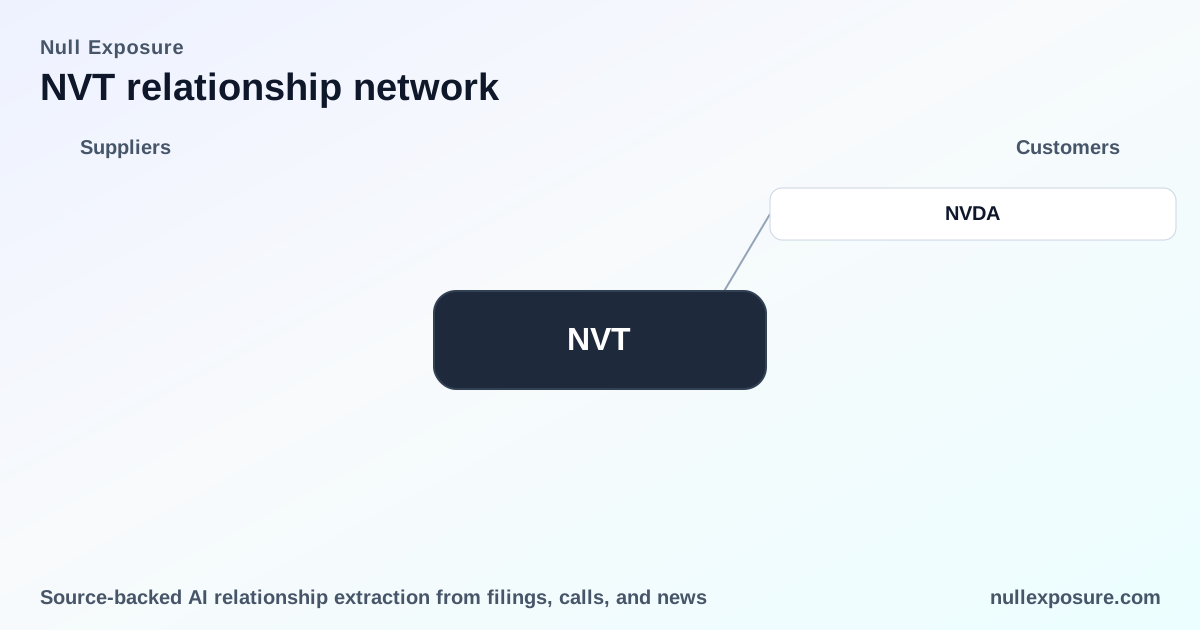
The monitoring returned two near-identical references naming NVIDIA; both originate from the same earnings call transcript.
NVDA (inferred symbol NVDA) — FY2026
nVent disclosed that it is working with NVIDIA and understands NVIDIA’s technology road maps and heat loads out to 2030, indicating a supplier role tied to thermal management or enclosure solutions for high-performance computing. This remark was captured in an earnings call transcript published by The Globe and Mail on March 10, 2026 (Q4 2025 / FY2026 commentary).
Source: The Globe and Mail earnings call transcript, March 10, 2026.
NVIDIA — FY2026
The company reiterated engagement with NVIDIA and explicit awareness of NVIDIA’s future heat-load requirements through 2030, signaling a customer-supplier relationship in data center or compute-enclosure applications. The mention appears in the same March 10, 2026 earnings call transcript published by The Globe and Mail.
Source: The Globe and Mail earnings call transcript, March 10, 2026.
Key takeaway: Both entries reference the same commercial engagement; nVent positions itself as a partner for large-scale compute customers where thermal and enclosure performance is critical.
What the company disclosures say about contracts, geography and concentration
Company reporting frames the operating model and helps translate single mentions into investment-relevant context:
-
Contracting posture: nVent manages a dual contracting model. The business recognizes a large share of revenue from orders filled within a short cycle—products generally ship within 90 days—while also carrying longer-duration performance obligations for infrastructure projects. As of December 31, 2024, nVent reported $139.8 million of remaining performance obligations on contracts with original expected duration of one year or more, with the majority expected to be recognized within 18 months. This mix creates near-term revenue visibility combined with episodic multi-quarter project execution risk (company filing for year ended Dec 31, 2024).
-
Geographic footprint and serving model: nVent “sells globally but serves locally” through regional manufacturing and supply chains, with the largest revenue base in North America but meaningful EMEA and Asia-Pacific operations. Reported segment revenue for the year ended Dec 31, 2024 shows substantial North American contribution alongside internationally diversified sales (company filing, year ended Dec 31, 2024).
-
Customer concentration and materiality: No customer represented more than 10% of net sales in 2024, 2023, or 2022, signaling low revenue dependence on any single counterparty and a diversified industrial customer base (company filing, year ended Dec 31, 2024).
-
Role definitions and product focus: nVent acts as manufacturer, seller, and distributor—it both makes finished goods and purchases some finished products for resale through its channels—and is principally a hardware business with installation and service components (company disclosures).
These company-level signals frame how single-customer mentions should be interpreted: a named relationship with NVIDIA is material from a strategic/technical perspective in certain verticals (compute, data centers), but not material as a single-customer revenue dependency at the consolidated level.
Explore how counterparties map across portfolios at https://nullexposure.com/ for deeper relationship analytics.
Operational implications for revenue risk and margin profile
nVent’s operating model produces several predictable investor implications:
-
Revenue stability with episodic project risk. The short-cycle nature of most orders supports predictable cash conversion, while longer-duration infrastructure projects increase backlog and create variable quarter-to-quarter recognition patterns. The $139.8 million of longer-term performance obligations is meaningful visibility but concentrated in project timelines rather than single customers.
-
Low counterparty credit concentration. With no customer over 10% of sales, counterparty credit exposure is diversified, which supports financial resilience during sector dislocations.
-
Vertical concentration matters more than single names. Engagements with large tech customers like NVIDIA elevate technical and product development risk: thermal management solutions for high-density compute are higher value, longer design-cycle projects that affect margin and working capital dynamics differently than commodity enclosure sales.
-
Global, regional delivery mitigates supply risk but increases operational complexity. Regional manufacturing supports local fulfillment speed but requires supply-chain discipline across multiple jurisdictions.
Investment implications and risk checklist
- Positive: Diversified customer base and recurring aftermarket services reduce single-counterparty revenue shock; high gross margins in hardware plus service mix support operating leverage as volumes scale.
- Watchlist: Execution on multi-year design wins (e.g., with NVIDIA) is a source of upside but requires on-time manufacturing and supply stability; any disruption in data-center demand could amplify volatility in higher-value verticals.
- Valuation context: nVent trades at a premium multiple consistent with durable margins and diversified industrial exposure; investors should reconcile premium multiples with the degree of project concentration embedded in backlog.
Final read for investors
nVent’s customer signals point to a company that is diversified in revenue yet selectively engaged in technically demanding, longer-duration projects with large compute customers like NVIDIA. That commercial mix supports steady hardware-driven revenues while providing episodic upside from design-win conversions in high-value verticals. Track conversion of the $139.8 million in longer-duration obligations and execution against data-center thermal contracts as the primary operational catalysts.
For ongoing tracking of nVent’s counterparties and to integrate relationship intelligence into investment workflows, visit https://nullexposure.com/.