News Corp A (NWSA): Customer relationships driving content licensing and subscription revenue
News Corporation operates as a diversified media and information company, monetizing through content licensing, subscriptions, advertising and digital real‑estate services across four core lines: digital real estate, news media, book publishing and cable TV. For investors, the immediate thesis is simple: News Corp leverages premium editorial and proprietary property-data assets to secure recurring subscription revenue and high‑margin licensing deals with large technology platforms, while geographic diversification and a broad customer mix limit single‑customer dependency.
Visit Null Exposure for deeper relationship analytics: https://nullexposure.com/
How News Corp sells value — the operating model in plain terms
News Corp sells two distinct kinds of value to customers. First, it licenses editorial and book content to tech platforms and aggregators, a direct monetization of journalism and IP. Second, it sells subscription and advertising products—from The Wall Street Journal professional subscriptions to Realtor.com advertising suites and real‑estate listing services—that generate recurring revenue. These monetization paths are complementary: licensing provides large, often upfront or variable payments from enterprise partners; subscription and advertising deliver steady, predictable cash flow.
- Contracting posture: The company operates a mix of licensing and subscription contracts, with many enterprise deals structured for multi‑year arrangements while some commercial relationships are treated as short‑term for revenue recognition purposes according to company filings.
- Customer concentration: News Corp's filings state no material reliance on a single customer, supporting a diversified revenue base across individual consumers and large enterprise clients.
- Geographic footprint and criticality: Revenue is meaningfully weighted toward North America, with substantial contributions from APAC (Australia) and EMEA (U.K.), making its content and real‑estate products globally relevant but regionally concentrated in key markets.
- Business maturity: These are mature media contracts—subscription economics with steady retention mixed with licensing deals that can spike revenue when large platforms pay for exclusive or broad rights.
Major relationships surfaced in the data — what investors need to know
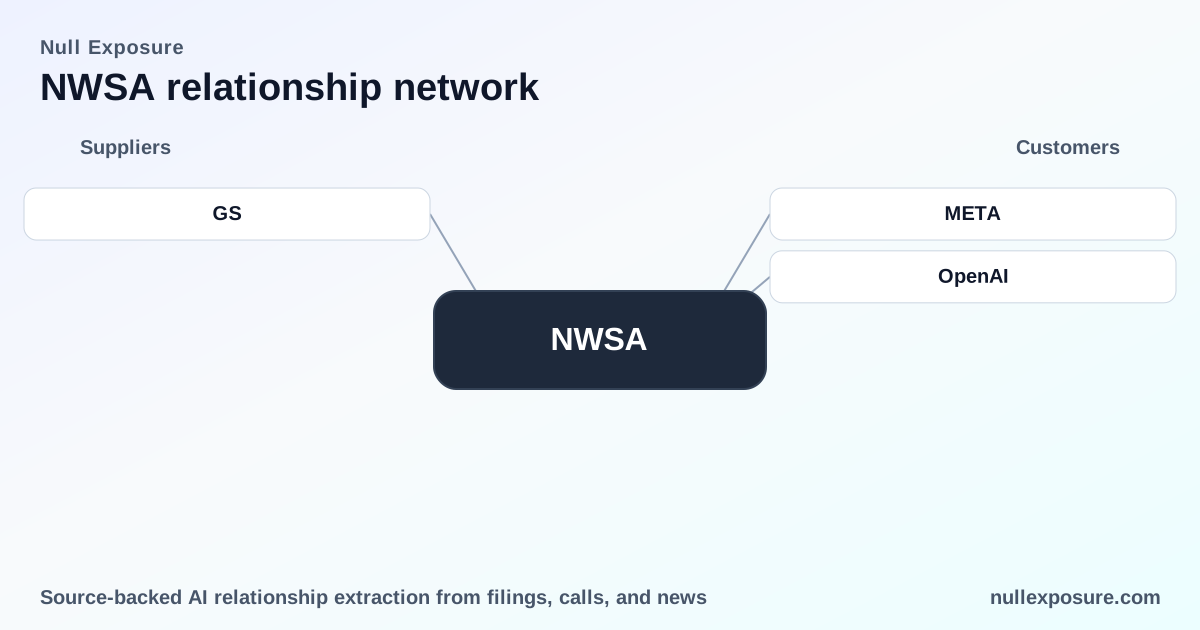
Meta Platforms, Inc. — large AI content licensing deal (entry 1)
Meta has signed an AI content licensing agreement with News Corp that will pay up to $50 million per year to license News Corp journalism for generative AI and related products. This represents a material, commercial licensing relationship with Big Tech that converts editorial inventory into direct licensing revenue. (SahmCapital report, March 4, 2026)
Meta Platforms, Inc. — same deal recorded again (entry 2)
A second indexed reference confirms the same Meta licensing arrangement, reiterating that Meta is a paying platform partner contributing steady annual licensing revenue under the new AI deal. The duplication in sources underscores media interest and coverage intensity around large tech licensing as an emerging revenue stream. (SahmCapital report, March 4, 2026)
OpenAI — previously negotiated multi‑year AI agreement
News Corp has an existing AI licensing deal with OpenAI that, according to reporting, could be worth more than $250 million over five years, reflecting how high‑value platforms are willing to pay for reliable journalistic content to fuel AI models. This contract illustrates the strategic premium attached to trusted news sources as training and grounding data for large language models. (SahmCapital noting reporting from The Wall Street Journal, March 2026)
Interpreting constraints and what they tell investors about risk and optionality
Company disclosures and the relationship evidence combined paint a clear commercial profile:
- Licensing and subscription duality: Filings cite both licensing (book and editorial IP) and subscription revenue lines (professional information products and real‑estate listing subscriptions), indicating a mixed revenue model that stabilizes cash flow while enabling episodic upside from large licensing deals.
- Short‑term contract handling: News Corp excludes sub‑one‑year contracts from certain revenue allocations under ASC 606, indicating some customer relationships are operationally short-term and recognized differently; this dampens headline volatility but requires attention to revenue recognition when large, short-duration deals are signed.
- Diverse counterparty mix: The company serves individual subscribers and large enterprise customers, from consumer readers to corporate platforms, reducing single-segment exposure but increasing product complexity and sales channel diversity.
- Global reach with regional concentrations: Fiscal disclosures show meaningful revenue from the U.S., Australia and the U.K., which implies both geographic diversification and exposure to region‑specific advertising and subscription cycles.
- No single-customer dependence: The filing explicitly states there is no material reliance on any single customer, a critical stability signal that reduces downside risk from the loss of one large partner.
What these deals mean for valuation and downside protection
The emergence of multi‑million dollar licensing contracts with Meta and OpenAI is a direct accelerant to News Corp’s content monetization profile. For investors:
- Upside: These technology platform deals convert content into large, lump‑sum or recurring licensing revenue that can materially lift margins relative to advertising revenues.
- Stability: The subscription businesses (Dow Jones, digital real estate) provide recurring cash flow that cushions quarterly swings from licensing timing.
- Key risks: Licensing revenue is concentrated in a narrow set of large tech partners and can be transactional in cadence; regulatory scrutiny and AI provenance debates introduce reputational and legal risk around content use.
Bottom line: News Corp's current relationship set shows a strategic pivot to monetizing editorial assets through high‑value platform licensing while maintaining a steady subscription backbone—an attractive combination for investors seeking growth with defensive revenue streams.
Explore more relationship-level intelligence and sector context at Null Exposure: https://nullexposure.com/
Practical next steps for investors and operators
- For investors: monitor renewal terms, revenue recognition language and any exclusivity clauses in platform deals, since these will determine persistence of the licensing revenue stream.
- For operators: prioritize contract governance and content usage controls to protect IP value and limit regulatory exposure as AI integrations expand.
Conclusion: News Corp is actively converting its editorial and publishing IP into commercial licensing revenue while preserving subscription and advertising foundations—this hybrid model supports upside growth from Big Tech deals with reasonable downside protection from diversified, repeatable revenue lines.