Nexalin Technology (NXL): Customer Relationships and Commercial Signals for Investors
Nexalin Technology commercializes non-invasive neurostimulation hardware and recurring service/licensing streams that monetize through device sales/leases, monthly licensing fees, and consumable sales (electrodes and cables). For investors, the company’s revenue profile is concentrated, clinically anchored, and driven as much by regulatory access and study validation as by unit economics—hardware sales seed recurring license income and consumables that together define the commercial thesis. Learn more on the company site: https://nullexposure.com/.
How Nexalin makes money and how customers fit into the model
Nexalin sells and leases its Generation 1 and Gen-2 transcranial electrical stimulation devices and collects recurring payments tied to those devices. Company disclosures describe one-year license agreements with automatic renewal and monthly billing, and separate recurring revenue from electrodes and patient cables, signaling a hybrid hardware-plus-subscription model. The firm reports device sales alongside license-derived revenue, indicating that customer clinics and institutional partners are both product purchasers and ongoing revenue sources through service and consumable purchases.
This commercial posture creates two economically important dynamics for investors:
- Upfront capital intensity and recurring friction: device sales produce immediate bookings but the long-term value depends on license renewals and consumable attachment rates.
- Regulatory and geographic gating: market access approvals determine where devices can be used clinically and therefore where recurring revenue can scale.
What the public record shows about specific customer relationships
Below are the relationships identified in coverage and filings. Each entry is a concise investor-facing summary with source context.
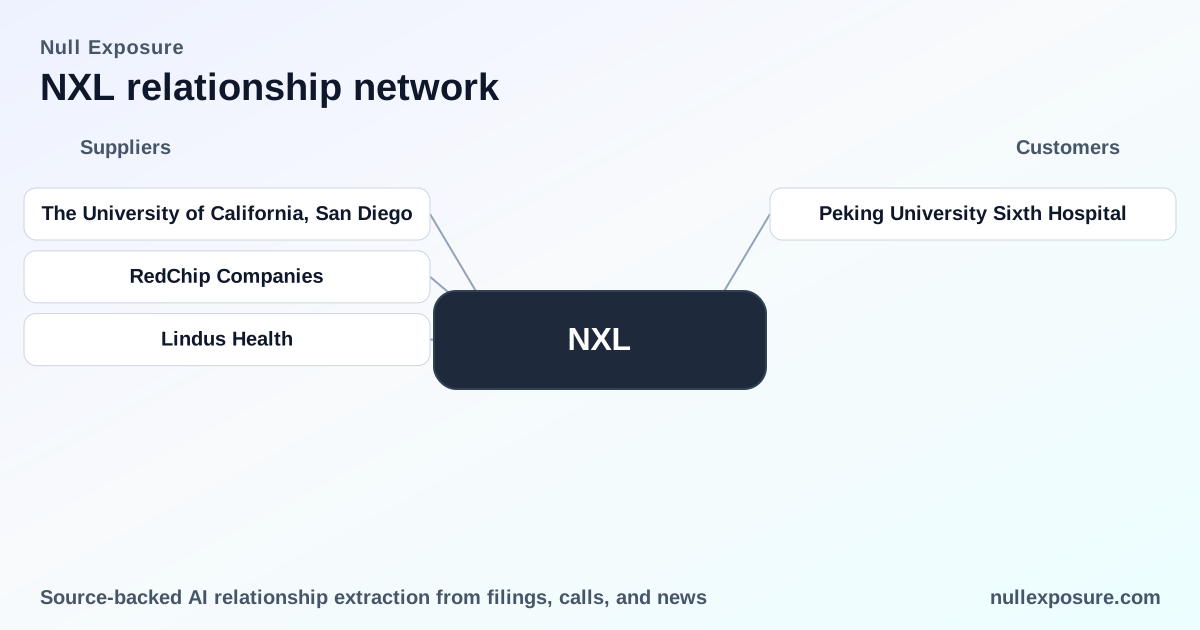
Peking University Sixth Hospital — peer-reviewed clinical trial using Nexalin equipment (GlobeNewswire / Molecular Psychiatry, Dec 2025)
Researchers at Peking University Sixth Hospital published a double-blind randomized sham-controlled trial in Molecular Psychiatry that used Nexalin-manufactured neurostimulation equipment to evaluate clinical outcomes and MEG imaging in adults with ADHD. The public release highlights equipment use and imaging endpoints, reinforcing academic validation of Nexalin hardware in a clinical research setting. Source: GlobeNewswire summary of the Molecular Psychiatry paper (published online Dec 2025).
Article: https://www.globenewswire.com/news-release/2026/01/14/3218706/0/en/published-peer-reviewed-study-demonstrates-nexalin-s-difs-neurostimulation-improves-attention-and-normalizes-brain-activity-in-patients-with-adhd.html
Peking University Sixth Hospital — duplicate publication notice (GlobeNewswire / Molecular Psychiatry, Dec 2025)
A second GlobeNewswire posting reproduces the same Molecular Psychiatry trial description indicating broad press dissemination of the peer-reviewed findings; both postings document the same clinical collaboration and device utilization in the study. The duplication underscores media pickup of the trial and contributes to clinical credibility in APAC markets. Source: GlobeNewswire reposting of the Molecular Psychiatry paper (published online Dec 2025).
Article: https://www.globenewswire.com/news-release/2026/01/14/3218706/0/en/Published-Peer-Reviewed-Study-Demonstrates-Nexalin-s-DIFS-Neurostimulation-Improves-Attention-and-Normalizes-Brain-Activity-in-Patients-with-ADHD.html
Commercial constraints and operating signals investors should weigh
Company disclosures and public reporting collectively paint a picture of a small-cap medical device company with specific commercial characteristics:
-
Contracting posture — licensing and subscription mix. Company filings describe one-year licensing agreements that auto-renew when terms are met and monthly billing for license fees, together with continued revenue from devices sold or leased prior to regulatory changes. This indicates recurring billing cadence and reliance on contract renewals for revenue stability.
-
Revenue concentration and spend scale. Geographic revenue notes show modest sales in China (for example, roughly $85k reported in 2024), implying current customer spend is sub‑$100k scale per region and that the business is in an early commercialization phase rather than broad commercial scale.
-
Geographic expansion is regulatory-driven. Filings document approvals and shipments tied to specific jurisdictions—Brazil regulatory approval for Gen-2 and conditional approval and shipments to the Sultanate of Oman—pointing to a roll‑out strategy that depends on discrete approvals to unlock clinic-level deployments across LATAM and EMEA.
-
Product focus and commercial maturity. The company emphasizes hardware (device sales and related consumables) as a core revenue stream, with licensing layered on top; this produces hardware-led commercialization that requires clinical adoption cycles to convert into material recurring revenue.
-
Buyer role in distribution. Nexalin sells into distribution channels in China and works with end users (clinics) globally, indicating a mixed direct-and-distributor go-to-market that influences gross margins and collection timing.
These are company-level signals drawn from public disclosures and reporting and therefore represent structural characteristics of Nexalin’s commercial model rather than attribution to any single customer.
What the relationship evidence implies for investors
-
Clinical validation in APAC strengthens the market-access case. Peer-reviewed use of Nexalin equipment at Peking University Sixth Hospital supports clinical credibility that can shorten sales cycles for academic and specialty clinics in Asia. Source: Molecular Psychiatry trial coverage via GlobeNewswire (Dec 2025).
-
Regulatory openings create step-function revenue opportunities. Brazil and Oman approvals cited in filings are the gating events that will determine where device deployments translate into recurring license and consumable revenues; approvals convert regulatory risk into addressable market access.
-
Small current revenue base and high volatility. Financials show low trailing revenue (approximately $301k TTM) and negative EBITDA, with elevated beta and low institutional ownership—factors that make customer wins important for valuation re-rating but also generate execution risk.
-
Operating leverage tied to consumable attach rates and license renewals. Given the business model, the key value inflection is not a single device sale but the follow-on consumable and recurring license economics per clinical site.
For a direct update on the company’s commercialization milestones and customer disclosures, visit the company portal: https://nullexposure.com/.
Risks, catalysts, and monitoring checklist for investors
- Risks: narrow revenue base, dependence on regulatory approvals for expansion, and limited institutional investor oversight can magnify volatility around customer announcements and trial outcomes.
- Catalysts: additional peer-reviewed trials, expanded regulatory clearances, and broader distributor signings in LATAM and EMEA that move the business from pilot deployments to networked clinic adoption.
- Monitor: trial publications, renewal rates on one‑year licenses, consumable shipment trends, and the cadence of shipments tied to regulatory milestones.
Bottom line
Nexalin operates a hardware-first commercial model with recurring licensing and consumable revenue layered on top; customer relationships documented in public reports are primarily research and clinic-focused, with clinical validation in APAC (notably the Peking University Sixth Hospital trial) and regulatory progress in LATAM and EMEA serving as the principal levers for revenue scale. Investors should track license renewal metrics, consumable attachment rates, and the pace of approvals and shipments as the principal drivers of value realization.