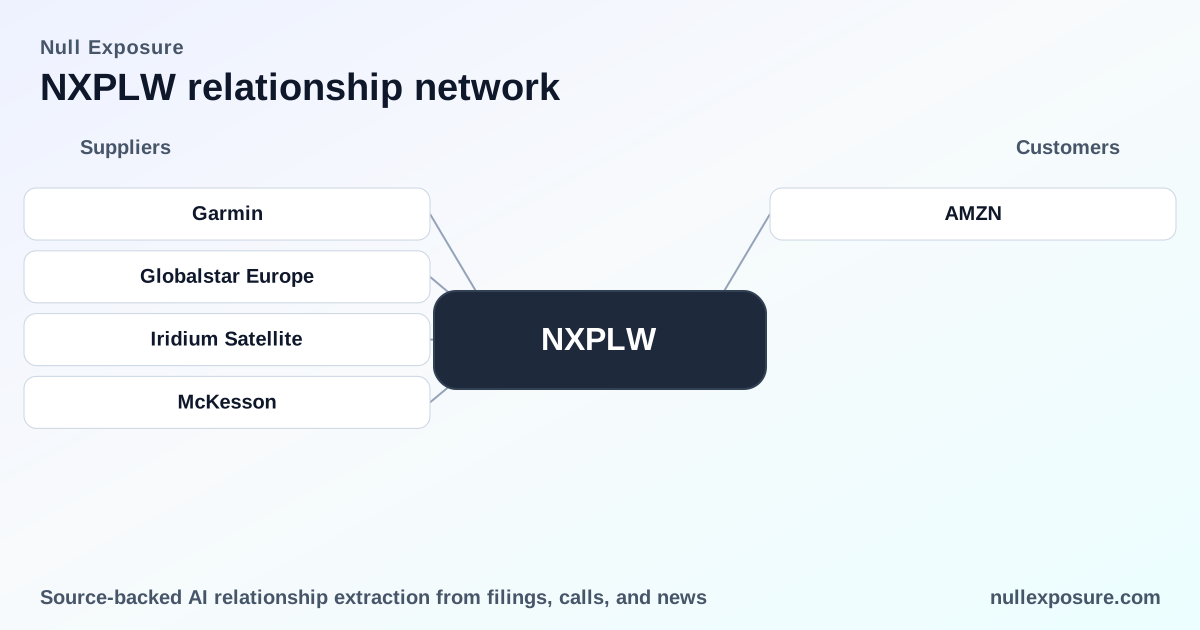
NextPlat (NXPLW) — Customer Relationships, Concentration, and Strategic Implications
NextPlat operates a hybrid digital commerce and healthcare services platform that monetizes through marketplace sales, equipment sales, recurring subscription services, and healthcare reimbursements. The company drives top-line volume via large e‑commerce channels while extracting higher-margin recurring revenue from subscription services and managed healthcare programs, and it recognizes a material component of revenue through prescription and PBM reimbursements. For investor due diligence and operational analysis, see more at https://nullexposure.com/.
Executive thesis: platform reach versus concentrated flows
NextPlat runs a global e‑commerce network combined with healthcare and satellite communications operations. Revenue is generated from (1) marketplace sales through third‑party channels, (2) the sale of hardware and satellite equipment, (3) a suite of healthcare services including pharmacy and TPA operations, and (4) subscription-based offerings that convert transactional customers into recurring revenue streams. The business model benefits from diversified commercial channels but is exposed to concentration risk from dominant marketplaces and key healthcare payors.
What the filings explicitly disclose about Amazon
Amazon (entry 1)
NextPlat discloses that its Amazon online marketplaces represented approximately 32.8% of total sales in 2024, down from 51.6% in 2023, and the company states those marketplaces will continue to represent a significant portion of sales going forward. This is reported in the company’s Form 10‑K for the year ended December 31, 2024.
Source: NextPlat Form 10‑K, FY2024 (nxplw-2024-12-31).
AMZN (entry 2)
A second results entry references the same disclosure: AMZN marketplaces drove roughly 32.8% of total sales in 2024 and 51.6% in 2023, underscoring the company’s dependence on major e‑commerce platforms for volume and distribution. This duplicate citation comes from the company’s FY2024 Form 10‑K.
Source: NextPlat Form 10‑K, FY2024 (nxplw-2024-12-31).
How these customer facts translate into commercial constraints
The 10‑K and the extracted constraint signals together paint a clear operating profile and a set of investment-relevant constraints:
-
Contracting posture and revenue model: The company sells both one‑off hardware and ongoing services. The filing states that many products require subscription-based services, which increases the predictability of airtime and service revenue and moves a portion of the business toward recurring monetization.
-
Counterparty mix and criticality: NextPlat serves individual consumers, enterprises and government payors. The 10‑K explicitly identifies Medicare Part D and the State of Florida Medicaid program as major customers, which signals exposure to public payor reimbursement cycles and regulatory risk. At the same time, Amazon marketplace dependence creates concentrated channel risk.
-
Geographic distribution: The company reports material sales across Europe (49.4%), North America (32.8%), Asia & Pacific (12.5%), and a small share in South America (0.3%), which reflects a global footprint for e‑commerce operations and a multi‑jurisdictional revenue base.
-
Materiality nuances: The filing contains two contrasting materiality signals: one note characterizes the e‑commerce customer base as diverse with no single customer representing more than 3.0% of gross e‑commerce sales, while other disclosures show Amazon marketplace accounting for 32.8% of total sales in 2024 and healthcare operations producing concentrated reimbursements from major PBMs (29%, 23%, 20%). These are company-level disclosures that require active reconciliation by investors.
-
Relationship roles and commercial mix: NextPlat functions as both a seller of hardware (satellite equipment and related devices) and a service provider (pharmacy dispensing agent for 340B programs, TPA and telepharmacy operations). The company explicitly recognizes net fees for 340B dispensing transactions, indicating an agency model with lower gross revenue but recurring fee capture.
-
Stage and maturity: Government payors such as Medicare Part D and Florida Medicaid are identified as active customers, while subscription offerings and international marketplace sales point to a mix of established revenue streams and growth-oriented recurring services.
For deeper customer-level intelligence, visit https://nullexposure.com/.
Investment implications and operational risks
-
Concentration risk is real and measurable. Amazon marketplaces represented a large share of sales in recent years (51.6% in 2023; 32.8% in 2024). That dynamic creates both revenue volatility and channel negotiating risk as the company is dependent on third‑party marketplaces for distribution and traffic.
-
Healthcare reimbursement concentration creates margin leverage. Progressive Care reimbursements are split across a few PBMs that together represent material portions of healthcare revenue, implying pricing pressure and reimbursement timing are key drivers of near‑term cash flow.
-
Global footprint reduces single‑country sovereignty risk but increases operational complexity. Substantial revenue from Europe and North America diversifies market exposure but raises compliance and logistics costs.
-
Business model mix supports margin improvement if subscriptions scale. The presence of subscription-based services and agency fee recognition in 340B pharmacy operations offers a pathway from lower-margin transactional sales toward higher-margin recurring revenue. Execution on subscriber growth will determine the pace of margin recovery; current consolidated metrics show negative operating margins and negative EBITDA (EBITDA reported as -$8,108,000 according to the most recent trailing data).
Key takeaways for operators and investors
- Monitor Amazon concentration as a leading indicator of revenue volatility. Changes in marketplace policies, fees, or search visibility will flow directly into top-line performance.
- Track PBM and government payor dealings closely — reimbursement schedules and contract renewals are material to cash receipts and profitability.
- Subscription growth is the strategic lever to stabilize gross margins; management commentary and KPIs on subscriber acquisition and retention should be prioritized in quarterly updates.
- Regulatory and international compliance will be a continuing cost center given the company’s multi‑region footprint and healthcare operations.
Bottom line
NextPlat is a hybrid commerce-healthcare operator with a clear path to recurring revenue but tangible concentration and payor risks that require active management. Investors and operators should prioritize monitoring of Amazon marketplace exposure, PBM reimbursement concentration, and subscription adoption dynamics. For an ongoing, customer‑focused monitoring service and deeper relationship mappings, visit https://nullexposure.com/.