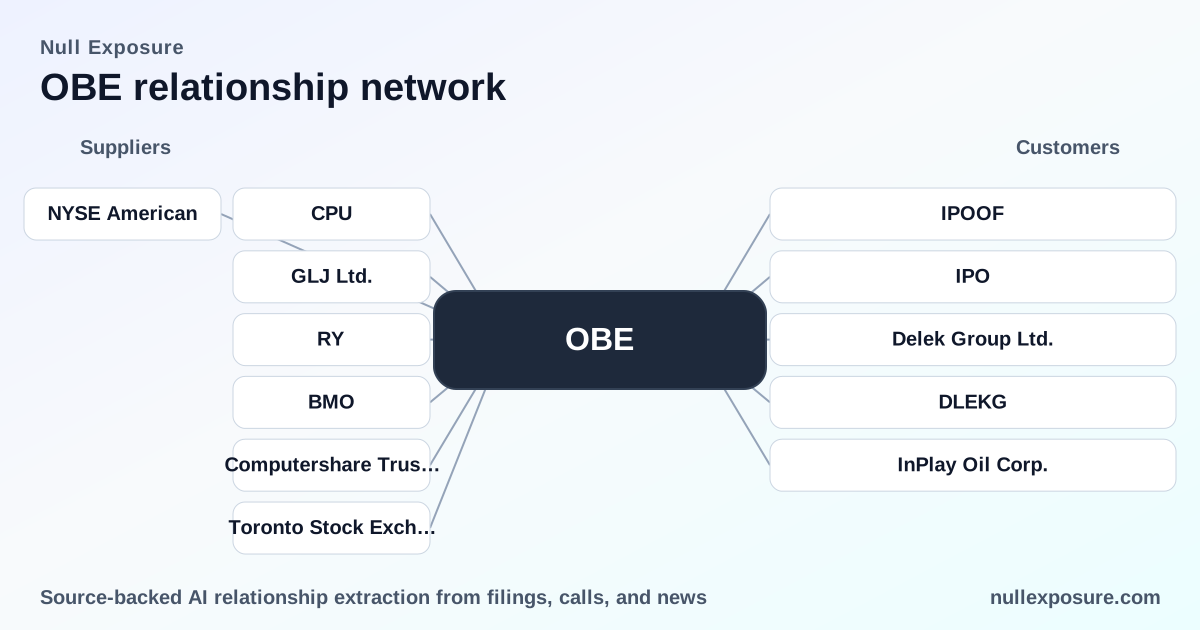
Obsidian Energy (OBE): How the Pembina divestiture reshapes customer and equity relationships
Thesis — Obsidian Energy operates as a Canadian upstream oil & gas E&P that monetizes production through asset sales and equity stakes while retaining non-operated interests; recent activity shows a deliberate monetization of operated Pembina (Cardium) assets and an exit from an equity position in the buyer, generating cash and altering its counterparty exposure. Investors should value Obsidian’s cash conversion from asset disposals and the reduced operating scope, while tracking contingent obligations tied to the sale. For more structured signals and relationship mapping, visit https://nullexposure.com/.
What happened, in plain terms
Obsidian sold its operated Pembina assets to InPlay Oil Corp. in 2025 and received a mix of cash, equity and asset considerations, then later monetized its equity stake in InPlay to Delek Group Ltd. That sequence provided roughly C$320M of proceeds for the asset sale and about C$91.4M for the equity disposition, materially improving liquidity and concentrating Obsidian’s operational footprint away from Pembina.
Transaction map: every relationship in the record
Below I list each relationship entry from the record. Each item is a discrete mention from public reporting and includes a one- to two-sentence summary plus the source citation.
1) IPOOF — Newsfile press release (Mar 10, 2026)
Obsidian noted that its estimated AER closure spending for 2026 remains subject to the purchase and sale terms governing the 2025 disposition of the Pembina assets to InPlay Oil Corp. Source: Obsidian press release on Newsfile, March 10, 2026.
2) IPO — EnergyNow (Feb 2025)
Obsidian entered a definitive asset purchase agreement with Calgary-based InPlay Oil Corp. under which Obsidian divested operated Pembina assets while retaining non-operated holdings in PCU#11, receiving approximately $320 million in three components subject to closing adjustments. Source: EnergyNow coverage of the asset sale announcement, February 2025.
3) InPlay Oil Corp. — EnergyNow (Feb 2025)
EnergyNow reported the same asset sale: InPlay agreed to acquire Pembina operated assets from Obsidian, with Obsidian keeping non-operated Cardium interests in a specific unit. Source: EnergyNow announcement, February 2025.
4) Delek Group Ltd. — SimplyWall (May 2026)
SimplyWall noted Delek completed acquisition of a 32.7% stake in InPlay that Obsidian had previously held, indicating Obsidian’s equity position in InPlay was transferred to Delek. Source: SimplyWall summary, May 2026.
5) InPlay Oil Corp. — SimplyWall (May 2026)
SimplyWall recorded that InPlay completed the acquisition of Pembina assets from Obsidian in April 2025, confirming the operational change in Pembina ownership. Source: SimplyWall, May 2026.
6) InPlay Oil — Torys law firm announcement (Feb 2025)
Torys advised that it acted as counsel to InPlay in its C$301 million acquisition of Cardium light oil assets in Pembina from Obsidian and affiliates, corroborating the legal and deal structure around the transaction. Source: Torys client work announcement, February 2025.
7) IPO — Torys (Feb 2025)
The Torys notice also lists the buyer as InPlay (ticker IPO) in the work summary for the same C$301M acquisition, reinforcing the transaction terms and counsel engagement. Source: Torys firm statement, February 2025.
8) InPlay Oil Corp — TradingView / Reuters (Jan 22, 2026)
A Reuters-distributed update repeated Obsidian’s note that AER closure obligations for 2026 could change per the purchase and sale agreement tied to the Pembina disposition to InPlay. Source: Reuters item carried on TradingView, January 22, 2026.
9) Delek Group Ltd. — Newsfile (Mar 2026)
Newsfile reported Obsidian completed the disposition of 9,139,784 InPlay shares — about 32.70% of InPlay — to Delek Group Ltd. for C$10 per share, for aggregate proceeds of approximately C$91.4M, subject to adjustments. Source: Newsfile corporate release, March 2026.
10) IPOOF — TradingView / Reuters (Jan 22, 2026)
TradingView’s Reuters feed repeated that Obsidian’s AER closure spending estimate remains subject to change under the Pembina sale agreement with InPlay. Source: Reuters coverage via TradingView, January 22, 2026.
11) InPlay Oil Corp — Newsfile (Mar 10, 2026)
Obsidian reiterated that its estimated 2026 AER closure obligation is tied to the terms of the Pembina asset disposition to InPlay; the notice appears in Obsidian’s guidance/operational update. Source: Obsidian press release on Newsfile, March 10, 2026.
12) Delek Group Ltd. — SimplyWall (May 2026)
SimplyWall’s entry confirms Delek’s purchase of the InPlay stake that Obsidian had held, an additional corroboration of the equity monetization. Source: SimplyWall, May 2026.
13) InPlay Oil Corp. — SimplyWall (May 2026)
SimplyWall’s timeline shows InPlay closed on the Pembina assets from Obsidian in April 2025, a direct confirmation of closing timing. Source: SimplyWall, May 2026.
14) InPlay Oil — Torys (Mar 10, 2026)
Torys’ client work notice is duplicated in the record; it highlights the same counsel role for the InPlay acquisition of Pembina assets. Source: Torys firm announcement, February 2025 (reported in March 2026 index).
15) IPO — Torys (Mar 10, 2026)
Torys documentation repeats the buyer designation (IPO) in its summary of the C$301M acquisition from Obsidian and affiliates. Source: Torys statement, February 2025.
16) Delek Group Ltd. — Boereport (Aug 7, 2025 / record entry 2026)
Boereport reported that Delek closed the acquisition of all 9,139,784 InPlay shares previously held by Obsidian, confirming the transfer of the equity stake. Source: Boereport article, August 7, 2025.
17) DLEKG — Boereport (Aug 7, 2025)
Boereport also listed Delek’s ticker (DLEKG) in coverage of the closing of the InPlay share purchase from Obsidian, mirroring other press. Source: Boereport, August 7, 2025.
18) InPlay Oil Corp. — BOEReport / company results (Feb 19, 2026)
Obsidian’s FY2025 results mention that in April 2025 the company closed the disposition of its operated Pembina (Cardium) assets to InPlay, a formal disclosure in results commentary. Source: Boereport coverage of Obsidian’s FY2025 results, February 19, 2026.
19) Delek Group Ltd. — OilPrice (Mar 2026)
OilPrice reported Obsidian’s definitive agreement to sell its InPlay shareholding to Delek for C$91.4M (~$66M USD), noting proceeds monetized equity from the Pembina sale. Source: OilPrice company news, March 2026.
20) InPlay Oil Corp. — Newsfile (Feb 2026 / FY2026)
In Obsidian’s fourth-quarter and full-year 2025 results release on Newsfile, the company states the Pembina Disposition closed in April 2025 to InPlay, reaffirming corporate reporting of the transaction. Source: Newsfile release, February/March 2026.
21) IPO — Newsfile (Feb 2026 / FY2026)
The same Newsfile release also references the Pembina disposition to InPlay (IPO) in Obsidian’s FY2025/FY2026 results commentary. Source: Newsfile corporate release, early 2026.
22) InPlay Oil Corp — Newsfile operational update (May 3, 2026)
An Obsidian operational update on Newsfile reiterated that 2026 AER closure obligations are governed by the purchase and sale terms with InPlay tied to the Pembina disposition. Source: Obsidian operational update on Newsfile, May 3, 2026.
Company-level constraints and operating model signals
There are no explicit constraint excerpts naming a counterparty beyond the sale mechanics; as a company-level signal, Obsidian demonstrates a transactional, monetization-first contracting posture for non-core assets. The pattern shows moderate concentration reduction (exiting Pembina operations), high criticality of sale terms for closure liabilities (AER obligations flow through sale documents), and maturing counterparty relationships—Obsidian monetized both the assets and the equity stake it received, signaling a strategic shift to a smaller operational footprint and stronger liquidity position.
Investment implications and risk points
- Balance sheet improvement: The Pembina sale plus sale of InPlay shares generated substantial cash inflows (C$320M and ~C$91.4M), reducing liquidity risk and funding optionality.
- Residual contingent liability: Obsidian’s AER closure spending estimate for 2026 is contract-dependent, so investors must monitor purchase-and-sale adjustment mechanics that can alter reported closure obligations. See Obsidian’s March 2026 operational update on Newsfile for the company statement.
- Concentration and focus: By exiting operated Pembina assets, Obsidian reduces operational concentration and counterparty complexity while retaining non-operated minority exposures (PCU#11).
- Monetization discipline: The subsequent sale of InPlay shares to Delek shows a willingness to realize equity gains rather than retain minority strategic stakes.
If you want a consolidated visualization of these relationships and their financial impact, NullExposure maintains structured exposure reports that map counterparty flows and contractual clauses — learn more at https://nullexposure.com/.
Bottom line
Obsidian’s asset sale and equity disposition sequence is a deliberate reallocation of capital and operating focus: cash generation and liability transfer are the core objectives, with deal terms that retain some contingent closure exposure. Investors should treat the Pembina disposition and the InPlay share sale as a net de-risking of Obsidian’s asset base but must continue to monitor contractual AER adjustments that can affect near-term obligations.