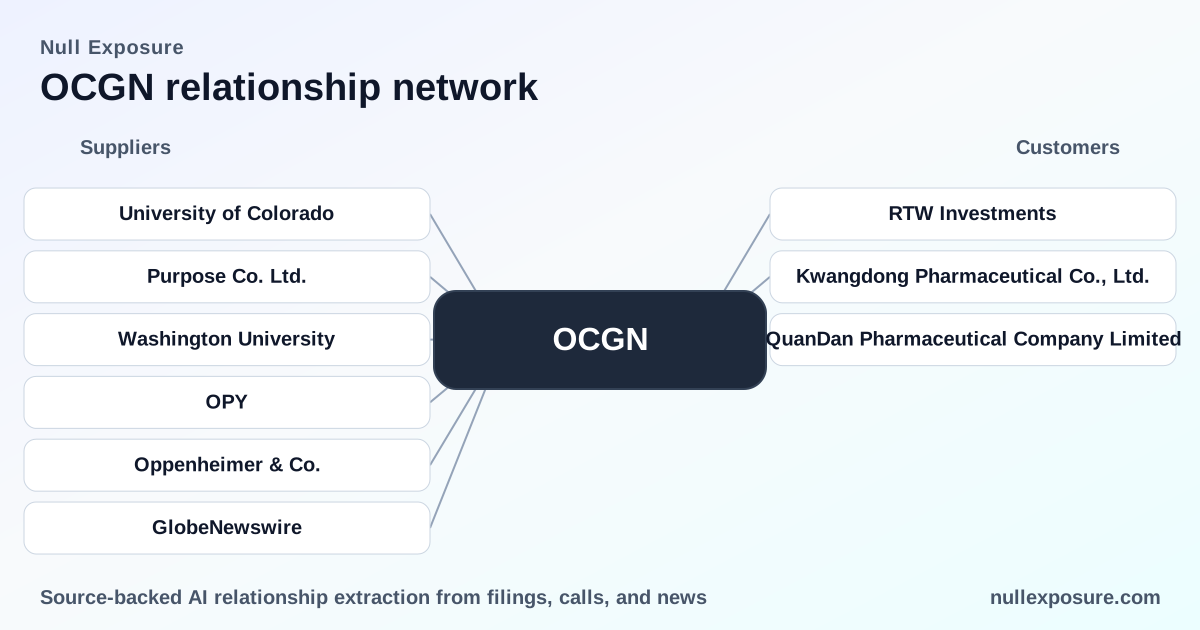
Ocugen (OCGN) — licensing-driven clinical-stage play with capital-market support
Ocugen is a clinical-stage biotechnology company developing gene therapies for inherited retinal diseases and age-related blindness. The company monetizes through regional licensing deals (upfronts, milestones and royalties) and episodic capital raises that fund R&D while regional partners bear local development and commercialization risk. For investors, the relevant trend is clear: near-term cash flow will come from licensing economics and markets will price clinical and financing milestones ahead of any product revenue.
Explore more research at NullExposure.
Business in plain terms: what Ocugen sells and how it gets paid
Ocugen advances ocular gene-therapy programs (notably OCU400) through clinical development and transfers regional commercialization rights to pharmaceutical partners in exchange for upfront payments, development milestones, and future royalties. The company supplements that revenue trajectory with equity financings to maintain operations while programs progress through clinical and regulatory gates. Financials show Ocugen is a pre-commercial, cash-consuming research enterprise: trailing twelve‑month revenue of $4.4 million against ongoing R&D and operating losses and a market capitalization in the mid‑hundreds of millions (USD).
How partnerships and financings fit together
Ocugen’s model is a classic hybrid for clinical-stage biotechs: de-risk technology through regional licensing, crystallize near-term cash via upfronts, and preserve global rights for larger deals or future commercialization. Licensing preserves upside (royalties) while shifting regional development costs and execution risk to partners. When licensing cadence is uneven, capital markets funding steps in to bridge cash needs and keep trials and preclinical programs moving.
Customer and partner relationships — the specifics investors need
-
RTW Investments — RTW led a $22.5 million underwritten registered direct offering of Ocugen common stock that closed in January 2026, providing capital for general corporate purposes and program advancement. The financing was announced via a GlobeNewswire press release dated January 23, 2026 and was also reported in investor press outlets describing Oppenheimer as the book‑runner and the company’s stated uses of proceeds in early 2026. (GlobeNewswire, Jan 23, 2026; Globe and Mail press release coverage, Jan 2026)
-
Kwangdong Pharmaceutical Co., Ltd. — Ocugen executed a licensing agreement granting Kwangdong exclusive Korean rights to OCU400 that includes upfront fees, near‑term development milestone payments, and royalties, positioning the company to generate non‑dilutive revenue while retaining rights elsewhere. Ocugen described this deal as a strategic step to affirm a regional partnership approach in its March 4, 2026 corporate update and 2025 results release. (Ocugen business update, Mar 4, 2026)
-
QuanDan Pharmaceutical Company Limited — Ocugen executed a regional licensing agreement for the exclusive Korean rights to OCU400 in 2025; management cited this agreement during the Q4 2025 earnings call transcript as the company’s first regional licensing execution for that program. The mention underscores management’s strategy to pursue region‑by‑region commercialization partners. (Q4 2025 earnings call transcript, published via InsiderMonkey, 2026)
What these relationships collectively signal about Ocugen’s operating posture
-
Contracting posture: Ocugen uses targeted regional licenses to commercialize programs incrementally, which conserves cash and allows partners to take on regulatory and market execution locally. This contractual strategy is intentional and recurring rather than ad hoc.
-
Concentration and diversification: The company pursues multiple small-to-mid regional partners instead of a single global partner, creating a diversified pipeline of potential upfronts and milestones but also increasing dependency on multiple counterparties for regional market success.
-
Criticality: Licensing revenue is material to near-term liquidity, while capital raises remain essential to fund corporate operations and sustain clinical programs between milestone events.
-
Maturity of revenue streams: Revenue is early-stage and lumpy—derived from licensing events and financings rather than product sales—so investors should treat near-term cash flow as transactional rather than recurring.
Investor implications — what to watch next
-
Catalysts: progression of OCU400 through clinical milestones, additional regional licensing announcements, and successful execution of existing partner development plans that trigger milestone payments or royalties. Each announced license or milestone materially changes near-term cash flow expectations.
-
Risks: continued reliance on equity financing increases dilution risk; execution risk resides with multiple regional partners; and the core clinical programs remain subject to development and regulatory uncertainty that will influence partner payments and ultimate royalty streams.
-
Valuation sensitivity: with revenue tied to discrete licensing events, market sentiment will drive valuation more than steady operating cash flow until commercialization is proven.
Bottom line and where to go for more
Ocugen operates as a licensing-first clinical biotech: it monetizes innovation through regional deals and supplements funding with equity placements. The January 2026 financing led by RTW Investments and the regional licensing deals in Korea (Kwangdong and QuanDan) illustrate the two levers management uses to fund development and realize value ahead of product approvals. For investors, these dynamics create a binary risk/catalyst profile—significant upside if clinical and partner milestones are met, and clear dilution and execution risks if they are not.
For ongoing monitoring and deeper coverage of partner and financing events, visit NullExposure for curated updates and relationship‑focused intelligence.