Orion Energy Systems (OESX) — Customer Map and Commercial Implications
Orion Energy Systems operates as a vertically integrated energy solutions provider: it manufactures LED lighting, sells and installs EV charging hardware through its Voltrek division, and supports those products with installation, maintenance and recurring software subscriptions. The company monetizes through product sales, turnkey installations and recurring software/service contracts, with meaningful revenue concentration and a North American customer base that tilts heavily toward government and large enterprise buyers. For a concise view of customer signals and how they translate into investment risk and operational priorities, read on. If you want ongoing coverage of relationship intelligence for small-cap energy names, visit https://nullexposure.com/.
What the customer roster tells investors about the business model
Orion’s commercial structure blends one-time capital sales with recurring service economics. Key operating characteristics inferred from public disclosures and company commentary:
- Contracting posture — blended product + subscription: Orion sells hardware (lighting fixtures, EV chargers), executes turnkey installations and collects recurring software subscriptions and renewals through its Voltrek EV offering, creating a mixed revenue profile. Company filings note the Voltrek acquisition and its software subscription component in Q3 FY2023.
- Concentration risk — single-customer materiality: In FY2025 one customer accounted for 24.3% of revenue, which signals high revenue concentration and elevated sensitivity to order timing or contract renewal dynamics.
- Counterparty mix — government-first, large enterprise exposure: Orion generates most revenue from governmental, commercial and industrial customers; this gives stability through multi-year projects but also places the company inside public procurement cycles and budget constraints.
- Geography and scale — predominantly North America: Virtually all sales occur in North America, limiting currency and market diversification but concentrating execution risk in one regulatory and economic region.
- Product-service mix and maturity: The company functions as manufacturer, seller and service provider, combining hardware (lighting, chargers), services (engineering, installation, maintenance) and software (EV charge management subscriptions). This cross-segment model accelerates total contract value per customer but requires multi-disciplinary execution.
Together these signals create a profile of capital-project-driven revenue with recurring upside, significant single-customer concentration, and customer stickiness anchored by public-sector contracts.
Relationship snapshots — every customer mention in the available coverage
-
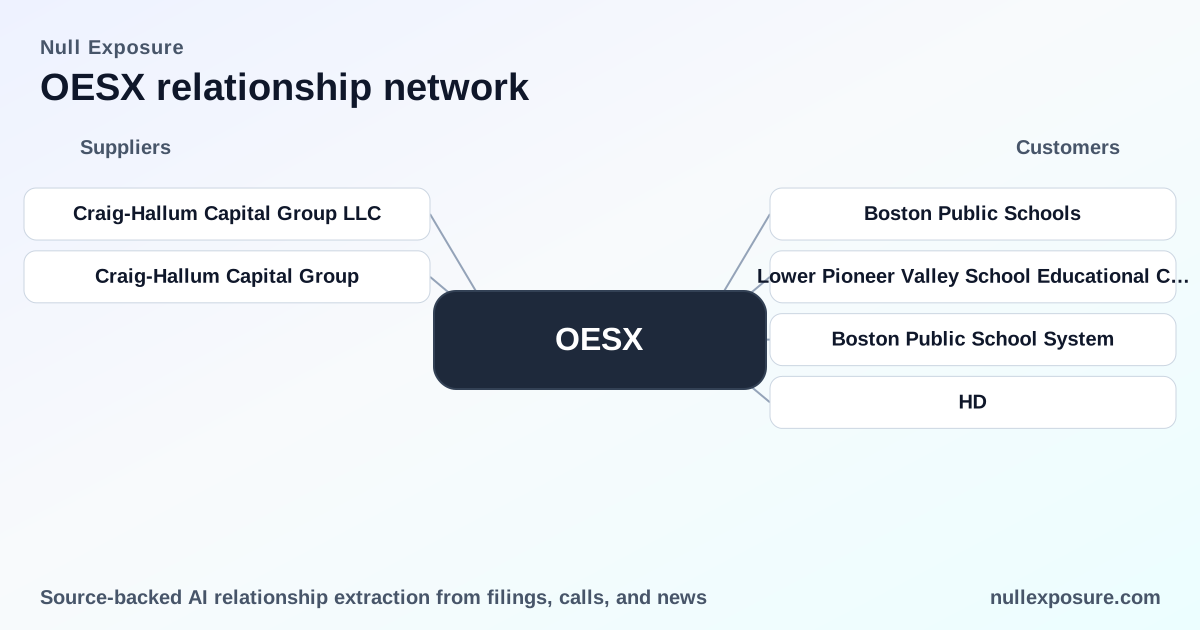
Lower Pioneer Valley School Educational Cooperative — Orion installed 13 EV charging stations serving Greater Springfield, MA, illustrating Voltrek’s role in smaller regional public-education projects. Source: GlobeNewswire press release announcing the Boston Public Schools project (Feb 3, 2026) and echoed by QuiverQuant reporting in March 2026.
-
Boston Public Schools — Orion’s Voltrek division is executing a $4 million project to install 105 DC fast chargers and related infrastructure at the Freeport Bus Yard, described by the company as one of its largest customers and a high-profile school district customer. Source: GlobeNewswire press release (Feb 3, 2026).
-
Boston Public School System — Orion’s Q3 FY2026 commentary reiterated the $4 million EV installation for the Boston Public School System, highlighting the project on the company’s earnings call as a recent large installation for its Voltrek business. Source: Q3 FY2026 earnings call transcript reported on InsiderMonkey (March 2026).
-
Home Depot (HD) — Management discussed ongoing and potentially expanding work with Home Depot, referencing a contract pipeline in the $14–$15 million range that has room to grow, indicating Orion’s engagement with national retail accounts and large national-install customers. Source: Q3 FY2026 earnings call transcript reported on InsiderMonkey (March 2026).
-
HD (ticker reference) — The same earnings call excerpt labels Home Depot by ticker (HD) when discussing the sizeable multi-million dollar opportunity and expansion potential, underscoring Orion’s exposure to large national account relationships that drive lump-sum project revenue. Source: InsiderMonkey earnings call transcript (March 2026).
Note: several of the media references duplicate the same underlying project announcements across GlobeNewswire and secondary outlets (QuiverQuant), and management reiterated project details on the earnings call.
Why these relationships matter to investors and operators
The customer list and the company’s stated operating model combine to frame both the growth opportunity and the primary risks:
- Growth vector: EV infrastructure projects — anchored by Voltrek — provide a clear path to scale recurring software and maintenance revenue on top of hardware sales. Large municipal or school projects (e.g., Boston Public Schools) produce immediate revenue and ongoing service contracts.
- Revenue concentration risk: With a single customer representing nearly a quarter of FY2025 revenue, loss or delay of large awards will materially impact near-term results. Investors should prioritize tracking order book transparency and large-account renewal announcements.
- Procurement and cash-flow cadence: Government and large-enterprise contracts typically follow long procurement cycles but produce multi-stage billing and potential maintenance backlog; this supports revenue visibility but can compress margins if installation and service delivery are resource-constrained.
- Execution complexity: Operating as manufacturer, installer and subscription provider increases addressable revenue per customer but also raises technical and logistical demands—inventory, on-site installation teams, and software support must scale together.
Investment implications and what to monitor next
For investors evaluating OESX, the decision balances recurring upside from subscriptions and services against concentration and execution risk. Key monitoring items include:
- Quarterly disclosures of backlog and large-customer order timing.
- Progress and margins on the Boston Public Schools EV rollout and other municipal projects.
- Renewal rates and monetization of Voltrek software subscriptions.
- Any shift in geography or a meaningful reduction in single-customer concentration.
If you want regular, relationship-level intelligence and alerts on customer concentration for names like Orion Energy Systems, see additional resources at https://nullexposure.com/.
Bottom line
Orion’s commercial model converts capital projects into recurring hooks—hardware sales and turnkey installs feed maintenance and subscription revenue. That structure creates leverage to multi-year municipal and national-account programs but leaves the company exposed to single-customer swings and the operational complexity of combined manufacturing, installation and software delivery. Investors should reward execution that demonstrates consistent subscription growth and diversification away from outsized customer concentration.