OGCP Customer Intelligence: Tenants, Ties, and What They Mean for Investors
Empire State Realty OP, L.P. (OGCP) operates as the operating partnership of Empire State Realty Trust and monetizes through a two-pronged model: long-cycle commercial real estate leases that generate recurring rent and tenant reimbursements, and visitor-driven Observatory operations that generate spot and usage-based ticket revenues plus ancillary service income and licensing fees. This hybrid model produces a mix of stable, contract-based cash flow and higher-volatility consumer revenue exposed to tourism cycles — a dynamic that drives both upside in recovery scenarios and sensitivity to demand shocks. For a deeper look at tenant-level customer relationships and governance signals, visit https://nullexposure.com/.
How OGCP makes money and the structural drivers investors should track
Empire State Realty OP monetizes primarily through:
- Rents and lease escalations from office, retail and multifamily tenants concentrated in Manhattan;
- Observatory ticket sales and concessions, recognized at the point of admission and increasingly operated under reservation/usage models that raise revenue per visitor; and
- Licensing and broadcast fees tied to the Empire State Building’s tower and brand.
These revenue streams create a profile with stable base income from leases and incremental, demand-sensitive income from tourism and concessions. The company’s disclosures show both material concentration (three properties generating roughly 55.5% of rental revenue and the Empire State Building alone ~31.9%) and diverse contract tenors (leases from one to 30 years alongside short-cancelable arrangements and spot ticket sales). Those dual characteristics define OGCP’s cash-flow volatility and capital allocation priorities.
Identified customer relationships in OGCP’s FY2024 filings
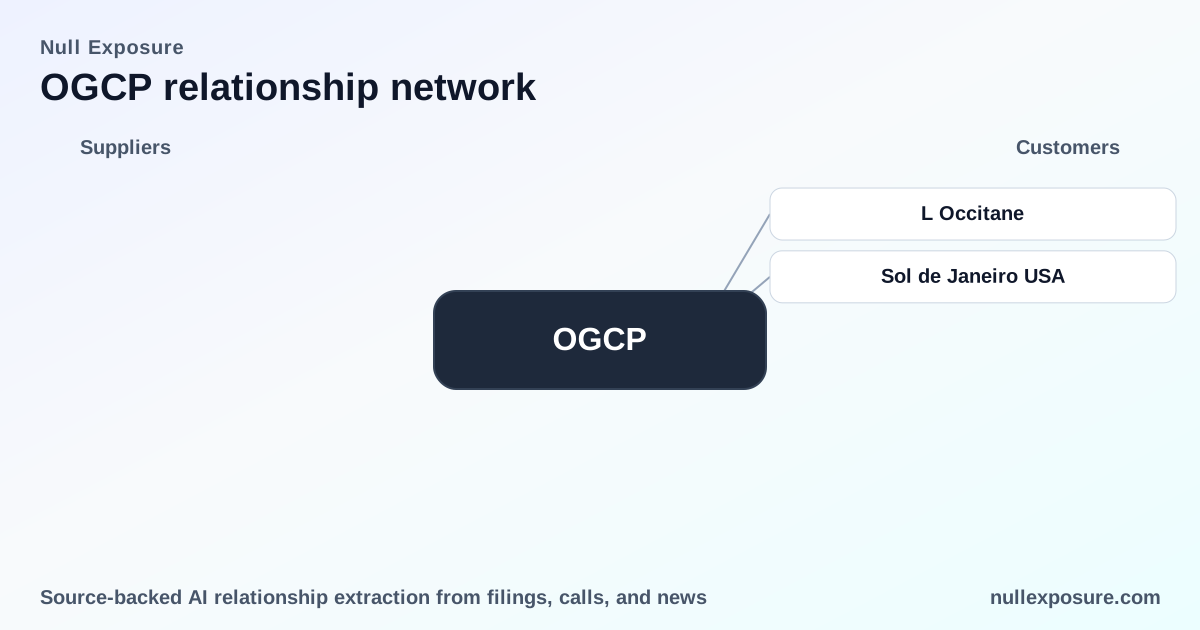
OGCP’s FY2024 10‑K discloses two tenant-related relationships that are material for customer and governance analysis.
L’Occitane
L’Occitane is identified as a tenant occupying space at 111 W. 33rd Street, with the filing noting that Sol de Janeiro is a subsidiary of L’Occitane and occupies that location. This establishes a corporate tenant relationship tied to retail space within OGCP’s Manhattan portfolio. According to OGCP’s FY2024 Form 10‑K, the disclosure lists the tenant and the subsidiary relationship explicitly.
Sol de Janeiro USA
Sol de Janeiro USA is disclosed as a tenant at One Grand Central Place, and the 10‑K highlights a governance connection: one of OGCP’s directors, Hannah Yang, is the sister of Heela Yang, Founder and CEO of Sol de Janeiro USA. That director-family tie is disclosed in the FY2024 10‑K and is relevant for assessing potential related‑party considerations and lease negotiation optics.
What the company-level constraints and contract types tell investors
OGCP’s filing supplies compact but actionable signals about contract types, geography, materiality and service mix. Presenting these as company-level signals (not attributed to any one tenant unless named), the filing communicates:
- Contract mix: OGCP operates long-term commercial leases (one to 30 years) that provide base rent stability, alongside short-term cancellable leases and spot, usage-based revenue from the Observatory that are recognized upon admission. This produces a predictable rent floor and volatility in tourism-linked revenue.
- Usage orientation for the Observatory: Management has moved the Observatory to a reservation and revenue-per-visitor model, increasing yield per customer while shifting some demand to pricing and timing signals.
- Geographic concentration: Operations are principally concentrated in New York City, with nine Midtown office properties and the Empire State Building dominating footprint and revenue; global tourism risks are explicitly called out as a factor for the Observatory.
- Materiality and concentration risk: Three properties account for ~55.5% of rental revenues and the Empire State Building accounts for ~31.9%, indicating high portfolio concentration and single-asset criticality to revenue.
- Role diversity: OGCP is both a lessor/seller of space and a licensor of broadcast space and concessions on the tower, and also provides asset management and service fees for excluded properties.
- Maturity and spend profile: Management describes mature, long-standing broker and tenant relationships, and disclosed asset management and service fees in the $0.8–$1.0 million range in recent years, indicating modest ancillary service revenue relative to core rent and observatory income.
These signals together outline a business that benefits from steady lease cashflows but is sensitive to tenant concentration, tourism cycles, and governance-linked tenant ties.
Relationship-level takeaways and investor implications
- Tenant concentration drives valuation sensitivity. With a single asset contributing roughly a third of rental revenue, any vacancy, re-leasing at lower terms, or major tenant dispute in the Empire State Building or other large properties would have outsized earnings impact. OGCP’s investor return profile is therefore closely tied to Manhattan office fundamentals and the capacity to re-let large blocks at market rents.
- Observatory revenue is higher-margin but cyclical and usage-based. The shift to reservations and per-visitor pricing increases revenue per customer but exposes short-term cashflow to tourism patterns and global events. The filing explicitly warns of international tourism and health or geopolitical risks as demand drivers.
- Governance/related-party signal from Sol de Janeiro relationship. The disclosed director-sibling relationship with a tenant CEO is a governance fact investors should monitor for lease approval processes and related-party disclosure thoroughness; OGCP publicly records the relationship in its FY2024 10‑K.
- Mixed contract tenors create hedged upside and execution risk. Long-term leases protect base rents, while short-term cancellable arrangements and spot sales provide flexibility but increase turnover risk and revenue variability.
- Licensing and broadcast fees diversify revenue and qualify as REIT income. License agreements for broadcast space and concessions generate non-lease cashflows that management notes as qualifying REIT income, which supports dividend treatment and tax efficiency.
Practical conclusions for portfolio and operations teams
- For investors: prioritize monitoring Manhattan office leasing metrics and international tourism indicators, and stress-test cashflows for adverse vacancy or visitor demand shocks given high concentration.
- For asset operators: focus on retention strategies for large tenants and on converting transient Observatory demand into higher-yield experiences; licensing revenue should be protected as a non-rent diversification channel.
- For governance-focused analysts: the disclosed director-to-tenant family tie at Sol de Janeiro should prompt a review of board recusal policies and lease-approval transparency.
For a consolidated view of OGCP customer links and governance signals, see additional reporting at https://nullexposure.com/.
Bold takeaway: OGCP blends durable rent rolls with higher-volatility tourist-driven revenue; the portfolio’s concentration around the Empire State Building is the single most material determinant of near-term earnings volatility and strategic focus.