OGE Energy: Customer Relationships Reoriented by Large Cloud Loads
OGE Energy operates as a vertically integrated regional utility through its electric subsidiary, OG&E, generating, transmitting and selling electricity primarily in Oklahoma and western Arkansas. The company monetizes by selling metered usage under regulated tariffs and a mix of special contracts—recovering fuel and purchased power costs through adjustment clauses—while capturing incremental earnings from negotiated large‑load agreements and ancillary services. Recent commercial wins materially shift OGE’s customer mix toward large, contract-backed industrial loads without changing its regulated cost‑recovery framework. For deeper business intelligence and ongoing tracking of counterparties, visit the Null Exposure homepage: https://nullexposure.com/.
How the customer wins actually work in practice
OG&E’s business is built on two complementary monetization channels: usage‑based retail sales under regulated tariffs and custom long‑term contracts with large customers that fund grid upgrades and provide predictable revenue. The recent announcements underscore both channels: Google represents a high‑value, long‑term large‑load contract that includes customer-funded interconnection costs and protective tariff mechanisms, while government and public authorities remain a steady, regulated revenue base.
- Usage economics dominate day‑to‑day revenue. Metered delivery and monthly billing constitute the core cash flow; fuel and purchased power are largely recoverable through adjustment clauses auditable by regulators.
- Special contracts drive capital and margin upside. Large customers that pay interconnection and contracted power costs reduce OG&E’s capital exposure and isolate existing retail customers from disproportionate rate impacts.
The relationships investors need to know (complete list)
Google — three new Oklahoma data centers
OG&E will power three new Google data centers in Muskogee and Stillwater, under long‑term energy service agreements that OG&E will file with the Oklahoma Corporation Commission. Google will fund 100% of grid connection costs and contracted power costs and will support new solar capacity and a proposed large‑load tariff designed to shield existing customers from rate impacts. According to Daily Energy Insider (April 30, 2026) and local reporting by KRMG (April 30, 2026), the agreement positions OG&E to capture sustained incremental load and contract revenue while transferring interconnection risk to Google. Source: Daily Energy Insider (Apr. 30, 2026) https://dailyenergyinsider.com/news/52118-oge-will-power-three-new-oklahoma-data-centers-for-google/?amp= and KRMG (Apr. 30, 2026) https://krmg.com/2026/04/30/oge-partners-with-google-to-open-3-new-data-centers-in-muskogee-and-stillwater/.
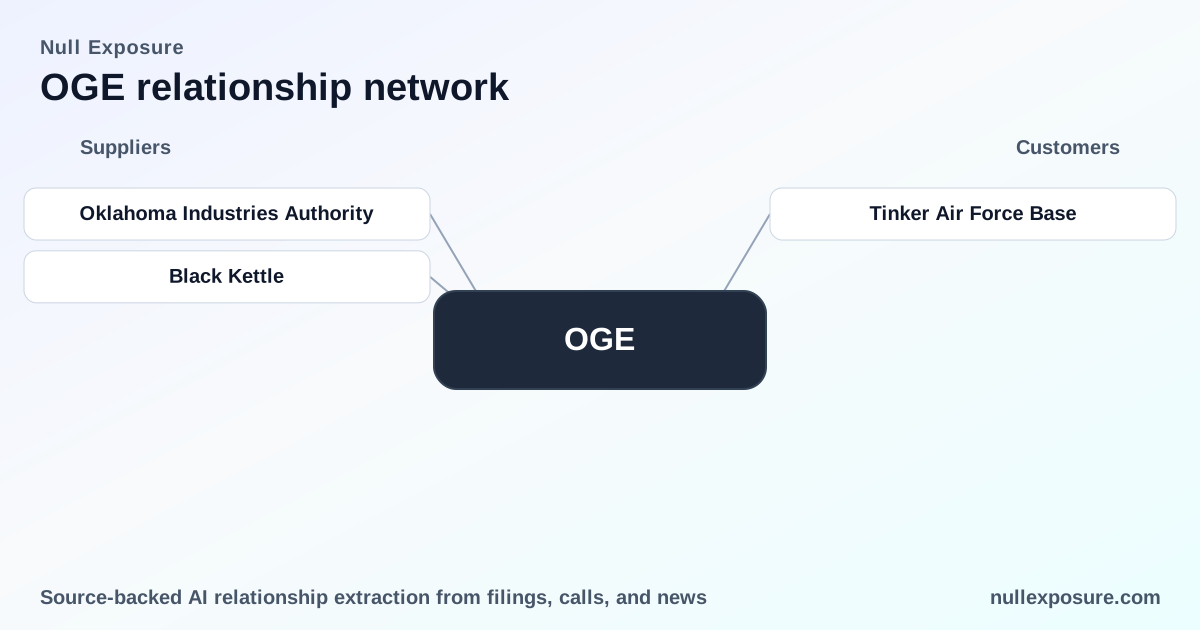
Tinker Air Force Base — operational support and priority of service
OG&E routinely operates generation units at peak times to maintain regional voltage and lists Tinker Air Force Base as the “first customer in line” for power when those units are deployed, indicating a priority operating relationship for critical load support. This is reported in OG&E communications around a new generation project and ribbon‑cutting event. Source: OK Energy Today (Feb. 2026) https://www.okenergytoday.com/2026/02/oge-and-tinker-air-force-base-to-host-ribbon-cutting-for-new-power-generation-project/.
Operating model constraints that shape revenue durability and risk
The public filings and press reporting reveal operational characteristics that determine OGE’s commercial leverage and regulatory risk profile.
- Contracting posture: OG&E primarily sells energy on a usage‑based meter‑to‑bill basis, but it also executes long‑term special contracts for large customers. Usage‑based billing remains the dominant revenue engine, while special contracts provide concentrated but well‑contracted cash flows.
- Counterparty mix and criticality: The company serves a large population of retail customers plus public authorities; government and public authorities are explicit customer classes in OGE’s revenue disclosures, which supports predictable regulated revenues.
- Geographic concentration: Over 90% of electric operating revenues are Oklahoma‑centric, subject to the Oklahoma Corporation Commission (OCC) and, to a lesser extent, the Arkansas PSC and FERC—this concentration creates regulatory dependency but also simplifies political and operational engagement.
- Capital recovery and risk transfer: Large‑load agreements such as the Google deals transfer interconnection and some grid upgrade costs to the customer and include tariff constructs to protect incumbent customers—a commercial structure that de‑risks capital spend while locking in load.
- Maturity and scale: With roughly 907,000 customers and a single predominant business segment (electric company), OGE operates as a mature, regulated utility where incremental earnings depend on load growth, rate cases, and negotiated special contracts.
What the Google wins mean for the financials and strategy
The Google agreements are an inflection point for OGE’s revenue mix. They add material, contracted load that increases system utilization and provides a pathway to recover capital expenditures without immediate rate base dilution. Because Google pays interconnection and contracted power costs, OGE’s cash CAPEX burden declines even as system demand rises. For investors, this changes near‑term capex timing and the forward revenue profile: expect higher volumetric sales and improved utilization metrics without a proportional shift in regulated earnings volatility.
Key risks investors should monitor
- Regulatory scrutiny: Large special contracts and proposed tariff changes require OCC approval; regulatory outcome shapes the net benefit to incumbent customers and timing of revenue recognition.
- Customer concentration: While Google’s contracts are lucrative, concentration risk increases if several large loads dominate incremental growth.
- Geographic/regulatory concentration: Heavy reliance on Oklahoma regulatory frameworks concentrates political and regulatory risk.
- Operational execution: Delivering interconnection and supporting new solar capacity requires coordination; delays or cost disputes could affect timing of contracted revenues.
Bottom line and actions for analysts
OGE is a stable, regulated utility whose incremental growth vector is large‑load contracts executed under protective tariff constructs and customer‑funded interconnection. The Google agreements are strategically positive: they bolster load, reduce OGE’s capital exposure on interconnection, and preserve rate protections for existing customers. Analysts should re‑model load forecasts, capex timing and regulatory risk premia while tracking OCC filings for the detailed contract terms.
For ongoing monitoring of OGE’s counterparty developments and regulatory filings, visit https://nullexposure.com/ for curated relationship tracking and source consolidation.