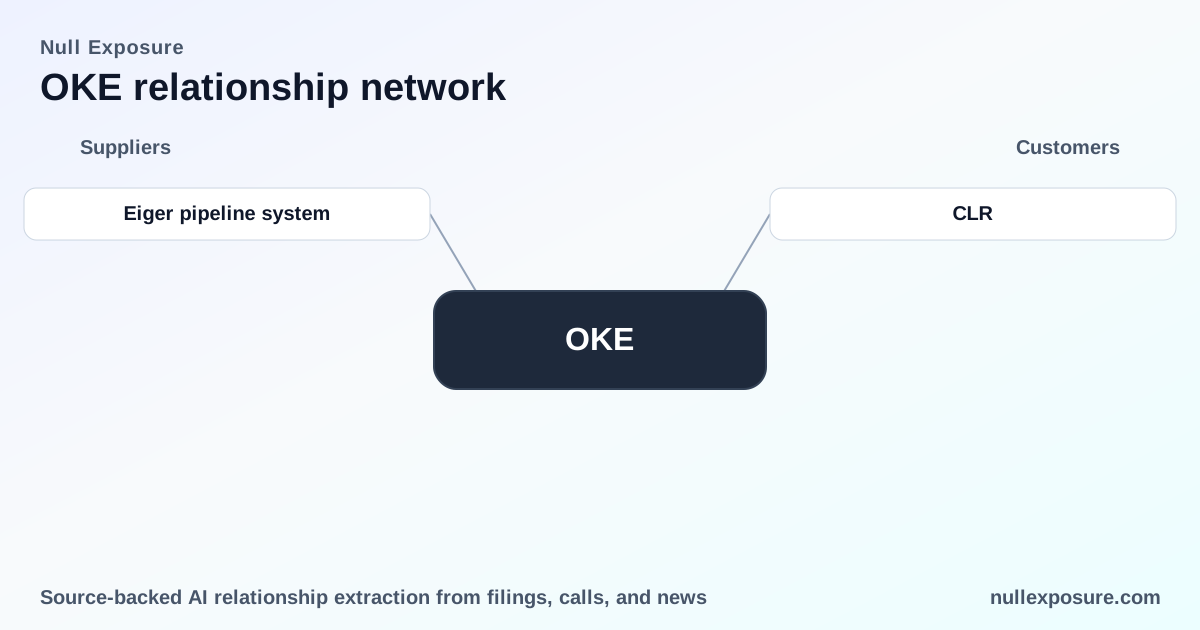
ONEOK (OKE) — customer relationships that drive a defensive midstream cash machine
ONEOK operates and monetizes a network of natural gas gathering, processing, NGL (natural gas liquids) transportation and refined products distribution assets by charging fees under a mix of regulated tariffs and long-term firm contracts, supplemented by shorter-term commercial agreements tied to volumes. Revenue derives from take-or-pay and firm transportation/storage contracts, regulated pipeline returns, and fee-based processing, which together produce predictable cash flow and support a meaningful dividend yield. For investors and operators evaluating counterparty exposures, these customer mentions highlight both volume concentration risks and the company’s strategy of monetizing non-core transmission assets. Learn more at https://nullexposure.com/.
Why the relationship evidence matters to investors
ONEOK is a classic midstream operator: cash flow resiliency comes from contract structure and regulated assets rather than commodity price exposure. Constraints pulled from company filings signal a contracting posture weighted to long-term agreements, with unsatisfied performance obligations stretching up to 16–17 years for firm transportation and storage, while a minority of counterparties are covered by short-term arrangements. Counterparties are predominantly large enterprises and utilities, with end-market deliveries including government entities (for example, military bases and airports) — a profile that underwrites cash flow durability and counterparty credit stability. These are company-level signals sourced from ONEOK’s public disclosures (2024 Form 10‑K) and subsequent communications.
Operational characteristics that matter for valuation and risk:
- Contract maturity profile: predominance of long-term, fee-based arrangements supports predictable revenue recognition and capital recovery.
- Counterparty composition: concentrated toward major producers, refiners, utilities and select government buyers, reducing small-degree counterparty risk but increasing sensitivity to a few large shippers.
- Geography and criticality: assets concentrated in North America’s major basins and demand centers, making ONEOK central to basin economics and logistics.
- Active commercial footprint: Most contracts are active and revenue-generating rather than nascent development deals, supporting near-term cash flow visibility.
Detailed relationship log — every mention in the record
CLR — InsiderMonkey earnings transcript mention (FY2026)
ONEOK’s Q4 2025 earnings call transcript referenced 18,000 barrels per day of Continental (CLR) NGL volumes rolling off its Rocky Mountain region this year, noting that contract rollovers and volume attrition are material to near‑term NGL throughput. This note was captured in an InsiderMonkey posting of the transcript on March 10, 2026. (InsiderMonkey, Q4 2025 earnings call transcript, 2026-03-10)
Continental — InsiderMonkey duplicate mention (FY2026)
The same InsiderMonkey transcript entry reiterates Continental’s role in the Rocky Mountain NGL base and the specific 18,000 bpd reduction, underscoring the earnings‑call focus on customer volume dynamics rather than new commercial wins. (InsiderMonkey, Q4 2025 earnings call transcript, 2026-03-10)
CLR — Globe and Mail / press release transcript (FY2026)
A Globe and Mail press release version of the Q4 2025 earnings transcript likewise cites that the $100 million net increase in a referenced item is net of contract rollovers and the 18,000 barrels per day of Continental NGLs rolling off Rocky Mountain volumes, indicating management’s view on how customer churn and contract renewals feed into reported results. (Globe and Mail, Oneok Q4 2025 earnings call transcript, 2026-03-10)
Continental — Globe and Mail duplicate mention (FY2026)
The Globe and Mail transcript repeats the Continental/CLR reference, reinforcing that this particular counterparty volume change was highlighted across distributed transcripts of the same earnings call. (Globe and Mail, Oneok Q4 2025 earnings call transcript, 2026-03-10)
DTM — DTM FY2024 10‑K (asset sale closed Dec 31, 2024)
According to DTM’s FY2024 10‑K, on December 31, 2024 DTM closed the Midwest Pipeline acquisition of three FERC‑regulated natural gas transmission pipelines from ONEOK for $1.2 billion, subject to customary purchase price adjustments, reflecting ONEOK’s active portfolio management and monetization of certain transmission assets. (DTM 10‑K, FY2024; entry noted Feb 14, 2026)
How these relationships map to ONEOK’s operating model and risks
The earnings‑call citations about Continental/CLR are operationally significant: an 18,000 bpd reduction in Rocky Mountain NGL volumes is a tangible hit to throughput-based fee income and illustrates the sensitivity of NGL processing and transportation cash flows to producer behavior and contract renewals. The DTM transaction is the opposite signal: asset monetization crystallizes value and reduces capital intensity, while transferring the operating and regulatory exposure associated with FERC‑regulated transmission lines.
Company-level constraints drawn from ONEOK’s filings clarify the business model:
- Long-term contracting is the dominant posture (max confidence 0.90), which supports cash flow stability and predictable revenue recognition across many assets.
- Short-term contracts exist alongside long-term deals (max confidence 0.85), creating volatility pockets when commodity or producer economics change.
- Counterparties are large enterprises and include government end-users (max confidence 0.80), improving credit profile but concentrating exposure.
- Geographic focus is North America (max confidence 0.80), aligning the company’s cash flow to U.S. basin production and demand centers.
- Relationships are mostly active and fee‑based (max confidence 0.85), reflecting realized cash flows rather than contingent future projects.
Investment implications for investors and operators
Positive structural takeaways: ONEOK’s fee‑based model, regulatory rate frameworks on select pipelines, and long-term storage/transport contracts deliver durable free cash flow that supports dividends and deleveraging. The DTM sale is an example of realize‑and‑recycle capital strategy — monetizing mature transmission assets to fund higher-return projects or return capital to shareholders.
Key risks highlighted by the relationship evidence: the Continental/CLR roll‑off demonstrates volume concentration risk in NGL flows; when a single large producer reduces volumes, near-term throughput and processing margins contract. The presence of short-term contractual exposure creates episodic revenue volatility even as the larger portfolio is long-term and regulated.
For active operators and contract managers, priorities are clear: preserve take‑or‑pay protections where possible, lock in renewals on core basin throughput, and be strategic about asset sales that reduce exposure while keeping critical footprint in high-value corridors.
Learn more about counterparty and contract signals at https://nullexposure.com/.
Bottom line
ONEOK’s customer mentions and related filings paint a coherent picture: a midstream company built on long-term fee contracts and regulated returns, tempered by pockets of short-term, volume‑sensitive exposure. Investors should value the predictability of contracted cash flows and the balance‑sheet flexibility unlocked by selective asset sales, while monitoring basin‑level volume trends and large counterparty churn — these are the events that move the earnings sensitivity table.