Universal Display (OLED): Customer Relationships, Concentration, and Commercial Implications
Universal Display develops, supplies and licenses proprietary organic light-emitting diode (OLED) materials and related intellectual property to display and lighting manufacturers; the company monetizes through material sales, patent and know‑how licenses, royalties and a small services business (Adesis) that provides contract research. With a 2024 revenue base of roughly $626.5 million and ~98% of sales tied to OLED materials, Universal Display’s cash flow profile is driven by large, enterprise customers in Asia that sign a mix of long‑term commercial supply and licensing agreements and short‑term purchase orders. For a concise view of customer exposure, visit https://nullexposure.com/.
How UDC gets paid and how its contracts behave
Universal Display’s commercial model is built around two revenue engines: repeat material sales to manufacturers and licensing of IP/know‑how that underpins display manufacturing. The company routinely executes long‑term agreements that combine commercial supply commitments with patent and manufacturing licenses, while operationally it also carries short‑term backlog (committed purchase orders expected to ship within ~90 days). The result is a hybrid contracting posture: contract longevity and technical embedment provide pricing power and recurring royalties, while short-term orders create revenue timing variability.
Key operating signals drawn from public filings and disclosures:
- High counterparty concentration: UDC derives most revenue from a small set of large enterprise panel makers; in 2024 three APAC customers (BOE, LG Display and Samsung Display (SDC)) each generated over 10% of consolidated revenue, making these relationships material and critical to near‑term cash flow.
- Global / APAC footprint: Roughly 98% of revenue is earned outside North America and most customers are in Asia, underscoring geographic concentration in APAC manufacturing ecosystems.
- Mature, deep technical relationships: UDC has more than two decades of customer engagement and typically operates as both seller of materials and licensor of technology, indicating high commercial maturity and integration into customer product roadmaps.
- Small services line: Adesis contributes low‑single‑digit percent of revenue as contract research services, a distinct but much smaller service stream.
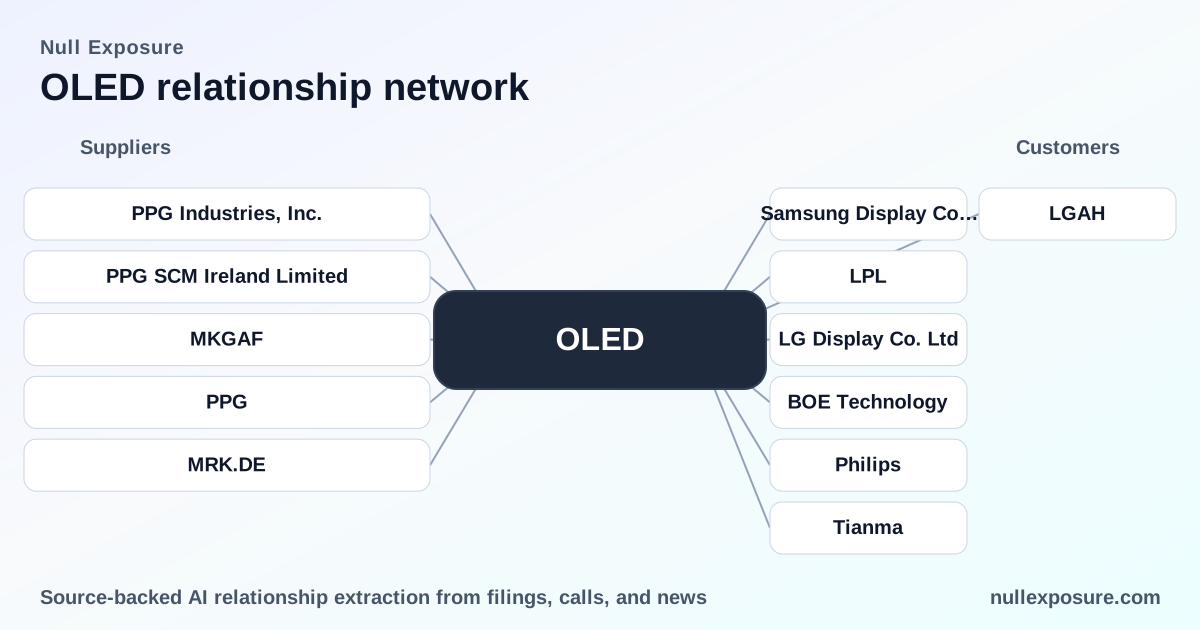
Customer roll call: every relationship spotted in public filings and press
Below are one‑to‑two sentence plain‑English summaries for each customer relationship referenced in the public results, with a concise source citation for each mention.
Samsung Display Co., Ltd.
Universal Display has a Supplemental OLED Material Purchase Agreement with Samsung Display through UDC Ireland Limited, evidencing formal commercial supply arrangements. According to Universal Display’s 2024 Form 10‑K, the agreement was documented as of December 2, 2022 (FY2024 filing).
Samsung
Universal Display public materials and press also reference supply commitments to Samsung (parent/affiliate contexts), indicating Samsung‑group demand for OLED materials under various agreements. This was noted in press coverage summarizing 2026 disclosures (LedInside, May 2026).
LG Display
LG Display has an extended long‑term OLED material supply and license agreement with Universal Display, reinforcing a multi‑decade partnership that underpins recurring material and license revenues. Multiple news outlets reported the extension in March 2026 (Simply Wall St; AlphaStreet; Finviz).
LPL (ticker references to LG Display)
Market and analyst coverage often references LG Display under its market ticker LPL when reporting on Universal Display’s renewed agreements; these items reiterate the long‑term contract extension and strategic importance to both companies (InsiderMonkey, Mar–May 2026).
LG Display Co. Ltd
International trade press (EE Times Asia) covered the same extension, describing LG Display Co. Ltd as a long‑standing customer that will continue to receive UDC materials and licenses under renewed terms (EE Times Asia, Mar 2026).
LG / LGAH (other LG variants referenced)
Earnings call transcripts noted multi‑decade collaboration with LG and active dialogue around contract renewal, confirming the relationship’s longevity and negotiation dynamics (InsiderMonkey and AlphaStreet transcripts, Mar 2026).
BOE Technology
Universal Display has an extended evaluation agreement with BOE, China’s largest panel maker, positioning UDC materials for broader commercial adoption in BOE’s next‑generation displays. This was reported in investor and industry coverage following UDC disclosures (LedInside, Nov 2025; press mentions Mar 2026).
Philips
Universal Display moved Philips from evaluation to a commercial materials agreement to supply PHOLED materials for Philips’ commercial OLED lighting products, marking a step from R&D collaboration to revenue‑generating supply. Industry reporting documented the extension in April–May 2026 (LedInside; LEDinside, Apr 2026).
Tianma
UDC signed long‑term OLED material supply and license agreements with Tianma to support next‑generation displays using UniversalPHOLED materials, expanding UDC’s APAC panel partner base. The extension was covered by Simply Wall St and EE Times Asia in March 2026.
Moser Baer Technologies Inc.
UDC agreed to license PHOLED and related OLED technologies to Moser Baer Technologies and to supply UniversalPHOLED materials for white OLED manufacturing, establishing a commercial supply and IP licensing relationship (LEDinside reporting, Apr 2026).
Govisionox
Press reporting referenced a supply relationship with Govisionox under new agreements for OLED materials, indicating UDC’s effort to broaden its manufacturing partners beyond the largest tier‑one panel makers (LEDinside, Apr 2026).
What the relationship mix implies for investors
- Revenue stability with concentration risk: The combination of long‑term licenses and material supply gives UDC stable, annuity‑like revenue streams, but heavy concentration in a small number of large APAC manufacturers creates earnings sensitivity to capital spending cycles at those customers. The 2024 disclosure that three APAC customers each exceeded 10% of revenue is a direct signal of this dependency.
- Contract mix reduces churn risk: Long‑term licensing and know‑how agreements lock customers into multi‑year technical dependencies, making customer loss operationally and commercially costly for panel makers and therefore reducing churn.
- Near‑term timing variability: Short‑term committed purchase orders and backlog (~$19.5 million as of Dec 31, 2024, expected to ship within 90 days) introduce quarter‑to‑quarter revenue timing swings despite the underlying long‑term partnerships.
- Geographic concentration: With nearly all revenue earned outside North America and most customers in APAC, UDC’s fortunes correlate with regional panel investment and adoption curves; diversification beyond APAC would materially change this profile but is not evident in current disclosures.
Investment takeaways and tactical considerations
- Bull case drivers: Continued extensions with LG Display, Tianma and BOE, plus conversion of evaluations (e.g., Philips) to commercial supply, support sustained revenue growth and royalty capture as OLED adoption expands across TVs, mobile and automotive displays. UDC’s high gross margins and licensing leverage remain core earnings drivers.
- Key risks: Customer concentration in a few APAC panel makers and revenue exposure to their capex cycles represent the primary operational risk; technology adoption timing (for example, major panel makers’ schedules for blue phosphorescent OLED) can influence royalty ramp rates and material volumes. Industry press has flagged varying timelines among panel makers (Thelec reporting, May 2026).
- Action: For a tailored view of customer exposures and scenario modeling on contract renewals and concentration risk, institutional investors and operators should review the full relationship map available at https://nullexposure.com/ and compare counterparty capex trends against UDC’s licensing cadence.
Universal Display’s position as a materials and IP anchor for OLEDs gives it structural commercial advantages, but the stock’s risk/return profile is tightly coupled to a handful of large APAC manufacturers and to the pace at which next‑generation OLED technologies are adopted across end markets. For a deeper, interactive breakdown of these customer relationships and their balance‑sheet implications, visit https://nullexposure.com/.