1RT Acquisition Corp. Warrant (ONCHW): Sponsor and Underwriter Stakes that Matter to Investors
1RT Acquisition Corp. operates as a special purpose acquisition company that raised capital through an IPO and associated private placement; the warrant instrument (ticker ONCHW) represents contingent equity upside for holders and monetizes through secondary-market trading and potential exercise into ordinary equity upon a qualifying business combination or redemption outcome. Investor returns depend on deal execution, sponsor alignment, and the distribution of warrant ownership created at IPO. For background and ongoing coverage, visit https://nullexposure.com/ for a concise feed of issuer relationship intelligence.
Why these relationships matter to warrant holders
Warrants are not mere paperwork — they are contractual levers that reflect sponsor incentives and underwriting allocations at formation. The initial allotment of warrants can signal sponsor commitment and underwriter appetite, both of which directly influence post-IPO governance and the likelihood of a value-accretive business combination. The filings available for 1RT show a concentrated placement of warrants that is worth parsing for potential governance and liquidity implications.
What the public record shows about ownership at formation
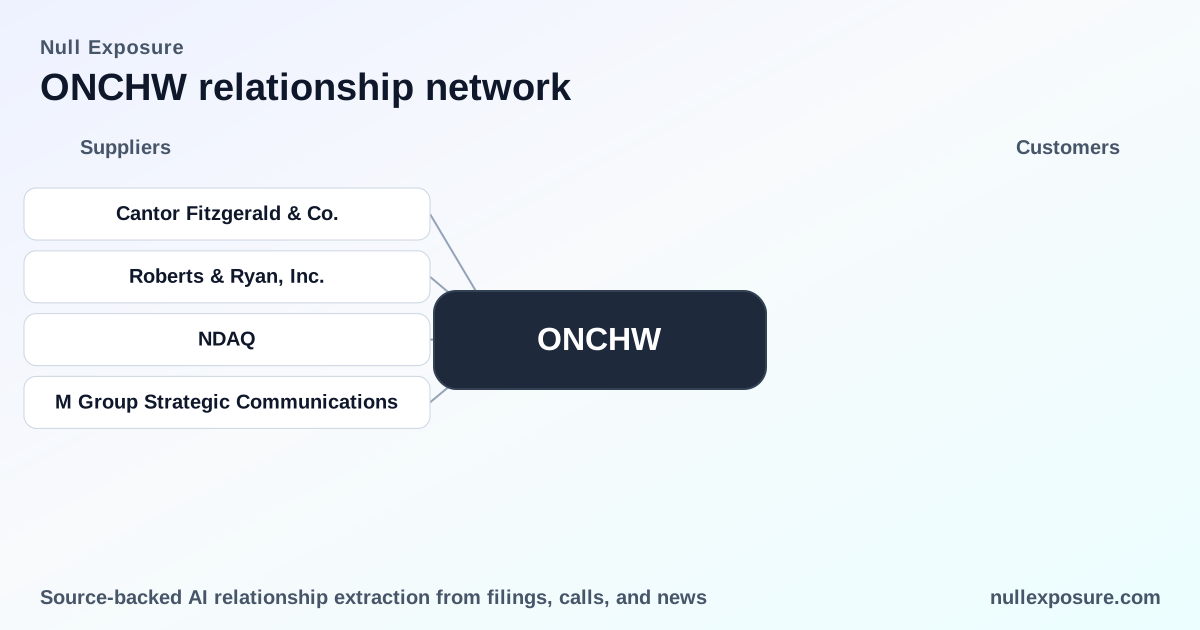
According to Investing.com’s coverage of the company’s SEC filing on May 3, 2026, 1RT allocated warrants at IPO and in a private placement, distributing 1,500,000 warrants to the sponsor and 750,000 warrants to Cantor Fitzgerald & Co., the underwriters’ representative. This split establishes the initial economic and voting posture relevant to investors who trade or hold ONCHW as a claim on future equity.
Relationship breakdown — concise, investor-focused summaries
1RT Acquisition Sponsor LLC
1RT Acquisition Sponsor LLC received 1,500,000 warrants as part of the IPO/private placement structure, signaling a material sponsor stake that aligns economic upside with deal delivery and post-merger equity performance. According to Investing.com’s summary of the SEC filing (May 3, 2026), the sponsor’s warrant allocation is the largest single block recorded in the transaction documentation. (Source: Investing.com, SEC filing coverage, May 3, 2026 — https://za.investing.com/news/sec-filings/1rt-acquisition-corp-completes-1725-million-ipo-and-private-placement-on-nasdaq-93CH-3785815)
Cantor Fitzgerald & Co.
Cantor Fitzgerald & Co., acting as the representative of the underwriters, acquired 750,000 warrants under the same placement terms, reflecting the underwriters’ compensated exposure and potential resale or inventory-management strategies post-listing. The allocation is documented in the same Investing.com report summarizing the company’s SEC materials on May 3, 2026. (Source: Investing.com, SEC filing coverage, May 3, 2026 — https://za.investing.com/news/sec-filings/1rt-acquisition-corp-completes-1725-million-ipo-and-private-placement-on-nasdaq-93CH-3785815)
Operating model and business-model characteristics investors should track
The available records do not show operational revenues or traditional financial metrics for the warrant security itself; instead, the instrument’s value is derivative of SPAC execution. From that vantage, the following company-level signals are material:
-
Contracting posture: The issuance of a concentrated warrant block to the sponsor is a standard SPAC mechanism to align the sponsor with long-term upside, but it also concentrates control-related economic incentives in a small group. Underwriter warrant ownership provides compensation and a secondary-market liquidity buffer. These contractual allocations influence how aggressively a SPAC pursues targets and how dilution is ultimately borne by public holders.
-
Concentration: The warrant ownership disclosed in the IPO/private placement is concentrated among the sponsor and the representative underwriter, which increases single-party influence over post-IPO liquidity dynamics and potential resale flows.
-
Criticality: For warrant holders, sponsor commitment is critical — sponsors executing a high-quality business combination unlock the primary path to warrant exercise value. The sponsor’s sizeable warrant holding is therefore a positive alignment signal if the sponsor deploys capital and leadership effectively.
-
Maturity: As a newly listed SPAC vehicle at IPO stage, the company’s instrument is in an early maturity phase where operational outcomes depend on forthcoming deal activity rather than recurring corporate cash flows. This creates a timeline risk for warrant monetization that investors must price in.
No additional contractual constraints or third-party dependency disclosures were found in the retrieved relationship data; the absence of explicit constraints in the public relationship extract should be treated as a neutral company-level signal rather than evidence of resilience.
Risk and opportunity profile for ONCHW holders
-
Opportunity: Sponsor-aligned warrant allocation means potential upside concentration with parties financially motivated to complete accretive transactions. If the sponsor sources a high-quality target, warrant value can compound significantly relative to current secondary-market pricing.
-
Risk: Concentration risk is pronounced; large sponsor and underwriter warrants create single-party selling pressure and dilution pathways that can compress secondary warrant value ahead of a business combination or redemption. Investors should treat the warrant as a high-volatility, event-driven instrument tied to SPAC timing and target quality.
-
Liquidity considerations: Underwriter ownership of a large warrant block suggests potential inventory and market-making activity, which can either support liquidity or introduce scheduled selling. Monitor trading patterns around lock-up expiration and sponsor-related disclosures.
Practical cues for monitoring going forward
- Watch for the sponsor’s announced deal pipeline, financing commitments, and any amendments to warrant terms or transfer events.
- Track underwriter disposition announcements and market volume around the warrant ticker; disproportionate selling by Cantor could depress price temporarily.
- Review subsequent filings for additional parties or secondary placements that would dilute or re-concentrate holdings.
If you want a concise ongoing synthesis of this issuer’s stakeholder movements and implications for holders, visit https://nullexposure.com/ for curated relationship intelligence and timeline alerts.
Final read: what investors should take away
The initial warrant allocation for 1RT Acquisition Corp. is concentrated and clearly aligned with sponsor incentives, with Cantor Fitzgerald occupying the underwriter allocation role. That structure provides both upside potential—through sponsor-driven deal execution—and clear concentration/dilution risks that will define ONCHW’s return profile until a qualifying business combination resolves the warrant into tradable equity or cash outcomes. Investors should prioritize monitoring sponsor activity, underwriter dispositions, and formal SEC filings for any material changes to these relationships.