Onconetix (ONCO): A concentrated commercial play built around Proclarix
Onconetix monetizes a single commercial franchise: the Proclarix prostate-cancer diagnostic and related reagent manufacturing and licensing through its Proteomedix subsidiary. Revenue today is driven by a mix of exclusive licensing arrangements and direct product sales, with a small number of counterparties accounting for the lion’s share of receipts — a structure that amplifies upside from successful commercialization but concentrates counterparty and operational risk. For deeper diligence on counterparties and commercial exposures, visit https://nullexposure.com/.
Proclarix is the business — and that shapes every customer conversation
Onconetix reorganized into a single commercial segment to focus on Proclarix after the Proteomedix acquisition closed in December 2023. The company sells Proclarix direct to laboratories and hospitals and uses licensing to scale the test’s U.S. footprint. Proclarix is both the revenue engine and the single point of criticality for Onconetix’s near-term valuation.
- The company reports a commercial segment dedicated to the development and commercialization of Proclarix following the halt to earlier vaccine programs. This structural focus concentrates operational resources on commercialization and regulatory roll‑outs (company filings, FY2024).
Customer relationships that define revenue and risk
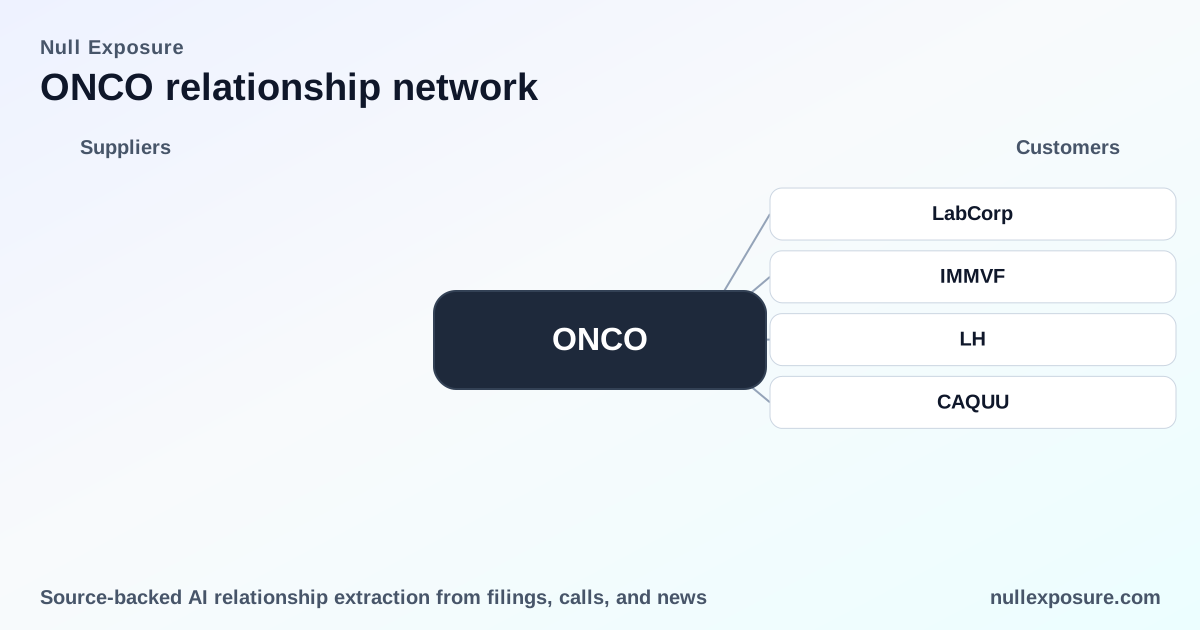
Below are the customer and partner relationships cited by the company and in market releases. Each relationship is summarized in plain English with source context.
LabCorp / LH
LabCorp is Onconetix’s dominant commercial partner and licensee in the United States: 73% of product sales in FY2024 came from LabCorp and the company has an exclusive U.S. license to develop and commercialize Proclarix-related products, with plans to market Proclarix in the U.S. as a lab‑developed test through the LabCorp agreement. (Onconetix Form 10‑K, FY2024; multiple press releases and market notices in 2025–2026.)
Immunovia AB / IMMVF
Proteomedix licensed manufacturing IP and master cell lines to Immunovia so Immunovia can independently produce key reagents for its PancreaSure pancreatic-cancer test, with payments of $700,000 in 2025–2026 plus a 3% royalty on net sales from 2026–2032. (GlobeNewswire announcement, Sept 22, 2025.)
Cambridge / CAQUU
Cambridge accounted for 18% of product sales in FY2024, making it a significant second source of product revenue behind LabCorp. (Onconetix Form 10‑K, FY2024.)
What the documented constraints imply for investors and operators
Onconetix’s public disclosures and the relationship evidence produce a clear operating profile with specific strengths and vulnerabilities.
-
Concentration and materiality are high. The company discloses that a limited number of customers account for a large portion of revenue: LabCorp (73% of product sales), Cambridge (18%), and Immunovia (100% of development services revenue). This concentration accelerates revenue upside from successful commercialization but creates substantial counterparty risk if any major buyer changes behavior (company 10‑K, FY2024).
-
Licensing is a primary contracting posture. Proteomedix’s license agreement with LabCorp gives LabCorp exclusive U.S. commercialization rights for Proclarix IP, which shifts regulatory and market execution risk to the licensee while preserving royalty and milestone economics for Onconetix. The licensing posture converts a product sales model into a hybrid of direct sales and partner-led commercialization (license agreement disclosure, March 23, 2023; company filings).
-
Short‑notice termination risk exists in certain channels. Contracts with GPOs and IDNs follow category bidding norms and are often terminable on 60–90 days’ notice; this creates a company-level short‑term contract risk for portions of commercial distribution, which investors should price into near‑term revenue visibility (company disclosures on channel contracting).
-
Geographic revenue mix is skewed toward EMEA with U.S. commercialization planned via LabCorp. The company reports material revenue from Switzerland and the UK and intends to use its LabCorp license to expand U.S. presence, producing a mix of Europe-first commercialization alongside planned U.S. lab‑developed test roll‑out (revenue by geography table, FY2024; press releases 2025–2026).
-
Capital structure and spend profile are meaningful to partner execution. Onconetix has access to a committed equity facility of up to $25.0 million (ELOC), completed a small PIPE for approximately $1.9 million, and exposed contractual milestone and license payments at the low‑millions level; these financing characteristics shape the company’s ability to scale manufacturing, regulatory submissions, and commercialization investments (ELOC and PIPE disclosures, Oct 2024; license milestone schedule).
-
Segment maturity is early commercial. The commercial segment is newly established (post‑2023) and centered on Proclarix, which implies product commercialization is early in its life cycle and that operational execution — manufacturing scale, lab integration, and payor/provider adoption — is the dominant near‑term value driver (management disclosures, FY2023–FY2024).
Commercial playbook and operational levers
Operators and investors should focus on four execution items that determine realized returns:
- License economics and royalty capture: The LabCorp exclusive U.S. license shifts margin capture toward royalties and milestones; tracking realized royalty receipts and milestone timing is essential.
- Diversification of customer base: Replacing concentration with a broader lab and distributor footprint reduces binary revenue risk. Cambridge and Immunovia are material today; broadening beyond them is strategically necessary.
- Manufacturing self‑sufficiency vs. licensing: Proteomedix’s decision to license manufacturing IP to Immunovia shows Onconetix can monetize manufacturing assets through partner licensing rather than verticalizing production — a lever to accelerate non‑dilutive cash.
- Channel stability in the U.S.: Proclarix’s U.S. adoption via LabCorp as an LDT will determine whether Onconetix achieves scale without direct U.S. commercial infrastructure.
For more context on counterparties and to map exposure to partner credit profiles, see the company overview at https://nullexposure.com/.
Bottom line: concentrated upside with single‑product execution risk
Onconetix is a focused commercial biotech where value is concentrated in Proclarix and a handful of counterparties. The licensing relationship with LabCorp unlocks U.S. scale but also centralizes counterparty and execution risk, while the Immunovia agreement demonstrates a route to monetize manufacturing IP through licensing and royalty streams. Investors should treat the next 12–24 months as the pivotal commercialization window: successful U.S. roll‑out and further customer diversification will transform the risk‑reward profile; failure or delays will leave the company highly exposed to a small number of buyers.
Key takeaways:
- High customer concentration: near-term revenue depends on a few counterparties.
- Licensing strategy reduces immediate capital needs but replaces direct margin with royalties and milestones.
- Operational focus is early‑stage commercial execution; manufacturing and channel adoption are the primary risk levers.
For a concise exposure map and counterparty summaries, visit https://nullexposure.com/.