OPAL Fuels: customer relationships that create long-duration cash flow in RNG
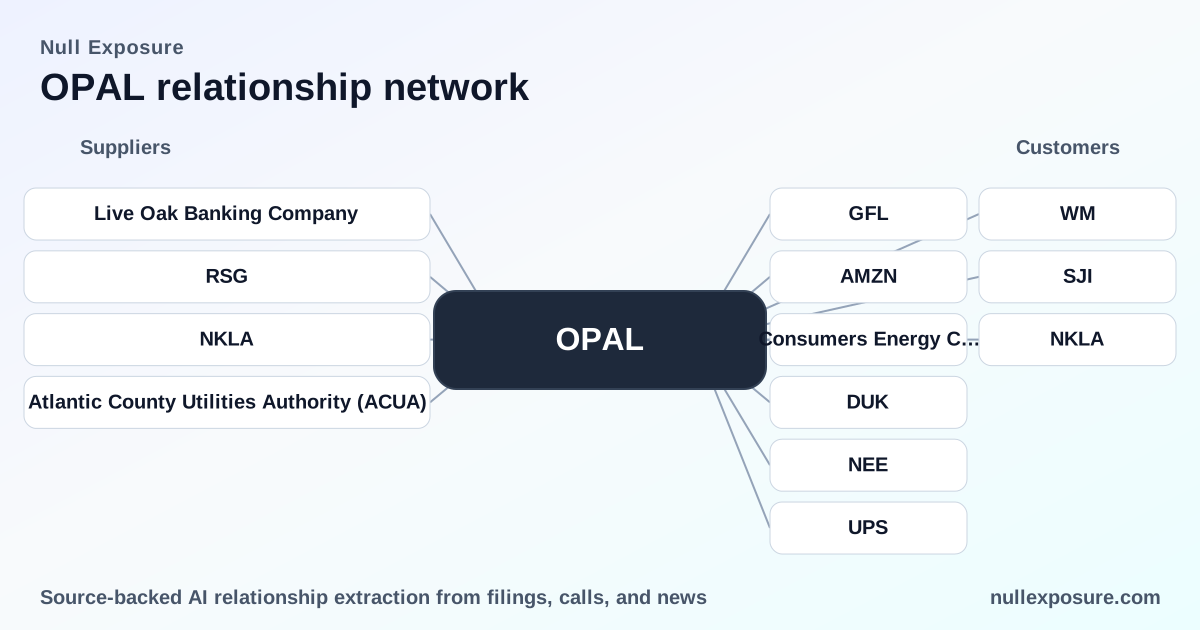
OPAL Fuels converts organic waste into renewable natural gas (RNG), then monetizes that output through the sale of fuel, the sale or monetization of environmental attributes, and construction/operation of fueling stations for heavy and medium‑duty fleets. Revenue derives from multi‑year fuel purchase contracts, utility offtakes and services contracts for station construction and maintenance, plus the sale of environmental credits and pipeline RNG, creating predictable, contract‑driven cash flows with concentrated counterparty exposure. For a consolidated view of OPAL’s customer map and how these relationships influence risk and upside, visit https://nullexposure.com/.
The customer map — relationship-by-relationship notes
Below are plain-English summaries for every relationship in the record set, each tied to the underlying press coverage.
GFL
OPAL completed construction and will operate an RNG facility that dispenses fuel to GFL’s fleet and other transportation customers, positioning OPAL as the operator and fuel supplier for GFL’s vehicle needs. Source: PR Newswire, March 10, 2026 — https://www.prnewswire.com/news-releases/gfl-environmental-and-opal-fuels-begin-commercial-operations-of-their-second-rng-facility-302268705.html
GFL Environmental Inc.
The same PR Newswire disclosure refers to GFL Environmental Inc. and confirms OPAL’s role operating and dispensing RNG from the newly completed facility to GFL’s fleet, reinforcing a commercial operator‑supplier relationship. Source: PR Newswire, March 10, 2026 — https://www.prnewswire.com/news-releases/gfl-environmental-and-opal-fuels-begin-commercial-operations-of-their-second-rng-facility-302268705.html
Amazon.com Inc. (AMZN)
OPAL has signed multi‑decade contracts (10–25 years included in its pipeline) with large corporate fleet customers including Amazon, indicating revenue visibility driven by long-term fuel commitments to retail and logistics firms. Source: Natural Gas Intelligence / reporting on OPAL, referenced March 2026 — https://naturalgasintel.com/news/opal-fuels-sees-heavy-duty-trucking-bulking-rng-demand/
AMZN
The AMZN mention reiterates Amazon’s inclusion among several anchor customers under OPAL’s long‑term contract pipeline, confirming Amazon as a named fuel purchaser in OPAL’s commercial backlog. Source: Natural Gas Intelligence, March 2026 — https://naturalgasintel.com/news/opal-fuels-sees-heavy-duty-trucking-bulking-rng-demand/
Consumers Energy Co.
Consumers Energy is listed among utilities and large buyers with long‑duration contracts in OPAL’s contract pipeline, representing utility and large‑enterprise demand for RNG and environmental attributes. Source: Natural Gas Intelligence, March 2026 — https://naturalgasintel.com/news/opal-fuels-sees-heavy-duty-trucking-bulking-rng-demand/
Duke Energy Corp. (DUK)
Duke Energy appears as a named counterparty in OPAL’s long‑term pipeline of contracts, signaling OPAL’s strategy to sell RNG and related attributes into regulated utility channels as well as direct fuels. Source: Natural Gas Intelligence, March 2026 — https://naturalgasintel.com/news/opal-fuels-sees-heavy-duty-trucking-bulking-rng-demand/
NextEra Energy Inc. (NEE)
NextEra is explicitly named in company disclosures as the counterparty to a purchase and sale agreement for Environmental Attributes generated by OPAL’s business, establishing a structured sales channel for credits and attributes. Source: Natural Gas Intelligence (contract list) and OPAL disclosures as reported March 2026 — https://naturalgasintel.com/news/opal-fuels-sees-heavy-duty-trucking-bulking-rng-demand/
United Parcel Service (UPS)
UPS is listed among large logistics buyers that have signed long‑duration agreements with OPAL, contributing to a book of business oriented toward heavy‑duty transportation fuel displacement. Source: Natural Gas Intelligence, March 2026 — https://naturalgasintel.com/news/opal-fuels-sees-heavy-duty-trucking-bulking-rng-demand/
WasteManagement (WM)
Waste Management is a named corporate counterparty in OPAL’s contract pipeline, consistent with OPAL’s focus on converting waste streams into customer‑facing RNG and fueling solutions. Source: Natural Gas Intelligence, March 2026 — https://naturalgasintel.com/news/opal-fuels-sees-heavy-duty-trucking-bulking-rng-demand/
SJI
OPAL delivered a project that is the first to inject RNG into South Jersey Gas’s pipeline system, a subsidiary of SJI, illustrating OPAL’s ability to sell pipeline‑quality RNG to local gas utilities as well as to fleet customers. Source: Yahoo Finance, March 2026 — https://finance.yahoo.com/news/opal-fuels-rng-facility-nj-134843629.html
South Jersey Gas
A South Jersey Gas (SJI subsidiary) tie‑in is confirmed by reporting that OPAL’s project is the first to deliver RNG into that pipeline system, establishing utility pipeline access in New Jersey. Source: Yahoo Finance, March 2026 — https://finance.yahoo.com/news/opal-fuels-rng-facility-nj-134843629.html
Nikola Corporation (NKLA)
OPAL and Nikola signed a memorandum of understanding to co‑develop hydrogen fueling stations where OPAL’s RNG portfolio would be used to lower the carbon intensity of hydrogen produced at the stations, indicating cooperation beyond RNG into hydrogen fueling infrastructure. Source: PR Newswire, 2021 (Nikola / OPAL MOU) — https://www.prnewswire.com/news-releases/nikola-and-opal-fuels-sign-mou-to-co-develop-and-construct-hydrogen-fueling-stations-and-related-infrastructure-301388499.html
NKLA
The NKLA duplicate references the same Nikola MOU and confirms OPAL’s commercial intent to leverage RNG to reduce hydrogen carbon intensity at co‑developed fueling stations. Source: PR Newswire, 2021 — https://www.prnewswire.com/news-releases/nikola-and-opal-fuels-sign-mou-to-co-develop-and-construct-hydrogen-fueling-stations-and-related-infrastructure-301388499.html
What OPAL’s contracting posture and constraints signal to investors
OPAL’s public disclosures and the relationships above produce a compact set of operating signals investors should internalize:
- Long‑term contracting is central. Company filings document fixed‑price and long‑duration deals (7–10 years and contracts in OPAL’s pipeline extending to 25 years) for fuel, LCFS/credits and fueling station services. This produces multi‑year revenue visibility and places emphasis on counterparty credit and contract enforceability.
- Geographic concentration is domestic and utility‑centric. OPAL’s assets and revenue activities are domiciled in the United States and its sales focus on U.S. fleets and utilities, concentrating regulatory and market risk within North American policy regimes.
- Revenue concentration is material. OPAL disclosed that two customers accounted for 52% of revenue for the year ended December 31, 2024, which elevates single‑counterparty risk despite the diversity of named counterparties.
- OPAL is both a seller and a service provider. The company sells RNG and associated environmental attributes and also provides construction, operations and maintenance services for fueling stations — a hybrid model that generates recurring fuel margins and service fees.
- Regulatory termination risk exists. OPAL reported termination of ISCC carbon credit contracts after EU regulatory changes in November 2024, demonstrating that international policy shifts can abruptly eliminate revenue lines.
- Named attribute sale with NextEra is an explicit structured channel. OPAL’s disclosed purchase and sale agreement with NextEra commits OPAL to selling a minimum share of Environmental Attributes, anchoring attribute monetization to a large market counterparty.
These constraints are company‑level signals except where filings explicitly name counterparties (for example, NextEra in the environmental attributes agreement).
Investment implications — risks and upside
- Upside: Long‑duration fuel and attribute contracts with major logistics firms and utilities create predictable cash flows and justify valuation multiples that reflect contract tenor rather than spot RNG prices. Pipeline injection capability (e.g., South Jersey Gas) and station operations expand commercialization routes beyond onsite fueling.
- Risk: Concentration risk is meaningful — 52% of 2024 revenue from two customers — and regulatory shocks can terminate entire revenue streams, as shown by the ISCC credit terminations. Counterparty creditworthiness becomes central when multi‑year contracts drive valuation.
- Operational criticality: OPAL’s role as both operator and fuel supplier (GFL example) demonstrates control over delivery economics but also concentrates operational execution risk on OPAL’s asset performance.
For an at‑a‑glance mapping of OPAL’s customer relationships and contract posture, visit https://nullexposure.com/ to explore our relationship visualization and monitoring.
Bottom line
OPAL’s commercial model is contract‑heavy, U.S.‑focused and anchored by large corporate and utility counterparties, giving investors predictable, contract‑driven revenue streams tempered by counterparty concentration and regulatory exposure. Allocate valuation discipline to counterparty risk, contract tenure and attribute monetization channels when modeling OPAL’s forward cash flows.