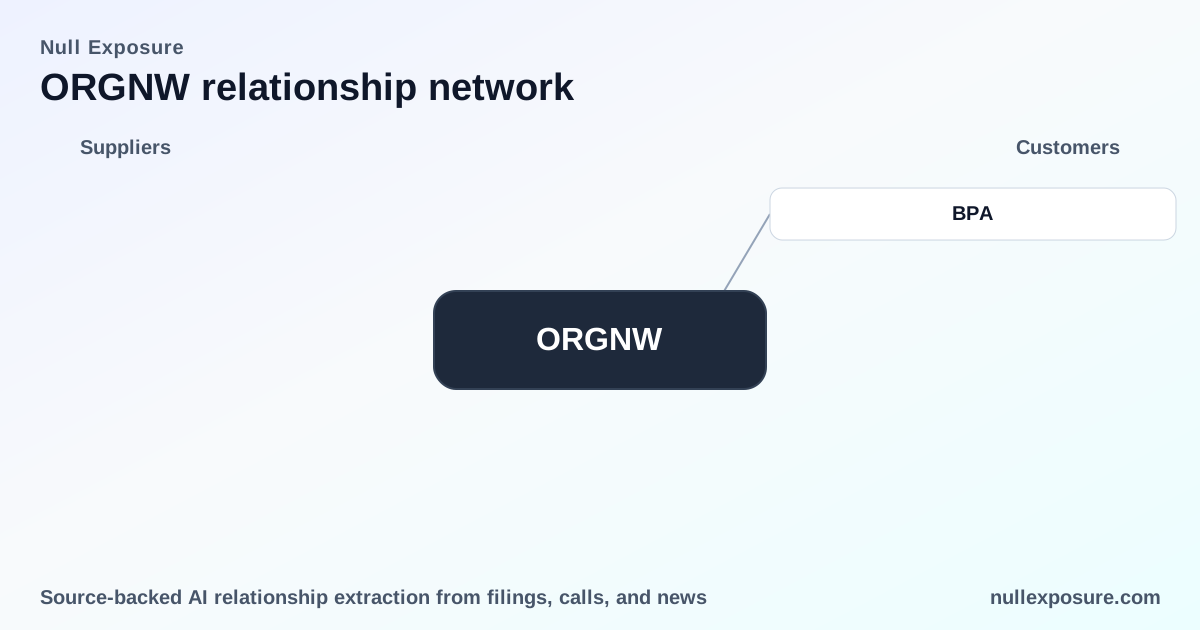
Origin Materials (ORGNW) — customer relationships and commercial posture investors should track
Origin Materials is a materials company that commercializes bio-based, carbon-advantaged feedstocks and finished components — with early revenue driven by sales of PET closures and related products. The company sells product to industrial buyers, recognizes revenue on shipment, and secures volume through a mix of negotiated commercial agreements and offtake-style commitments; near-term monetization hinges on a small set of large customers as Origin ramps production capacity. For a concise view of relationship-level signals and operating constraints, visit https://nullexposure.com/.
How Origin monetizes and why customers matter
Origin sells material and closure products into the plastics and packaging value chain and positions itself as a supplier to distribution partners and OEMs. Revenue is realized upon shipment, and the company is intentionally concentrating resources on its PET closures business to drive recurring near-term revenues. This contracting posture creates a classic industrial supplier profile: seller of a core product to a narrow set of commercial buyers, where customer fulfillment and logistics execution determine cash flow timing and growth cadence.
Key commercial characteristics:
- Concentration and criticality: historical disclosures show top customers historically accounted for the vast majority of revenues and receivables, elevating counterparty and operational risk.
- Contracting posture: Origin uses long-form commercial commitments consistent with offtake arrangements to secure volumes and price certainty for planned facilities.
- Geographic reach and addressable market: while current revenue is U.S.-attributable, product programs are aimed at global markets such as the >$65 billion closures segment.
Customer relationships uncovered in public filings and calls
Berlin Packaging — first commercial order now in fulfillment
Origin reported that Berlin Packaging placed its first order during the quarter and the company is in the process of fulfilling that order; Origin described Berlin as a respected market leader and a sales/distribution partner. This confirms a nascent commercial relationship where Berlin will act as a channel for Origin’s PET closure products. Source: Origin Materials 2025 Q3 earnings call (as presented in the company’s fiscal commentary first seen 2026-03-07).
BPA (inferred symbol for Berlin Packaging) — same engagement logged under ticker
The same disclosure appears separately under the inferred ticker BPA, reiterating that the first order from Berlin Packaging (BPA) has been received and fulfillment is underway, and that Berlin serves as a distribution and sales partner for Origin’s products. This duplicate listing reflects how the company’s public commentary maps to market identifiers used by analysts and screens. Source: Origin Materials 2025 Q3 earnings call (document noted 2026-03-07).
What the relationship collection tells investors about Origin’s operating model
The relationship records and company disclosures together form a coherent commercial profile:
- Long-term contracting signal: Origin references offtake-style arrangements that provide binding take-or-pay commitments for annual volumes and specified pricing; this indicates a willingness to lock in volume under multi-year terms to de-risk project economics.
- Concentration risk is high and explicit: management reported that the top two product customers accounted for approximately 96% of revenues in 2024 (and very large shares of accounts receivable), making customer continuity and payment performance critical to near-term financial stability.
- Product focus and prioritization: management is allocating human and cash resources to capture recurring sales in the closures market, underscoring a strategic bet on PET closures as the core near-term revenue stream.
- Active commercial stage: Origin has begun recognizing revenue from operations (initial commercial shipments began in 2023), and public remarks indicate the company is actively fulfilling its first orders with distribution partners.
- Geography nuance: while the addressable market and product strategy are global, reported revenues for presented periods are attributable to the U.S., concentrating operational exposure to domestic customers and logistics.
These characteristics produce a supplier risk profile where execution on manufacturing ramps, fulfillment reliability, and customer diversification determine valuation upside and downside.
Risk and opportunity — the investor checklist
- Opportunity: The closures market is large (> $65 billion addressable for PET closures) and distribution partnerships like Berlin Packaging accelerate market access without Origin needing to build direct retail channels. Successful fulfillment of early orders establishes reference customers that facilitate broader commercial traction.
- Risk: Extreme revenue concentration and negative operating margins present a binary outcome: successful scale reduces unit costs and validates long-term contracts; any disruption to top customers or fulfillment delays will materially compress revenue and cash receipts.
- Operational dependency: Long-term offtake commitments and the need to meet contract volumes put pressure on plant commissioning schedules and working capital management.
- Financial health cue: Origin’s trailing financials show negative EBITDA and material losses, underscoring reliance on order flow and collection from large customers to stabilize near-term results.
A compact set of bullets for quick screening:
- Top two customers dominated revenue in 2024 — critical concentration risk.
- Origin recognizes revenue on shipment and focuses on PET closures as core near-term product.
- Company uses offtake-style long-term commitments to underpin planned capacity.
- Geographic ambition is global, but reported revenue is currently U.S.-based.
What investors and operators should watch next
- Fulfillment cadence with Berlin Packaging: track shipment notices, invoicing cadence, and receivable aging from that relationship; early performance sets the template for future distribution partnerships.
- New customer wins or diversification: growth beyond the initial distribution partner reduces concentration risk and improves valuation multiples for the core business.
- Contract execution vs. plant ramp timelines: monitor any public updates on manufacturing commissioning and whether volume targets under offtake-style agreements are being met.
- Receivables and payment terms: given the heavy concentration, a focus on accounts receivable trends and any material changes in customer payment behavior is essential.
Bottom line for investors
Origin is a supplier-stage company monetizing bio-based PET closures through concentrated, long-term commercial arrangements. The Berlin Packaging order is an important operational milestone, but the company’s financial trajectory will depend on successful scale-up, diversification of customers, and disciplined execution of offtake-style commitments. For a deeper view of how customer-level signals feed into credit and operational analysis, explore additional resources at https://nullexposure.com/.