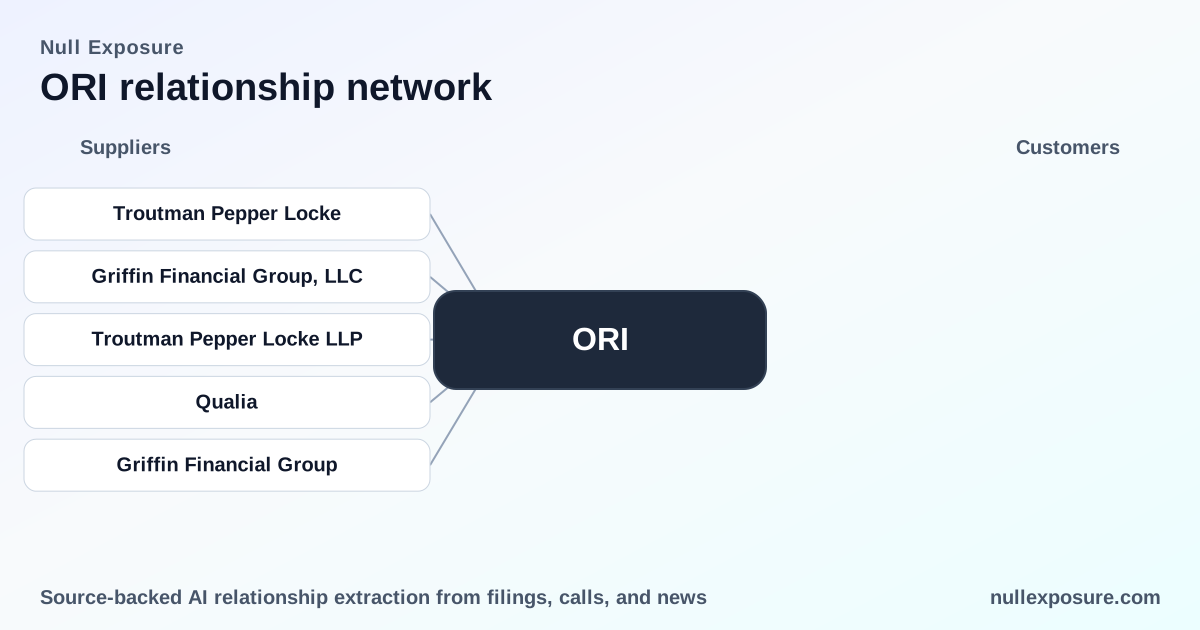
Old Republic International (ORI) — Customer Relationship Briefing: Title Insurance and Service Revenue Dynamics
Old Republic underwrites property & casualty insurance and delivers a suite of real-estate related services, monetizing through three principal channels: underwritten premiums (largely annual commercial P&C), one-time title insurance premiums collected at closing, and recurring software/licensing and transactional services tied to real-estate activity. This combination produces a mix of predictable renewal income in specialty lines and episodic cash inflows from title closings; investors should evaluate counterparties, contract structure, and geographic concentration to judge revenue durability and counterparty risk. For a schematic view of customer exposure mapping, see https://nullexposure.com/.
How ORI makes money — the investor-facing thesis
Old Republic operates as an insurance holding company with integrated service businesses that support real-estate and lending workflows. The core economics are straightforward: insurance underwriting yields earned premium and investment spread, while the Title segment converts transactional events into immediate cash through one-time title premiums and incremental recurring fees from licensing and electronic services. The balance sheet benefits from scale in underwriting (Revenue TTM ~$9.42B; Market Cap ~$9.37B) and a historically profitable operating profile (Operating Margin ~18%, Return on Equity ~17.3%). These figures support a valuation anchored in insurance economics and cyclical premium-rate dynamics.
Key monetization drivers:
- Premium rate changes and renewal retention drive organic premium growth in Specialty Insurance (net premiums earned increased 13.5% in 2024 driven by rate increases and high renewal retention).
- Title insurance is episodic: premiums are paid once at closing, creating revenue spikes tied to housing and mortgage activity.
- Software licensing and electronic services provide a smaller, but meaningful, recurring revenue layer (licensing revenue reported at $64.5M in 2024).
For more analysis on exposure and counterparties, visit https://nullexposure.com/.
Contracting posture and operating constraints — what the filing signals
Old Republic’s public disclosures reveal a mixed contract morphology that shapes cash flow predictability:
- Short-term, annually renewable underwriting: Substantially all Specialty Insurance premiums are associated with one-year policies and are recognized pro-rata with related loss expense — this produces a predictable renewal cadence but requires continual pricing discipline.
- Spot, single-premium title policies: Title policies (owners’ and lenders’ policies) are one-time premiums collected at closing, creating episodic revenue tied to transaction volume rather than a contractual recurring stream.
- Licensing and services provide recurring fees: The Title Insurance segment includes software licensing, tax-deferred exchange, and electronic recording services, with reported licensing revenues of $64.5M (2024), $62.5M (2023), and $69.2M (2022), which diversify revenue composition away from pure underwriting volatility.
- Counterparty mix includes governments and institutions: The Specialty Insurance book focuses on commercial lines sold to businesses, state and local governments and institutions, which generally reduces counterparty credit volatility compared with retail exposure.
- North American centricity: Operations and revenue focus on North America; foreign operations are not significant to consolidated totals.
- No single-customer concentration: The company discloses it does not derive over 10% of consolidated revenues from any one customer, which limits client concentration risk.
- Role diversity: Old Republic functions both as an insurer/seller and a provider of escrow, closing and ancillary services — a dual-role model that embeds the company deeper into real-estate transaction workflows.
- Renewal strength: High renewal retention in Specialty Insurance is a positive operational signal for policyholder stickiness and pricing leverage.
These characteristics create a business that is partly predictable through renewals and partly exposed to transaction cycles via title premiums.
Customer relationships in the record — who is interacting with ORI
The searchable relationship results show one clearly identified customer interaction:
- CBNK — The record shows that Standard Title requested an ALTA Commitment for Title Insurance from Old Republic National Title Insurance Company, referencing a transaction tied to Capital Bank (CBNK). This is a transactional title engagement where Old Republic was the title insurer providing commitment documentation for a closing (Mortgage Professional America, March 9, 2026: https://www.mpamag.com/us/mortgage-industry/industry-trends/dc-court-lets-capital-bank-reclaim-priority-after-botched-refinance/559063).
This item is a concrete example of how Old Republic’s Title segment participates in individual real-estate transactions: title commitments and one-time premiums accompany closings and are often central to dispute resolution over lien priority in subsequent litigation.
Why this relationship matters to investors
The CBNK/Standard Title interaction illustrates the mechanics of the Title business: Old Republic issues commitments and policies that crystallize revenue at a point-in-time, but also create contingent liabilities through claims and litigation over title defects. The transactional nature reduces recurring revenue but embeds ORI in essential closing workflows, sustaining cross-sell of escrow and electronic services.
Portfolio implications and monitoring checklist
Investors should track the following to assess the revenue sustainability and risk profile of ORI’s customer relationships:
- Transaction volumes and mortgage/RE activity: Title premiums are directly correlated to real-estate closings; macro housing activity and mortgage refinancing cycles materially influence results.
- Renewal ratios and pricing power in Specialty Insurance: Annual policy retention and premium rate adequacy determine underwriting leverage and margin expansion.
- Regulatory and litigation exposure in title claims: Commitments like the ALTA form the basis for liability — active disputes or systemic title defects increase loss provisioning.
- Licensing revenue trajectory: Software and electronic services revenue (~$64.5M in 2024) offer diversification; growth here improves revenue visibility.
- Counterparty credit and sector concentration: Government and institutional exposure lowers counterparty credit risk but increases sensitivity to public-sector budgets and infrastructure cycles.
- Geographic concentration: North America dominance provides scale but limits growth diversification into higher-growth international markets.
Key risks and balance of probabilities
- Episodic title revenue increases earnings volatility relative to purely recurring insurance models.
- Underwriting cycle risk remains inherent in P&C insurance; adverse loss development will press reserves and margins.
- Legal/regulatory outcomes in title disputes can produce outsized, idiosyncratic losses, as illustrated by litigation involving commitments and lien priority.
Bottom line for investors
Old Republic’s commercial mix of annual specialty insurance plus one-time title premiums and a small but meaningful licensing business positions the company as a resilient, service-integrated insurer with modest customer concentration and strong North American scale. The operating model trades some recurring revenue predictability for deep transactional integration into real-estate workflows—a profile that rewards monitoring of housing activity, renewal retention, and title-claims trends. For further exposure mapping and customer relationship analytics, visit https://nullexposure.com/.