Otis Worldwide: Customer wins that reinforce a global, recurring-services franchise
Otis builds and sells elevators, escalators and moving walkways while locking customers into recurring maintenance and modernization revenues; the company monetizes through new equipment sales, long‑term service contracts and large-scale modernization projects that sustain a high-margin installed-base business. Recent contract announcements demonstrate a balanced mix of infrastructure and private‑sector projects across APAC, EMEA and North America—supporting both near‑term equipment revenue and multi‑year service streams. For a concise, navigable view of these customer relationships visit https://nullexposure.com/.
Operationally Otis combines manufacturing scale with an installed‑base service platform: equipment sales generate upfront revenue and create durable service economics when customers sign long‑term maintenance and modernization agreements. The firm sells directly and through partners, serves government agencies and private developers, and operates globally across APAC, EMEA and the Americas—a business built for geographic diversification and recurring cash flow.
What investors should take from these customer engagements
The recent customer list highlights three strategic points investors care about: 1) contract mix — projects that produce both equipment and long-term service follow‑on; 2) customer type — a mix of government infrastructure authorities and private developers that reduces single‑counterparty concentration; and 3) geography — exposure across major regions that dampens localized cycle risk. The constraints in Otis’ filings reinforce these observations: long‑term contracts are common, government infrastructure work is material to the company’s pipeline, and the business is globally distributed rather than dependent on a single customer.
- Otis operates as both a manufacturer and a services provider, selling new equipment and performing installation, maintenance and modernization.
- Contracting posture emphasizes long‑term service agreements for building owners and government agencies, which supports predictable revenue streams.
- Customer concentration is low: no single customer accounted for 10%+ of consolidated net sales in recent years, reducing counterparty concentration risk.
Project-by-project readout: what was announced and why it matters
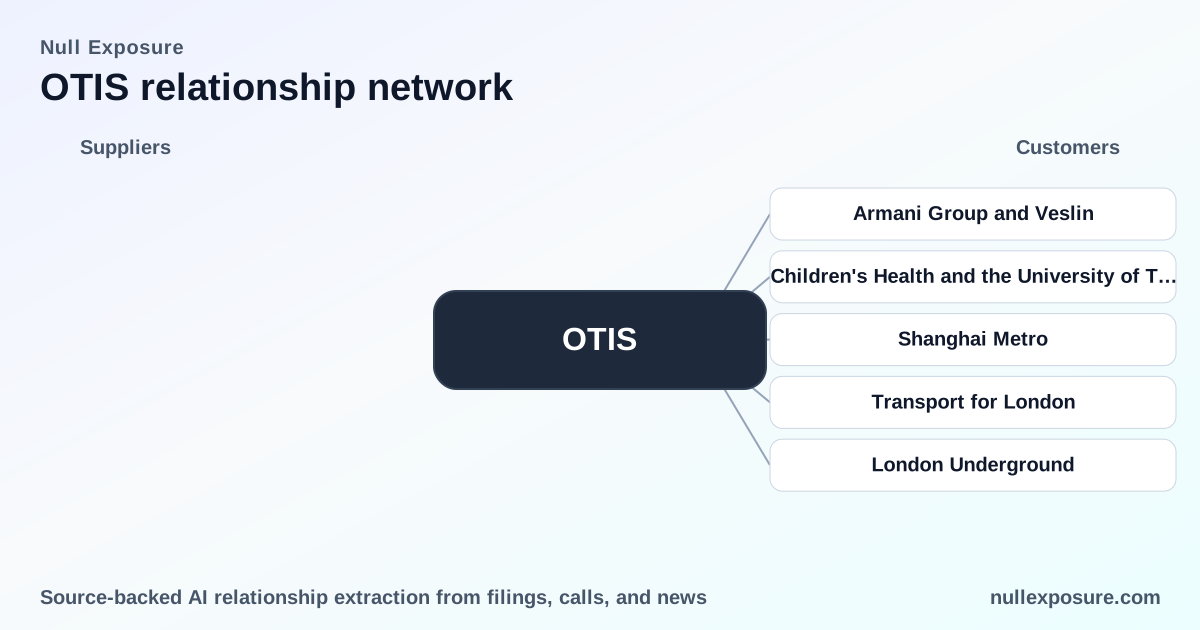
Below are the relationships disclosed in Otis’ public materials and earnings commentary, each summarized in plain English with source attribution.
Armani Group and Veslin — Skyrise deployment in Kuala Lumpur
Otis won a new‑equipment contract to deliver 26 Skyrise elevator systems with Compass 360 destination management, Otis One IoT functionality and eVue smart screens for the Armani Halston KLCC project developed by Armani Group and Veslin in Kuala Lumpur. According to Otis’ Q4 2025 earnings call, the contract showcases product integration between hardware and digital services that enhance passenger experience and tie into future service opportunities.
Children's Health and the University of Texas Southwestern — hospital elevators in Dallas
Otis secured a major equipment order to supply 39 elevators for a new pediatric hospital developed by Children’s Health and UT Southwestern in Dallas. Otis cited the project on its Q4 2025 earnings call as a material new‑equipment win in the Americas that will flow into ongoing maintenance and modernization demand.
Shanghai Metro — heavy‑duty escalators for Line 19
Otis was selected to supply more than 490 heavy‑duty public escalators for Shanghai Metro Line 19. The selection, disclosed in the Q4 2025 earnings commentary, represents a substantial infrastructure order in China and underscores Otis’ role as a supplier to government transport agencies in APAC.
Transport for London — service and modernization for London Underground escalators
Otis won a comprehensive service and modernization program covering 172 escalators on the London Underground, bringing total units serviced for Transport for London above 300. The Q4 2025 earnings call highlights this as an example of large‑scale phased modernization work that increases service backlog and recurring revenue.
Austin Convention Center — redevelopment equipment and escalators
Otis was selected to supply 46 units to the Austin Convention Center redevelopment, including SkyRise and Gen3 elevators plus public escalators, announced in FY2026 coverage from Investing.com. This project is a notable North American new‑equipment order that will generate aftermarket service opportunities over the life of the facility.
Marseille Metropolitan Transport Authority — full replacement and maintenance of 51 escalators
Otis will fully replace and maintain 51 escalators across 10 metro stations for the Marseille Metropolitan Transport Authority, reported in FY2026 press coverage. This contract is consistent with Otis’ strategy of combining modernization work with ongoing service commitments for public transport authorities.
Runwen community, Harbin City — residential elevator upgrade program
Otis will upgrade 46 elevators in the Runwen residential community in Harbin as part of a bond‑funded residential renewal, replacing units with Gen3 Comfort elevators, according to FY2026 news reporting. This project emphasizes Otis’ participation in municipal and residential renewal programs in China that pair equipment replacement with future service revenue.
How these relationships fit Otis’ operating constraints
Otis’ disclosures and the contract list align with company‑level operating signals rather than isolated anomalies. Key business model characteristics:
- Long‑term contracting posture: Otis prices and reports receivables assuming long‑term cash flows, and many customers—especially large property owners and public agencies—execute long‑term maintenance agreements that underpin recurring revenue.
- Government counterparty exposure: The company explicitly sells new equipment to government agencies for infrastructure projects (airports, railways, metros), which is reflected by multiple public‑transport contracts in this set.
- Global footprint with regional variance: Otis serves customers worldwide; recent wins span APAC, EMEA and North America, which mitigates single‑market cyclicality but requires active regional execution.
- Low single‑customer concentration: Otis states no individual customer accounted for 10%+ of consolidated net sales, an important investor comfort factor given the broad customer base.
- Integrated manufacturer + service provider model: The company designs and manufactures new equipment while its Service segment captures maintenance, repair and modernization revenues—creating high‑margin, durable cash flow from installed units.
Investment implications and risk signals
These project wins collectively support growth in new‑equipment revenue with visible follow‑on service streams, strengthening Otis’ modernization backlog and installed‑base economics. Key positive signals include diversification across customer types and geographies, and an expanding modernization pipeline that typically carries higher margins than new equipment. Risk considerations include execution on large public‑sector modernizations, regional demand volatility (notably China), and the operational complexity of integrating digital services at scale.
For a structured dashboard of Otis’ customer relationships and contract signals, visit https://nullexposure.com/.
Final takeaway
Otis’ recent announcements illustrate the company’s competency in winning both infrastructure and private development projects that generate immediate equipment revenue and create long‑term service value. Investors should view this mix as confirmation of Otis’ dual revenue engine—manufacturing scale plus recurring service cash flow—while monitoring regional demand dynamics and execution on large modernization programs.
Sources: Otis Q4 2025 earnings call transcripts (company commentary), Investing.com coverage of FY2026 earnings call highlights, and Finviz reporting on modernization backlog (March–May 2026).