Outlook Therapeutics (OTLK): Commercial foothold in Europe via distributor partnerships
Outlook Therapeutics develops and commercializes LYTENAVA (ONS‑5010), a bevacizumab gamma monoclonal antibody for retinal diseases, and monetizes through product sales to wholesalers and exclusive distribution agreements in defined markets. The company is in the early commercial phase in EMEA while continuing U.S. regulatory engagement; near‑term value for investors derives from territorial rollouts, distributor execution, and reimbursement adoption across Europe. For a concise corporate signals view, visit https://nullexposure.com/.
Why the Mediconsult deal matters for the commercial thesis
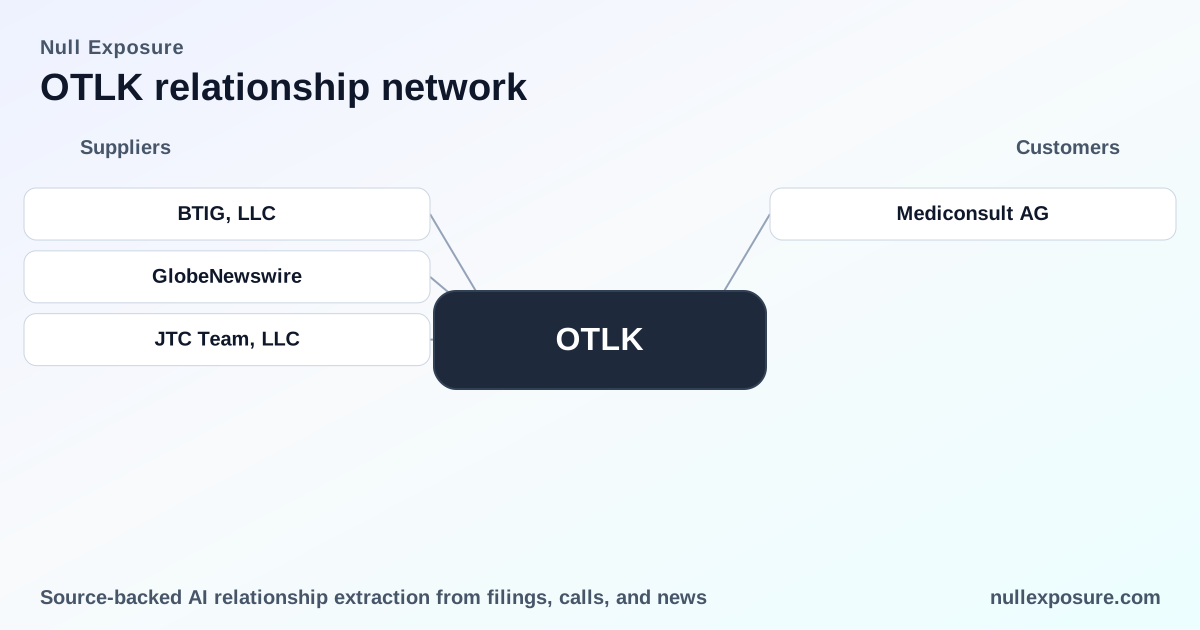
Outlook’s first wave of commercial activity in Europe relies on third‑party distribution partners to reach clinics, hospitals and pharmacies. An exclusive Swiss distribution agreement with Mediconsult AG establishes a localized sales channel that reduces go‑to‑market execution risk in Switzerland while preserving Outlook’s direct launches in other E.U. markets. According to a GlobeNewswire press release dated February 19, 2026, Outlook announced an exclusive commercial distribution agreement with Mediconsult AG for LYTENAVA in Switzerland. (GlobeNewswire, Feb 19, 2026)
Relationship: Mediconsult AG — what investors need to know
Outlook signed an exclusive commercial distribution agreement with Mediconsult AG to sell and distribute LYTENAVA in the Switzerland market, formalizing a local pathway to physicians and pharmacies. This arrangement was described in Outlook’s public releases in late 2025 and early 2026 as part of its broader European roll‑out. (GlobeNewswire press releases, Dec 31, 2025; Feb 11 and Feb 19, 2026)
What the relationship set tells you about Outlook’s operating model
- Contracting posture: Outlook favors territorial exclusives for local distribution, which accelerates access to established networks but creates reliance on partner performance in each country. The Mediconsult agreement is consistent with that posture.
- Concentration and coverage: The company launched directly in Germany and the U.K. and is partnering for Switzerland, indicating a hybrid model of direct launches plus selective exclusive distributors to fill out EMEA coverage.
- Criticality: LYTENAVA is the company’s revenue engine; distributor relationships are therefore operationally critical to near‑term topline growth.
- Commercial maturity: Activity and disclosures show an early commercial phase—initial shipments and modest revenue recognition have occurred, but broad market penetration and scale are nascent.
These are company‑level signals derived from Outlook’s disclosures on launches and customer mix rather than attributes tied to any single partner.
Company signals and constraints investors should incorporate
Outlook’s investor communications and filings provide several concrete signals:
- The company reported launching directly into Germany and the U.K. in June 2025 and recognized $1.4 million in LYTENAVA sales in the year ended September 30, 2025, signaling first‑wave commercial traction in core E.U. markets. (Company investor disclosures, FY2025)
- Public filings describe the typical buyer as pharmaceutical wholesalers/distributors who resell product to clinics, hospitals and pharmacies, confirming the reliance on distribution partners for last‑mile sales. (Company filing excerpts)
- Relationship staging is active: the company is in commercial launch mode in EMEA while simultaneously managing U.S. regulatory interactions and post‑approval commitments. (Company disclosures, FY2025–FY2026)
Together these points establish a clear commercial posture: early revenue, distributor reliance, and geographically staged expansion.
Financial and shareholder context that frames distribution risk
Outlook’s financials and ownership profile amplify the strategic importance of successful partnerships:
- Revenue run‑rate is small: Revenue TTM is reported at $205,700, with company disclosures flagging the $1.4M of LYTENAVA sales in the year ending Sept 30, 2025—both figures reflect an early commercial base rather than scale.
- Balance of power: Market capitalization is modest (≈ $31.7M), insiders hold ~15.5% and institutions about 6.4%, concentrating governance with management and insider shareholders.
- Analyst view: Consensus coverage is limited but skewed to “Buy” ratings with an analyst target price around $4.17, implying upside if commercialization accelerates.
These data points underscore that execution on distribution agreements and European market access are primary levers for investor returns.
Regulatory backdrop and operational watch‑items
Outlook continues active regulatory engagement in both the U.S. and E.U., and public releases through late 2025 and early 2026 document ongoing FDA interactions alongside European marketing authorizations and launches. (GlobeNewswire regulatory updates, Nov–Dec 2025; Feb 11, 2026)
Key operational items for investors and operators:
- Reimbursement uptake and hospital/clinic formulary adoption in Switzerland under Mediconsult’s stewardship.
- Sales cadence and inventory flow from wholesaler/distributor customers to end‑users in the initial E.U. markets.
- Additional territorial distribution agreements to broaden EMEA coverage beyond Germany, U.K., and Switzerland.
- Progress and outcomes of U.S. regulatory meetings and any follow‑on commitments that could affect manufacturing scale and global supply.
Quick investor checklist
- Track Mediconsult AG sales roll‑out reports and Swiss reimbursement decisions; these will be the earliest commercial signals from the Swiss market. (GlobeNewswire, Feb 19, 2026)
- Monitor quarterly sales disclosures versus the $1.4M FY2025 baseline for indications of scaling. (Company filings, FY2025)
- Watch for announcements of additional exclusive distributors to assess cadence and concentration risk.
- Follow FDA engagement notes for U.S. market timing and manufacturing capacity implications. (GlobeNewswire, Feb 11, 2026)
Bottom line
Outlook’s strategy is straightforward and execution‑dependent: monetize LYTENAVA through a mix of direct launches and territory‑specific exclusive distribution agreements. The Mediconsult AG deal delivers crucial Swiss market access and exemplifies the company’s commercial playbook. For investors, the immediate valuation lever is the conversion of early shipments into repeatable, reimbursed sales across EMEA; the primary risk is concentrated execution reliance on third‑party distributors and the timelines of broader regulatory and reimbursement wins.
For a focused watchlist on partner‑level exposure across public companies, see more at https://nullexposure.com/.