Occidental Petroleum: How counterparty moves are re-shaping risk and capital allocation
Occidental Petroleum (OXY) operates and monetizes by producing and marketing oil, natural gas and NGLs, operating chemical manufacturing through historically significant subsidiaries, and developing low‑carbon solutions via its Low Carbon Ventures arm; revenue flows come from commodity sales and services (marketing, midstream) while strategic asset sales and partnerships are being used to de‑lever and refocus capital toward core energy and carbon management businesses. Recent counterparty activity — most notably the sale of OxyChem and targeted midstream divestitures — materially reshapes Occidental’s counterparty exposures and balance‑sheet flexibility. For a concise map of these customer and partner moves, visit https://nullexposure.com/.
H2: Big deals first — what changed the counterparty map this year Occidental executed several high‑visibility transactions in FY2025–FY2026 that altered who it sells to and who it partners with. The sale of OxyChem to Berkshire Hathaway for $9.7 billion converted a manufacturing, operational and counterparty relationship into a one‑time liquidity event and secular de‑risking step. That $9.7 billion cash inflow materially trimmed liabilities and sharpened Occidental’s focus on upstream and carbon businesses. According to multiple media reports, Berkshire closed the purchase early in 2026, giving Occidental immediate cash to reduce debt and reallocate capital (news sources, March–May 2026).
H2: Counterparty roll call — who matters now (and why) Below I cover every named relationship reflected in the public reporting sample and explain the practical implication for investors.
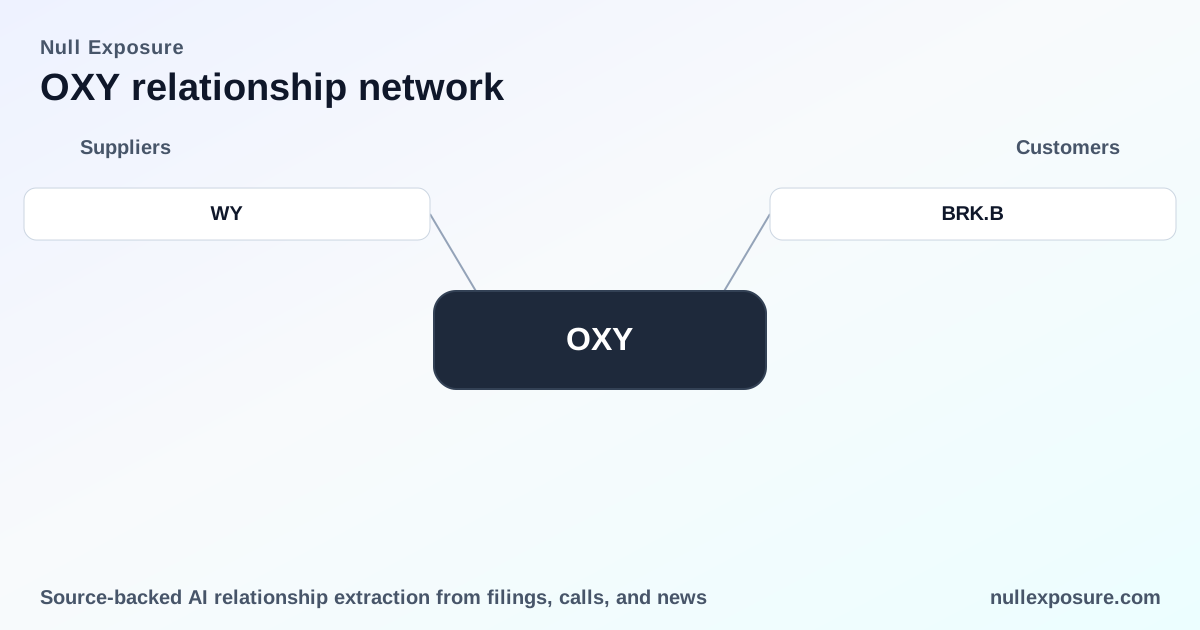
H3: Berkshire Hathaway (BRK‑A / BRK‑B) Berkshire Hathaway completed the $9.7 billion acquisition of OxyChem from Occidental, transferring ownership of the chemical business and providing Occidental with cash to reduce debt and refocus on core energy operations. A 247wallst report (Mar 31, 2026) and contemporaneous coverage at Simply Wall St (May 2, 2026) documented the closing and the transaction’s debt‑reduction effect.
H3: Enterprise Products Partners (EPD) Enterprise Products Partners purchased Midland Basin gas gathering assets from Occidental for roughly $580 million, reflecting a midstream divestiture that simplifies Occidental’s asset footprint while creating a midstream counterparty for produced natural gas. Reporting on the transaction and its midstream integration consequences appeared in Simply Wall St and TradingView earnings coverage (FY2026).
H3: Kosmos Energy (KOS) Kosmos Energy is partnered with Occidental on offshore development in the outboard Wilcox (Tiberias), where Kosmos operates and Occidental owns and operates the Lucius host facility; the arrangement is a classic operator/non‑operator development partnership. An earnings call transcript from Kosmos (Q4 2025) highlights the 50/50 arrangement and coordination between the parties (InsiderMonkey coverage, FY2026).
H3: Natural Resource Partners L.P. (NRP) Natural Resource Partners agreed to provide about 65,000 acres to evaluate and potentially develop permanent CO2 sequestration hubs for Occidental’s Low Carbon Ventures (OLCV), giving Occidental scale and land access for carbon storage — a strategic enabler for its emissions‑management business. InvestingNews covered the acreage agreement in early 2026 (FY2026).
H2: What these relationships imply about Occidental’s operating model and contract posture The mixed pattern of asset sales, midstream dispositions and strategic partnerships reveals several company‑level operating signals that matter for investors:
- Contracting posture: Occidental runs a blend of long‑term and short‑term commercial relationships. Public disclosures note material long‑term delivery commitments for oil, NGL and gas stretching to multiple years, while many marketing and midstream arrangements operate on shorter, renewable terms. This hybrid posture gives Occidental operational flexibility while locking in baseline volumes for key counterparties.
- Role and revenue mix: Occidental principally acts as a seller of core hydrocarbons and related services — production, NGLs, gas, and historically chemicals — while its marketing and midstream groups optimize logistics and third‑party service revenue. The OxyChem sale converts a manufacturing revenue stream into cash and reduces operating complexity.
- Geographic concentration and market focus: The firm retains a North America‑centric operating footprint for chemicals and much of its midstream and sequestration work; several excerpts emphasize North American manufacturing and the presentation of revenue by geographic area. That regional concentration simplifies regulatory complexity but concentrates commodity and demand risk.
- Maturity and strategic trajectory: Recent transactions are consistent with a transition from diversified manufacturing toward capital discipline in upstream and carbon businesses: divestitures reduce leverage and create space for growth capital in low‑carbon projects (OLCV), which are earlier‑stage and partner‑dependent.
- Service orientation and criticality: Enterprise’s midstream purchase and NRP’s acreage for sequestration show Occidental shifting some operational responsibilities to specialist counterparties, while maintaining critical control over host facilities (for example, Lucius offshore). These relationships are strategic and operationally critical for capacity and carbon ambitions.
H2: Risk and concentration considerations investors should price
- Counterparty concentration risk has shifted from in‑house manufacturing exposure to a smaller set of large strategic partners. The Berkshire sale eliminated OxyChem’s counterparty complexity but increased reliance on a few large transactions and midstream counterparties for capital redeployment.
- Commodity sensitivity remains central. Being a seller of hydrocarbons means cash flow and counterparty credit dynamics track oil and gas prices.
- Execution risk on nascent carbon projects. NRP acreage and OLCV partnerships are necessary for scale but are early in maturity; execution and permitting will determine value capture.
- Balance‑sheet flexibility improved materially post‑OxyChem. Public reporting indicates $9.7 billion in proceeds were used to reduce liabilities, lowering leverage and improving optionality for future deals and partnerships (news coverage, March–May 2026).
H2: Bottom line for investors and operators Occidental has traded manufacturing ownership for liquidity and strategic partner exposure. That shift improves near‑term balance sheet resilience while concentrating operational risk into a smaller set of large counterparties and partner‑led projects (midstream and carbon sequestration). Institutional investors should treat the company as a hybrid upstream merchant with growing exposure to project‑based carbon ventures and third‑party midstream operators.
For investors or operating partners who want the full counterparty map and constraints overview, see the broader coverage at https://nullexposure.com/.
Bold takeaway: capital discipline plus partner specialization is the new Occidental playbook — stronger balance sheet today, concentrated operational counterparty exposure tomorrow.