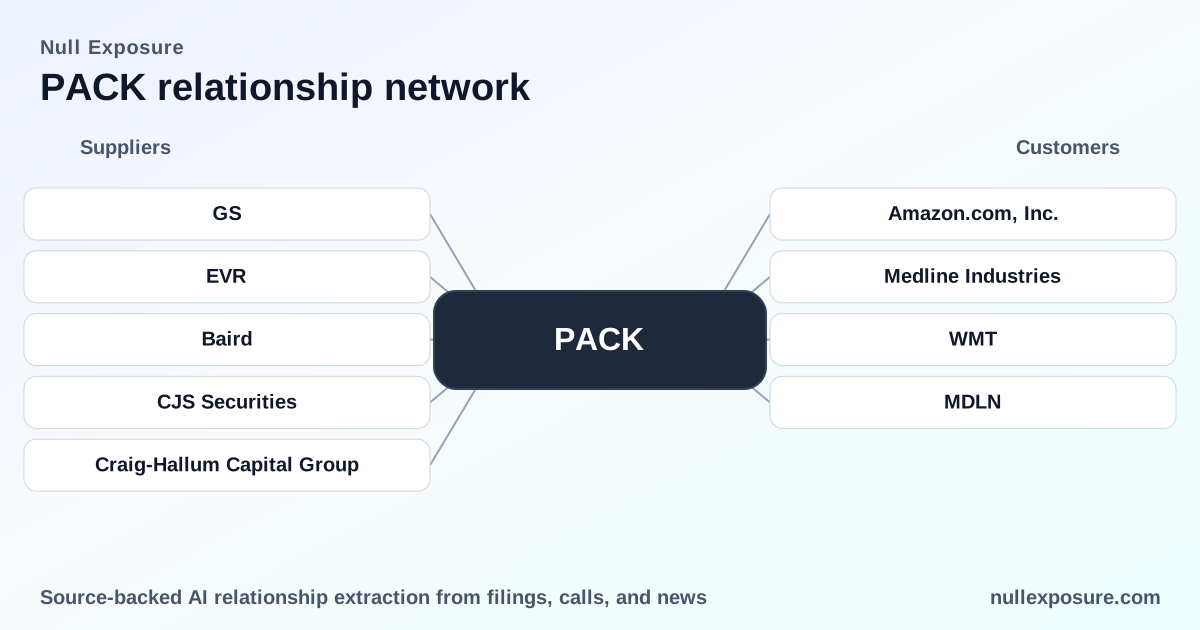
Ranpak (PACK) — customer relationships that drive the automation pivot
Ranpak sells paper-based protective packaging systems (PPS) and recurring consumables, plus machine leases and subscription-style service agreements; it monetizes through a mix of equipment sales, short-term machine leases, recurring fees for machine usage and consumables, and strategic commercial deals that sometimes include equity-linked warrants. Revenue is driven by installed equipment and high-margin consumables, while commercial partnerships with large retailers and healthcare distributors accelerate scale and recurring cash flow. For a deeper look at how these customer relationships translate into commercial and financial risk, visit https://nullexposure.com/.
How Ranpak makes money in plain terms
Ranpak’s business model is a systems play: sell or lease PPS machines, then capture recurring revenue from paper consumables and service. Machine leases are recognized straight-line over agreements that are typically less than one year, and Ranpak charges annual or quarterly fixed fees for machine use in some arrangements, creating both short-term contractual exposure and subscription-like revenue streams. The company sells primarily through a global distributor network but also contracts directly with large end-users, producing a mixed sales channel that supports scale without a wholly captive direct salesforce.
The strategic customer relationships investors need to know
Amazon — strategic financing and warrant economics
Ranpak agreed to issue a warrant to a wholly‑owned Amazon affiliate to acquire up to 18,716,456 shares at $6.8308 per share under a Transaction Agreement signed Jan 28, 2025, signaling a deeper commercial-financial tie between the companies. According to Ranpak’s FY2024 Form 10‑K, that warrant structure is an explicit piece of the relationship and creates non-cash accounting effects reported in subsequent quarters. (Ranpak FY2024 10‑K; company filing Jan 2025.)
A separate earnings/news disclosure noted a non-cash reduction in revenue of $2.3 million in Q4 2025 tied to warrants related to agreements with Amazon and Walmart, indicating the warrant economics have a measurable impact on reported revenue. (Yahoo Finance reporting, May 3, 2026.)
Walmart — large-scale deployment of AutoFill systems
Ranpak has expanded a partnership with Walmart to deploy AutoFill and AI-powered DecisionTower technology across multiple Next Generation Fulfillment Centers, positioning Ranpak inside a major retail logistics network for high-volume packaging automation. The company and third-party reports describe the expansion as multi‑center and long-running, reflecting a commercial anchor in retail fulfillment. (SimplyWallSt summary of historical expansion; Marketscreener reporting March 2026.)
Market announcements around the FillPak Mini launch explicitly referenced Ranpak’s expanded Walmart partnership, which reinforces that Walmart is a named customer for newly commercialized, space‑efficient solutions and contributes both equipment and consumables demand. (MarketScreener product launch release, March 10, 2026.)
Medline Industries — healthcare automation and box customization
Ranpak announced a major collaboration with Medline to provide automated box customization solutions across high-volume healthcare distribution operations, signaling a sector-specific use case for Ranpak’s automated systems in medical supply chains. Management highlighted this partnership on an earnings call as central to Ranpak’s push into automated box customization for healthcare. (Ranpak earnings call Q4 2025; March 2026.)
Multiple press releases repeated the same strategic tie-up and product positioning, confirming Medline as a deliberate channel into high-volume, mission‑critical distribution where packaging efficiency and protection can materially affect customer operations. (MarketScreener and TipRanks coverage, January–May 2026.)
What the contractual and structural constraints tell investors
The relationship-level data and company disclosures imply a distinct operating posture with several investment-relevant characteristics:
-
Contracting posture: Ranpak combines short-term machine leases (contracts under one year) with subscription-style arrangements that include annual or quarterly fixed fees for machine usage, which creates a revenue mix that is both recurring and sensitive to churn and renewal dynamics. This tilts the revenue base toward predictability in consumables but exposes lease income to short contract cycles.
-
Concentration and criticality: One customer accounted for 10.2% of net revenue in 2024, indicating meaningful concentration risk at the company level; large anchor customers such as major retailers and healthcare distributors are commercially critical for scale and product validation.
-
Channel dependence: Approximately 79% of net revenue comes from distributors, reflecting a highly intermediated go‑to‑market model that supports broad market reach but concentrates commercial control in third parties and reduces direct pricing leverage for certain end markets.
-
Geographic diversification: Revenue is geographically diverse—about 44% North America, 48% Europe, and 8% Asia and other locations—reducing single‑market risk but creating exposure to Euro-denominated revenue and FX translation effects (substantially all non‑USD revenue denominated in Euros in 2024).
-
Maturity of relationships: Ranpak’s distributor relationships are established and long-term across 300+ partners, a signal of commercial maturity for the core PPS business and a stabilizer for recurring consumables sales.
-
Product positioning: The business is centered on its core PPS systems and paper consumables, positioning Ranpak as a systems-plus-consumables provider rather than a disposable-only vendor—this supports higher lifetime value per installed machine.
Investment implications — risk, runway, and valuation context
-
Upside: Large, named partners (Amazon, Walmart, Medline) provide commercial validation and sizable distribution channels for both machines and consumables, supporting a clear path to recurring revenue scale if installations and consumable attach rates accelerate. Strategic warrants and partnership structures can align incentives and accelerate rollout.
-
Risk: Short-term lease contracts and heavy distributor reliance create renewal and concentration risk; a single top customer represented over 10% of revenue in 2024. FX exposure is material given high Euro-denominated revenue. Reported non-cash warrant-related revenue adjustments reduce headline revenue volatility and complicate near-term comparability. Operational execution on deployments and consumables penetration will determine whether commercial relationships translate into durable free cash flow.
-
Valuation posture: Ranpak’s market cap and reported EBITDA place it in a recovery/scale phase where successful partner rollouts will be rewarded; however, high beta and negative EPS reflect execution sensitivity and cyclical demand exposure in e‑commerce and industrial channels.
For a consolidated view of Ranpak’s customer playbook and to track how these relationships evolve into durable revenue, visit https://nullexposure.com/ for ongoing coverage and datasets tailored to investors.
Bottom line
Ranpak’s customer relationships are both the engine and the risk for the company’s automation pivot: anchor agreements with Amazon and Walmart provide distribution scale and financing complexity, while Medline demonstrates cross‑industry product-market fit in healthcare. Investors should weigh the recurring consumables economics and installed base growth potential against contract duration, distributor concentration, and warrant-related accounting adjustments when assessing the company’s path to sustainable profitability.