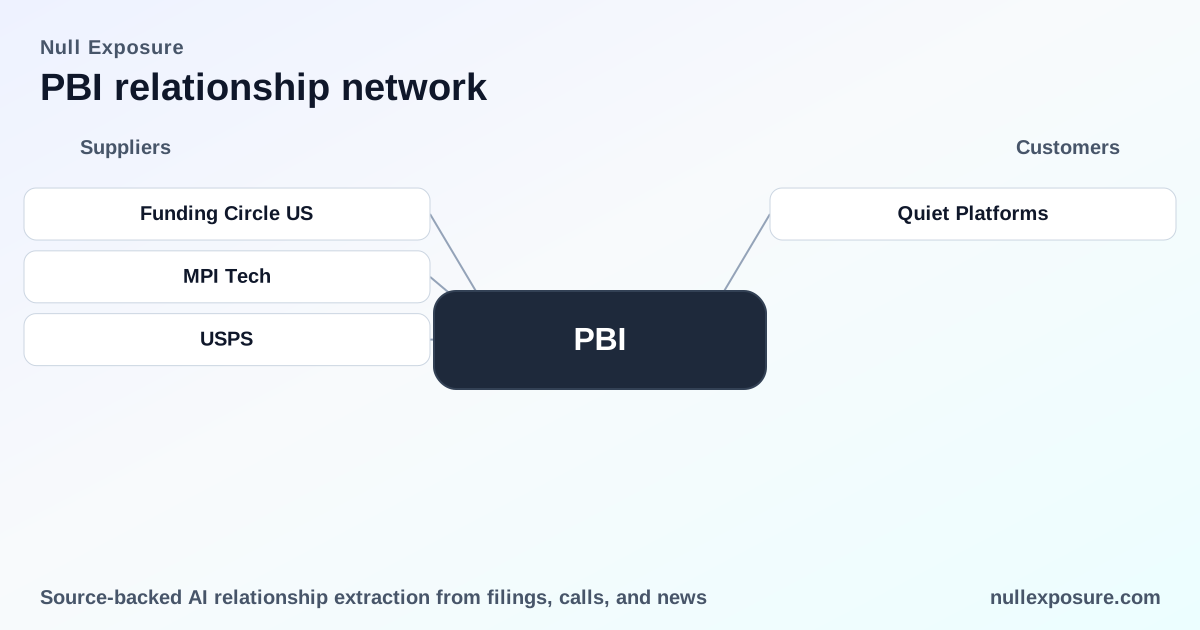
Pitney Bowes (PBI): Customer relationships that drive a mature shipping-and-services platform
Pitney Bowes operates a diversified shipping, mailing and financial-services business that monetizes through equipment sales and leases, recurring shipping and mail subscription fees, presort and fulfillment services, cross-border software, and finance products via Pitney Bowes Bank. Its go-to-market mixes direct sales, distributor channels and service contracts, which together create predictable recurring revenue and a broad footprint across small businesses, large enterprises and government clients.
For a concise, investor-focused view of these customer relationships and what they imply for revenue durability and operational risk, see more on Null Exposure: https://nullexposure.com/
How the customer map informs where Pitney Bowes earns and how stable it is
Pitney Bowes’ customer base spans three commercial tiers—small business, large enterprise and government—and this breadth is a deliberate part of the operating model: subscription and maintenance agreements deliver ratable revenue recognition while equipment leasing and sales create higher-variance receipts. The company’s filings note that revenue for shipping subscription solutions is recognized evenly over contract terms, reflecting a contracting posture that favors recurring streams rather than one‑off project billing. The firm is heavily weighted to North America in revenue and finance offerings, with selective presence in EMEA and the UK through its financing arm.
Several constraints shape investor analysis:
- Contracting posture: Subscription and maintenance contracts underpin recurring revenue; financing contracts (through the Bank) add sticky, credit‑linked revenue.
- Customer mix and concentration: The client base is large and diverse; the company reports no single client greater than 10% of consolidated net sales, making individual accounts immaterial to consolidated revenue.
- Role diversity: Pitney Bowes acts as seller, distributor and service provider, which increases optionality but also creates operational complexity around logistics and aftermarket support.
- Geography and maturity: Revenue is concentrated in North America, with established presort and USPS workshare relationships that are operationally critical.
These characteristics support cash stability while exposing the company to pockets of operational risk in logistics and e-commerce fulfillment.
Customer relationships — who they are and why they matter
Quiet Platforms
Quiet Platforms announced a collaboration with Pitney Bowes to integrate value‑added carrier services into Quiet Platforms’ open-sharing network, signaling PB’s participation in diversified last‑mile and marketplace-enabled delivery partnerships. A FreightWaves report (March 10, 2026) covered the collaboration between Quiet Platforms and Pitney Bowes, highlighting PB’s role as a logistics partner for non‑traditional delivery networks. Takeaway: partnership extends PB’s carrier services into marketplace-led delivery channels.
Source: FreightWaves, March 10, 2026.
Bark (BarkBox owner)
Pitney Bowes’ e‑commerce logistics unit historically served digital‑native merchants including BarkBox’s owner, Bark, which positions PB within the subscription‑commerce fulfillment channel that requires repeatable, high‑volume parcel handling. SupplyChainDive noted Bark among customers of PB’s e‑commerce logistics operations (reported May 3, 2026). Takeaway: relationship demonstrates exposure to subscription e‑commerce demand and the operational intensity that accompanies it.
Source: SupplyChainDive, May 3, 2026.
U.S. Postal Service
Pitney Bowes is the Postal Service’s largest workshare partner and regularly uses trucking to move parcels from sortation facilities to Postal Service sites, underlining PB’s entrenched role in national mail infrastructure and presort services. SupplyChainDive documented PB’s workshare role with the USPS in an industry piece (first seen in 2026 referencing earlier operations). Takeaway: the USPS relationship is operationally critical and a structural moat for presort services.
Source: SupplyChainDive (industry reporting; related excerpts from company service disclosures).
Shein
Shein has been identified among clients that used Pitney Bowes’ e‑commerce logistics services, which places PB in the logistics supply chain for high‑volume fast‑fashion flows that can generate scale but also volatility. SupplyChainDive listed Shein as a customer of PB’s now‑shuttered e‑commerce logistics unit (May 3, 2026). Takeaway: exposure to large cross‑border retail accounts increases volume upside and concentration risk in fulfillment.
Source: SupplyChainDive, May 3, 2026.
Hudson’s Bay
Hudson’s Bay was cited as a customer of Pitney Bowes’ e‑commerce logistics operations, indicating retail and department‑store order flows historically routed through PB’s fulfillment services. SupplyChainDive named Hudson’s Bay among clients of PB’s e‑commerce unit (May 3, 2026). Takeaway: relationships with legacy retailers reflect PB’s role as a fulcrum between traditional retail logistics and omnichannel needs.
Source: SupplyChainDive, May 3, 2026.
Victoria’s Secret
Pitney Bowes’ logistics services list includes Victoria’s Secret, tying PB into branded omnichannel fulfillment for apparel and lifestyle categories. SupplyChainDive noted Victoria’s Secret among customers (May 3, 2026). Takeaway: large retail accounts drive scale but also create exposure to retail sector cyclicalities.
Source: SupplyChainDive, May 3, 2026.
You can review these relationship patterns and what they mean for portfolio risk at Null Exposure: https://nullexposure.com/
Investment implications and operational risks — what investors should weigh
- Recurring revenue and predictability: Subscription shipping solutions and maintenance contracts generate ratable revenue, which supports margin stability and cash flow forecasting. This is a strategic advantage for valuation compared with pure asset‑sale models.
- Immaterial customer concentration at the consolidated level: Company disclosures confirm no single client exceeds 10% of consolidated sales, which reduces counterparty risk to headline customers but does not remove sectoral vulnerability.
- Operational concentration in presort and USPS workshare: Being the USPS’s largest workshare partner creates a durable competitive position for mail processing, but also concentrates operational risk—disruptions in sortation or transportation lanes directly impact a core revenue stream.
- E‑commerce logistics volatility: Recent press coverage documents that PB’s e‑commerce logistics unit served major online retailers and marketplaces but faced restructuring; relationships with Shein, Bark, Hudson’s Bay and Victoria’s Secret illustrate both the growth opportunity and executional risk in high‑volume fulfillment. SupplyChainDive reported the shuttering/reshaping of PB’s e‑commerce unit (May 3, 2026), which is relevant to near‑term revenue trajectory for fulfillment services. This is a key operational risk to monitor.
- Geographic skew: Revenue is weighted to North America, and financing products (the Bank) focus on U.S., Canada and U.K. clients, concentrating regulatory, credit and macro exposure in a few regions.
- Role diversification: Acting as seller, distributor and service provider improves reach but increases execution complexity across aftermarket, leasing and credit functions; each role carries distinct margin and working‑capital dynamics.
Bottom line for investors and operators
Pitney Bowes delivers a diversified mix of subscription, services and financing revenue anchored by presort and mailing expertise. The business combines predictable recurring streams with pockets of operational leverage in logistics and fulfillment; the USPS workshare relationship is a distinct competitive asset while e‑commerce client exposure introduces episodic volatility. For investors, the tradeoff is between stable subscription cash flows and execution risk tied to high‑volume logistics contracts.
For a deeper, customer-level risk analysis and monitoring workflow for PBI, explore methodology and signals at Null Exposure: https://nullexposure.com/