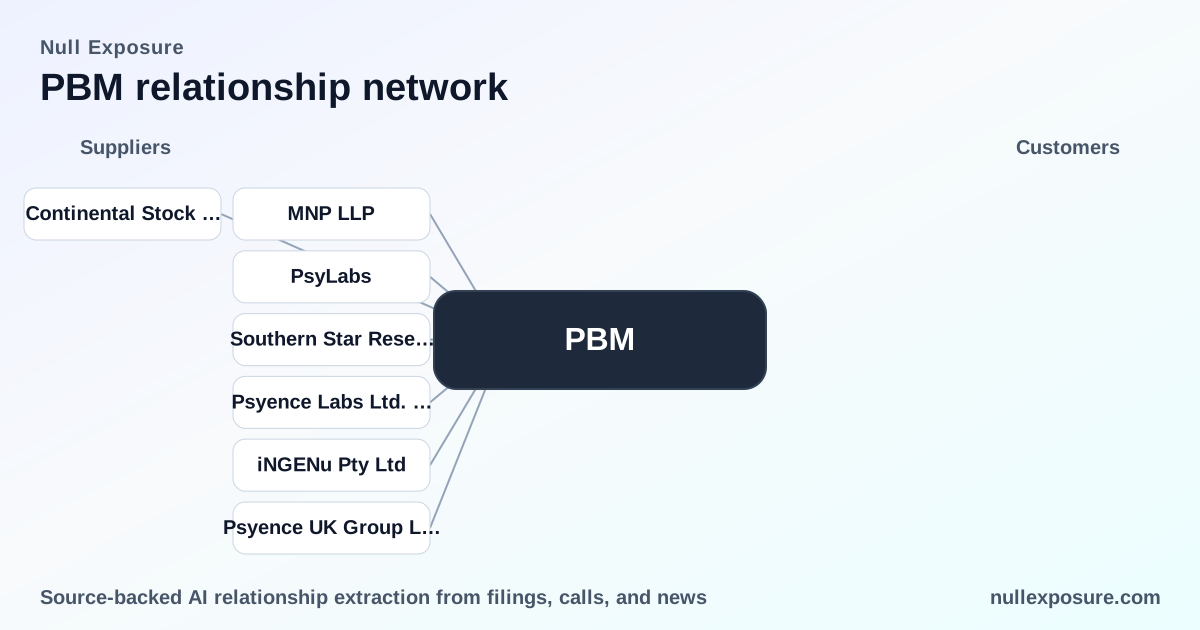
Psyence BioMed (PBM): Clinical partners are the short-term signal for a pre-revenue biotech
Psyence BioMed operates as a vertically integrated developer of psilocybin-based therapies, combining cultivation, formulation and clinical programs into a single development engine. The company currently monetizes through intellectual property and clinical progress that enable future licensing or product commercialization — today’s value drivers are trial execution, site relationships and regulatory traction rather than product sales.
If you track partner-led execution as a predictor of trial timelines and commercial optionality, Psyence’s recent expansion of its Australian clinical network is a material operational development. For a concise view of the company and its partners, visit https://nullexposure.com/ and read the supporting intelligence that underpins these relationship signals.
Why the Australian site expansion matters to investors
Psyence announced an expansion of its Australian clinical site footprint in April 2026; this is a targeted operational move to accelerate patient recruitment and to validate clinical logistics for NPX-5 trials. Clinical site quality and geographic clustering directly affect enrollment speed, protocol fidelity and the cost of data collection, so adding established hospital and specialist research partners is a tangible way to reduce execution risk on near-term endpoints. According to a GlobeNewswire press release on April 8, 2026, the company expanded its site network to five sites to advance NPX-5 supported activities.
The partners — who they are and what they bring
Ramsay Health Care
Ramsay Health Care was added to Psyence’s Australian clinical network as a hospital partner, bringing institutional hospital infrastructure and specialist access that supports in-patient procedures and safety oversight. This addition directly strengthens Psyence’s ability to run larger, site-based clinical cohorts. (GlobeNewswire, April 8, 2026)
NeuroCentrix
NeuroCentrix joins the network as a specialist research partner, providing neuroscience-focused clinical capabilities that complement Psyence’s therapeutic protocols. The partnership increases the company’s capacity to conduct specialist assessments and neurobiological endpoints. (GlobeNewswire, April 8, 2026)
Empax Centre
Empax Centre in Perth is an existing established site where the study is currently operating; clinical dosing began in late 2025, indicating the trial is already underway at operational sites. This gives Psyence early on-the-ground data collection and safety signal monitoring. (GlobeNewswire, April 8, 2026)
Mind Medicine Australia Clinic
The Mind Medicine Australia Clinic in Melbourne is another active dosing site in the network, supporting outpatient delivery and follow-up assessments that are central to mental-health-focused trials. Having a dedicated clinic partner accelerates standardized patient care and data capture. (GlobeNewswire, April 8, 2026)
Paratus Clinical Research
Paratus Clinical Research, also in Melbourne, completed the initial group of operational sites where dosing began in late 2025, helping diversify recruitment sources within the metropolitan area and adding experienced clinical research staff to the study execution. (GlobeNewswire, April 8, 2026)
How these relationships map to PBM’s operating model and business model constraints
Psyence’s business model is execution-centric: without product revenue, value accrues from successful trials, IP protection and the ability to strike licensing or commercialization agreements. The partner list signals a pragmatic contracting posture — the company contracts out clinical delivery to established hospitals and specialist research centers rather than attempting to internalize all trial operations. That posture reduces fixed overhead but creates operational dependency on external sites for recruitment and protocol adherence.
Company-level signals investors should weigh (drawn from public filings and recent disclosures): as of the quarter ended September 30, 2025, PBM reported zero revenue and negative EBITDA, with a market capitalization in the low tens of millions and very low institutional ownership. These facts underscore that the company is an early-stage, capital-sensitive clinical developer. Specifically:
- As of the latest public quarter, PBM shows no product revenue and negative operating results, so cash runway and financing strategy are critical to monitor.
- Concentration risk exists at the program level: the firm’s near-term value is tightly coupled to a small set of clinical programs and the performance of a handful of sites.
- Criticality: external clinical partners are operationally critical — site performance directly impacts timelines for data readouts and potential partnering conversations.
- Maturity: PBM remains in pre-commercial clinical stages; the network expansion is a step toward operational maturity but does not change the underlying pre-revenue status.
Practical implications for investors and operators
- Positive: Adding Ramsay Health Care and specialist research partners like NeuroCentrix increases institutional credibility and operational capacity, which should shorten enrollment timelines and strengthen safety oversight.
- Risk: Externalized trial delivery concentrates execution risk in third-party sites and local regulatory environments; any site-level delays will have outsized effects on program timelines.
- Operational focus: Monitor enrollment rates, site initiation timelines, adverse event reporting cadence, and any amendments to trial protocols — these are the immediate leading indicators for value realization.
- Balance sheet watch: With no revenues, the company will need to preserve cash or secure financing before later-stage milestones.
For operators evaluating PBM as a potential collaborator or counterparty, the network composition signals a preference for established clinical institutions and specialist boutiques, which implies that Psyence values institutional governance and established site procedures over ad hoc clinics.
If you want the broader intelligence and comparative relationship analysis that investors use to model trial risk and partner concentration, see https://nullexposure.com/ for additional context.
Bottom line: a tactical expansion that matters, but execution is everything
Psyence’s Australian site expansion is a material operational update for a company whose value hinges entirely on clinical execution. The addition of hospital-grade partners and specialist research centers directly improves PBM’s ability to enroll and manage complex trials, which is a positive for near-term program momentum. However, the company remains pre-revenue and capital reliant, so the ultimate value impact of these relationships will depend on enrollment performance, data outcomes and the company’s financing path.
Key items for investors to watch next: enrollment velocity across the five sites, interim safety signals, regulatory communications, and any licensing or partnership announcements that monetize trial progress.