PACCAR (PCAR): Customer relationships that shape product demand and technological optionality
PACCAR is a vertically integrated truck manufacturer that monetizes through vehicle and parts sales, product support services, and captive finance/leasing via PACCAR Financial Services. The company sells trucks under Kenworth, Peterbilt and DAF nameplates, distributes parts, and captures recurring revenue from service and financing—while selectively partnering with autonomy and electric vehicle players to sustain future demand. For investors, the key questions are how distribution partnerships, dealer concentration, and strategic tech alliances affect demand elasticity, residual values, and the financing book. Learn more: https://nullexposure.com/
Why customers and partners drive the PACCAR thesis
PACCAR’s revenue mix—vehicle sales, parts and services, and financial services—creates high revenue visibility from dealer and fleet channels while exposing the company to cyclical capex from large fleets and to technology transition risks (autonomy, electrification). The customer signals in public filings and media show a mix of long-term finance contracts, dependence on independent dealers for distribution, and strategic OEM partnerships for autonomy and electric truck supply.
Customer map: the relationships that matter
Aurora (AUR)
PACCAR is a manufacturing and integration partner for Aurora’s autonomous driving system, supplying prototype and production trucks built to accommodate the Aurora Driver and working jointly on launch plans for a third-generation commercial hardware kit. This is documented in Aurora’s earnings call transcripts and a 8‑K citing joint development and prototype testing (Aurora earnings calls 2025Q3/2025Q4; 8‑K disclosed in early 2026).
AUROW
AUROW references the same prototype testing collaboration with PACCAR in its 2025Q3 earnings commentary, underlining PACCAR’s role as a manufacturing host for autonomy prototype validation at PACCAR facilities (AUROW 2025Q3 earnings call, March 2026).
Rush Truck Centers (RUSHB)
Rush Truck Centers is a major dealer network and repeat buyer of Peterbilt and other OEM trucks; industry coverage shows Rush prioritizes allocations of new Peterbilt units to national accounts and has materially integrated Peterbilt inventory into its dealer operations (MarketScreener & FreightWaves reporting, FY2025–FY2026).
Rush Enterprises (RUSHA)
Rush Enterprises’ public filings and press releases enumerate its representation of Peterbilt, International and other brands across U.S. and Canadian dealerships—illustrating the dealer channel that sells PACCAR-manufactured Peterbilt units to end customers (Rush press releases and 10‑K / GlobeNewswire, FY2024–FY2026).
Kenworth
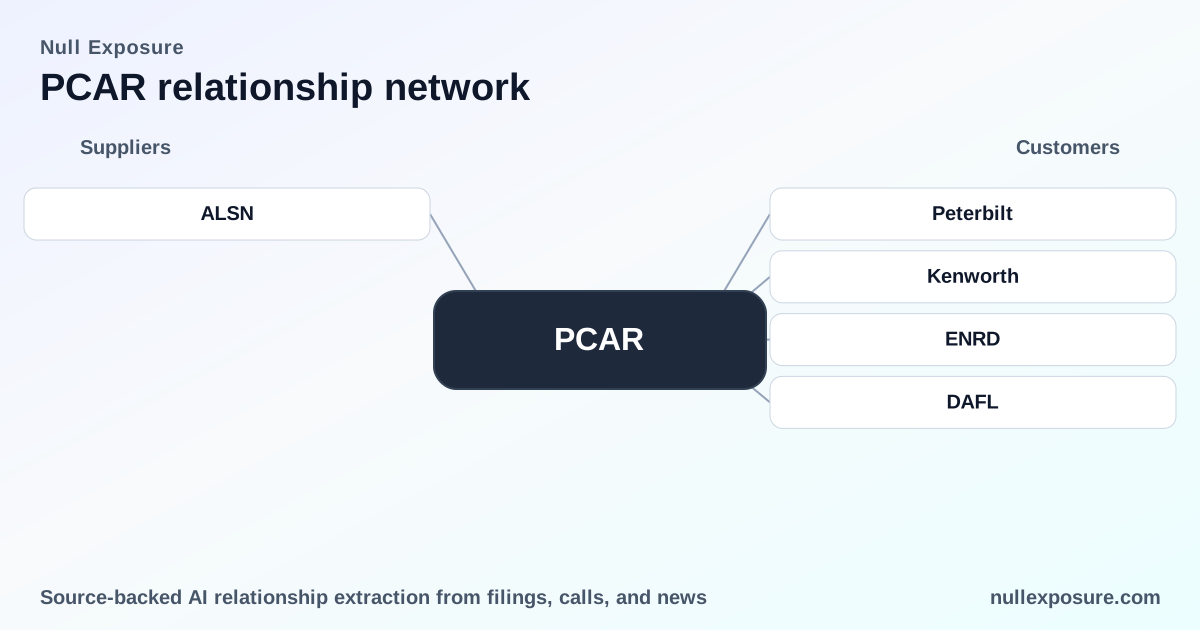
Kenworth is a PACCAR brand and internal customer of PACCAR’s new engine manufacturing investments; media coverage of PACCAR’s Mississippi engine plant specifically notes production of 12.9L and 9.2L diesel engines for Kenworth vehicles (TruckingInfo, FY2026).
Peterbilt
Peterbilt, another PACCAR brand, is repeatedly referenced as a direct recipient of PACCAR engine production and as the OEM brand distributed through dealers like Rush—underscoring integrated product flow from PACCAR factories to dealer networks (TruckingInfo and dealer coverage, FY2026).
DAF
DAF—PACCAR’s European brand—is cited alongside Kenworth and Peterbilt as a core beneficiary of PACCAR’s new engine capacity, reflecting the group’s multi‑brand manufacturing footprint across North America and Europe (TruckingInfo coverage, FY2026).
DAFL
DAFL (DAF/DAFL referenced in multiple news items) is mentioned in the same context as DAF concerning the new engine manufacturing facility and the complement to PACCAR’s existing Netherlands engine operations (industry press, FY2026).
Einride (ENRD)
Einride sources electric truck chassis from established OEM partners including PACCAR (Kenworth/Peterbilt) while focusing its product on software and operations—evidence that PACCAR supplies vehicle platforms to electric freight operators as they outsource powertrain and operational layers (TrendingTopics summary of Einride financing, FY2026).
Embark (EMBK)
Embark selected the Kenworth T680 as the hardware platform for its autonomous interface in trials and programs, highlighting PACCAR trucks’ adoption as a platform for third‑party autonomy stacks (FreightWaves reporting, FY2022).
Hyzon (HYZN)
Hyzon has fielded hydrogen-powered truck projects built on a Class‑8 DAF chassis, indicating PACCAR’s DAF platform is used by alternative powertrain integrators for low‑emission applications (DairyReporter coverage, 2021).
Universal Logistics Holdings (ULH)
Universal Logistics Holdings was reported operating Peterbilt 579EV electric trucks in its fleet, showing direct fleet-level adoption of PACCAR’s electrified vehicle offerings in customer operations (Trucking Dive, FY2026).
What the constraints tell investors about PACCAR’s operating model
-
Contracting posture: PACCAR’s finance and lease contracts for trucks typically span three to five years, and operating leases follow a similar multi‑year cadence, which creates durable revenue streams from PACCAR Financial Services and smooths manufacturing demand over time. Evidence for three‑to‑five year terms is embedded in the company’s finance disclosures.
-
Payment and working capital signals: Standard payment terms for trucks and aftermarket parts are short (typically within 30 days), though PACCAR can extend terms selectively—this supports conservative receivables turnover but leaves room for programmatic lease financing where appropriate.
-
Customer concentration and counterparty types: PACCAR serves large fleets, mid‑market companies, and owner‑operators, with financing book exposure concentrated in a mix that includes several large enterprise customers; the firm has noted higher reserve activity tied to a small number of large fleet counterparties.
-
Geographic reach: Sales and financing are primarily North America and Europe, with manufacturing and distribution footprints that support global sales but concentrate earnings in NA/EMEA regions.
-
Materiality and revenue mix: Other product sales outside trucks and parts represent less than 1% of consolidated revenues, signaling that truck, parts and financial services are core revenue drivers.
-
Relationship roles: PACCAR is both seller (primary OEM) and service provider (product support and financing), while distribution flows through independent dealers—supporting scale but adding dependency on a dealer network for market access.
-
Segment signals: The business is segmented into Truck, Parts, Services, and Financial Services, with Truck and Parts driving the majority of topline and Services/Finance generating recurring aftermarket and interest income.
Investment takeaways and risks
-
Key strength: Vertical control across manufacturing, parts and captive finance gives PACCAR strong margin and lifecycle visibility; partnerships with autonomy and e‑truck integrators create optionality without requiring PACCAR to be exclusively the software owner.
-
Key risk: Dealer and large‑fleet concentration, plus multi‑year financing exposure, means credit stress in a handful of large counterparties would have outsized effects on reserves and PFS performance.
-
Where to watch next: Monitor Aurora and other autonomy partners for scale commitments, dealer order patterns (Rush and others), and quarterly PFS credit metrics for signs of stress or recovery.
For a consolidated view of PACCAR customer relationships and their investor implications, visit https://nullexposure.com/ — or contact our team for custom customer-concentration analysis.