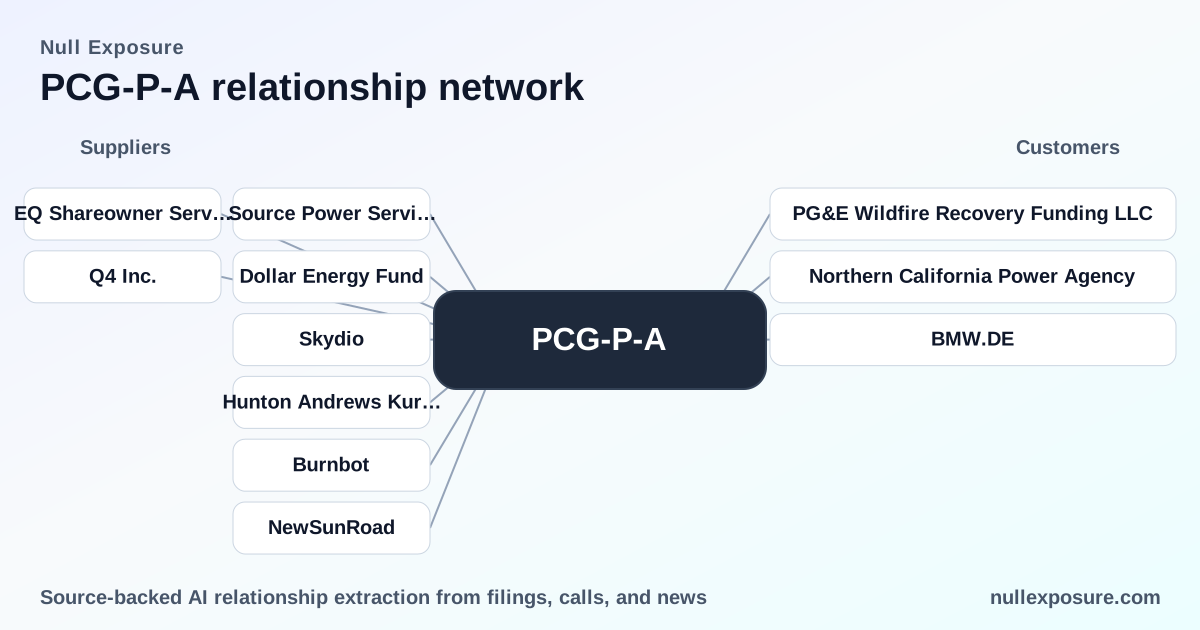
PCG-P-A — Who Pays, Who Partners, and What That Means for Preferred Holders
Pacific Gas & Electric Company issues the PCG‑P‑A 6% preferred as a fixed-income claim on a deeply regulated utility whose revenue is primarily collected through regulated retail tariffs and long-term power contracts. Investors in PCG‑P‑A are effectively buying exposure to a capital structure supported by a large, captive customer base and a handful of structured counterparties that participate in recovery financing, fuel blending pilots, and distributed electrification programs. Credit resilience for preferred holders depends on the utility’s regulated cash flow, structured recovery mechanisms, and the stability of key commercial relationships. For a fast pathway to the relationship maps and sourcing behind this note, visit https://nullexposure.com/.
What the customer relationships tell us at a glance
PG&E operates as a monopoly electric and gas distributor in large parts of California, monetizing through regulated rates approved by the California Public Utilities Commission and through specific, contract‑driven programs that allocate costs to ratepayers or specialized recovery vehicles. The relationships documented below are not retail customer anecdotes — they are strategic commercial and recovery counterparty links that affect cash flow allocation, operational programs, and long‑term risk transfer for the enterprise.
- The relationship set shows a mix of structured financing, public‑sector energy partners, and large corporate programmatic customers.
- These linkages signal structural revenue support (recovery bonds), operational collaboration on hydrogen and renewable integration, and demand‑side management partnerships that influence earnings volatility and regulatory treatment.
- There are no explicit constraints flagged in the provided relationship data, which itself is a company‑level signal about the nature of disclosures available in the sampled sources.
Counterparties and what each relationship means for PCG‑P‑A holders
PG&E Wildfire Recovery Funding LLC — This entity plays a central role in PG&E’s post‑wildfire capital structure: bond proceeds were used to purchase recovery property from PG&E as part of a structured recovery financing. According to a Hunton advisory describing the offering, proceeds from a Series 2022b senior secured recovery bond were earmarked to acquire recovery assets from PG&E, directly affecting how wildfire liabilities and recovery cash flows are isolated and repaid. (Hunton news release, 2022: https://www.hunton.com/news/hunton-advises-pacific-gas-and-electric-on-39-billion-offering-of-sr-secured-recovery-bonds-series-2022b)
Northern California Power Agency (NCPA) — NCPA appears as a project partner in hydrogen feasibility work connected to PG&E’s gas infrastructure innovations. Public coverage of the H2 project shows NCPA’s Lodi Energy Centre is positioned to accept hydrogen‑natural gas blends for electric generation, linking PG&E operational pilots to municipal or joint‑action utility customers and co‑investors. This relationship underscores PG&E’s role in pilot fuel‑blend commercialization and the potential operational transition pathways for gas assets. (World Pipelines coverage of PG&E‑led hydrogen study, 2022: https://www.worldpipelines.com/business-news/03052022/pge-launches-study-on-hydrogens-feasibility-within-gas-pipelines/)
BMW / BMW Group — PG&E is a program partner for BMW’s smart‑charging initiative in Northern and Central California, making BMW drivers who are PG&E residential customers eligible for advanced charging services tied to renewable integration. The BMW press release describes the smart charging offer for BMW BEV and PHEV drivers who are PG&E customers, indicating a direct retail programmatic relationship that supports distributed electrification and load‑management objectives. This type of corporate program elevates demand flexibility and retail engagement for the utility. (BMW Group press release on smart charging initiative, 2021: https://www.press.bmwgroup.com/usa/article/detail/T0328209EN_US/bmw-group-and-pg-e-plug-in-to-leverage-renewable-energy-and-sustainably-power-electric-vehicles?language=en_US)
Key operating model signals and what they mean for preferred investors
Even though there are no explicit constraints captured in the relationship payload, the relationships above let us infer several company‑level operating and business model characteristics that matter for PCG‑P‑A:
- Contracting posture — Regulated plus bespoke contracts. Core revenue is tariffed and rate‑regulated, while specialized contracts (recovery bonds, project partnerships, OEM charging programs) are negotiated to allocate cost, risk, or service responsibilities outside standard rate cycles. That dual posture stabilizes baseline cash flow but introduces complexity when bespoke counterparties are used to manage legacy liabilities or enable new fuel programs.
- Concentration — Broad retail base, concentrated strategic counterparties. Retail customers are numerous and dispersed, reducing counterparty concentration risk at the revenue line; however, strategic programs and financing rely on a small number of institutional counterparties (recovery funding vehicles, municipal agencies, large OEMs) whose terms shape recovery and capital allocation outcomes.
- Criticality — Systemically critical to regional energy delivery. PG&E’s distribution and transmission footprint is critical to California power and gas delivery; counterparties such as NCPA and large vehicle OEM programs reflect integration with wholesale and end‑use demand management mechanisms that are essential to system reliability.
- Maturity — Legacy utility with modern program overlays. The core business is mature and regulated, but recent years show active use of structured recovery instruments and pilots (e.g., hydrogen blending, EV smart charging) to navigate legacy liabilities and the energy transition.
Implications for credit and investment posture
- Recovery finance reduces immediate balance sheet strain but layers new counterparties and repayment priorities. The use of a recovery funding LLC to buy recovery property indicates a deliberate capital‑structure response to wildfire liabilities that creates discrete repayment streams; preferred holders should treat those streams as priority‑defining for long‑dated recovery obligations.
- Programmatic customer relationships support load stability and decarbonization but require regulatory alignment. Collaborations with NCPA and corporate partners like BMW support demand‑side management and renewable integration—both credit‑positive for steadying net revenue—but they depend on regulatory approval and tariff design to be value accretive.
- Investor focus should be on regulatory rulings, recovery bond covenants, and program contracts. Monitoring CPUC decisions, bond indentures tied to recovery vehicles, and the commercial terms of large program partnerships will give the best forward signal on cash flow available to preferred creditors.
Bottom line and next steps
The customer and counterparty footprint associated with PCG‑P‑A shows a utility managing legacy risk through structured finance while simultaneously pursuing operational partnerships that support the energy transition and load flexibility. For preferred‑stock investors, the critical lenses are the durability of regulated cash flows, the structure and seniority of recovery bond repayments, and regulatory actions that codify cost recovery.
For a deeper look at relationship graphs, filing excerpts, and the primary sources summarized here, explore the full map at https://nullexposure.com/. Exploring those original notices and press releases will help stress‑test scenarios for recovery payment timing and program rollout under different regulatory outcomes.