PCG-P-E: How PG&E’s customer relationships map to revenue durability and regulatory risk
Pacific Gas & Electric Company issues the PCG‑P‑E 5% 1st A Preferred Stock; the underlying utility monetizes primarily through regulated delivery charges, tolls to third‑party suppliers, and billing services it provides to community choice aggregators (CCAs) and municipal utilities. For preferred investors, credit quality and dividend coverage hinge on the utility’s ability to collect delivery/toll revenues and to absorb episodic liabilities from outages and municipal disputes. For deeper operational signals and customer‑level evidence, see https://nullexposure.com/.
Investor thesis in one paragraph
PG&E is a geographically concentrated, regulated network operator that extracts steady cash flows from delivery and tolling arrangements with both retail customers and institutional buyers (CCAs, municipalities); but those same relationships are the focal point of political and legal pressure that can compress margins or force asset transfers. PCG‑P‑E investors therefore trade a fixed income claim against a company with stable regulated cashflow tempered by high political sensitivity, concentrated geography, and episodic operational liabilities.
What recent reporting tells investors about revenue sources and customer friction
Recent press coverage highlights three consistent themes: (1) PG&E collects tolls and delivery fees from other providers, which is a primary revenue stream; (2) PG&E performs delivery, billing and grid services for CCAs and municipalities, creating counterparty and operational dependence; and (3) outage events generate direct financial claims and reputational pressure from small businesses and municipal actors, which translate into regulatory scrutiny and potential compensation liabilities. Those dynamics shape contracting posture, concentration, criticality and maturity as described below.
Operating model constraints investors should factor into valuation
- Contracting posture: PG&E operates under regulated tariffs and long‑standing interconnect arrangements; contract terms are administrative and rate‑regulated rather than market‑negotiated, which limits pricing flexibility but stabilizes base delivery revenue.
- Concentration: The business is geographically concentrated in California, increasing exposure to local political movements (municipalization) and regional regulatory decisions.
- Criticality: PG&E’s grid is critical infrastructure—it controls delivery and billing for many CCAs and municipalities, which creates bargaining leverage but also makes the company a lightning rod for public accountability after outages.
- Maturity: The utility is a mature incumbent with legacy assets and regulatory history; growth is limited to rate case outcomes and infrastructure programs, while downside runs through reputational, legal and wildfire liability channels rather than rapid demand shifts.
These are company‑level signals that frame how individual customer relationships translate into cashflow stability and political risk.
Customer roster and what each relationship signals
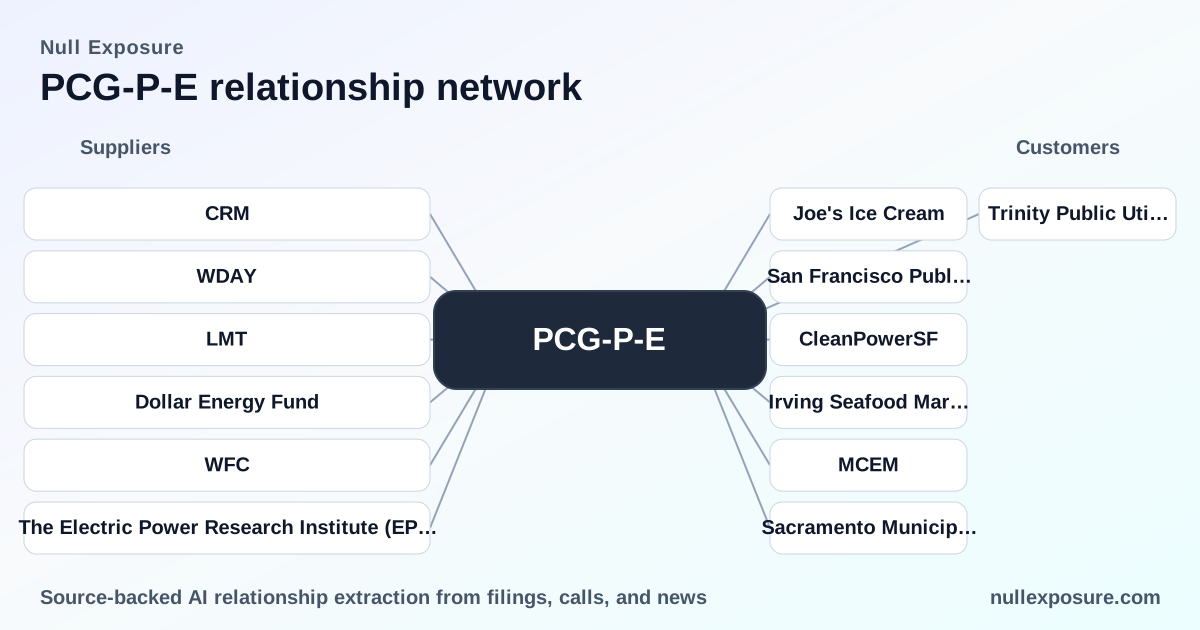
Joe’s Ice Cream — small business outage losses
A KTVU story on March 10, 2026 reported that Joe’s Ice Cream lost business and product during a recent outage, illustrating the microeconomic damage outages inflict on commercial customers and the pathway to localized lawsuits or compensation demands. (KTVU, March 10, 2026: https://www.ktvu.com/news/san-francisco-pge-customers-express-frustration)
San Francisco Public Utility Commission (SFPUC) — tolls and municipal friction
The SFPUC pays tolls to use PG&E’s grid, and The Frisc noted that PG&E’s primary source of income in San Francisco includes these tolls charged to other providers, highlighting the company’s dependence on third‑party delivery fees and the exposure to municipal disputes over fair compensation. (The Frisc, FY2024: https://thefrisc.com/in-a-quest-for-public-power-sf-made-a-2-5b-buyout-offer-and-pge-refused-the-real-price-could-come-soon/)
CleanPowerSF — CCA reliance on PG&E for delivery and billing
Reporting shows CleanPowerSF supplies most San Francisco residents with generation while PG&E continues to handle grid improvements and customer billing, and prior coverage flagged a January rate increase that applied to CCAs. That arrangement underscores PG&E’s durable delivery/billing revenue even as CCAs control energy procurement. (Axios, Jan 13, 2026; The Frisc, FY2024: https://www.axios.com/local/san-francisco/2026/01/13/pge-rate-decrease-san-francisco-bill-california-utility; https://thefrisc.com/in-a-quest-for-public-power-sf-made-a-2-5b-buyout-offer-and-pge-refused-the-real-price-could-come-soon/)
Irving Seafood Market — commercial customers contest compensation
KTVU coverage of businesses preparing to sue PG&E quoted an owner of Irving Seafood Market who said the utility’s $2,500 commercial offer did not cover lost revenues, a concrete example of how standardized payouts can produce litigation and negative press that pressure regulators. (KTVU, March 10, 2026: https://www.ktvu.com/news/sunset-businesses-preparing-sue-pge)
MCEM (MCE) — CCA billing exposure and bill impact
Marin Independent Journal reported that MCE (also referenced as MCEM) procuring energy but relying on PG&E’s infrastructure means PG&E’s rate moves feed through to CCA customers, with PG&E estimating a roughly $20 monthly bill impact for typical residential MCE customers. This underscores the direct link between PG&E’s tariff outcomes and CCA customer economics. (MarinIJ, FY2026: https://www.marinij.com/2026/01/07/mce-says-it-will-offset-recent-pge-electricity-price-hikes/)
MCE — duplicate reference to CCA relationship
A second record for MCE repeats the same operational reality: MCE procures power while PG&E delivers and bills it, and PG&E’s rate adjustments transmit to MCE’s customers, reinforcing the recurring counterparty exposure in CCA arrangements. (MarinIJ, FY2026: https://www.marinij.com/2026/01/07/mce-says-it-will-offset-recent-pge-electricity-price-hikes/)
Sacramento Municipal Utilities District (SMUD) — precedent for separation disputes
The Frisc’s coverage cites SMUD as a historical example of how a municipality can separate from PG&E and the disputes that follow over “just compensation” for assets, signaling a legal precedent for protracted, compensatory disputes that can impose cash and regulatory burdens on the utility. (The Frisc, FY2024: https://thefrisc.com/in-a-quest-for-public-power-sf-made-a-2-5b-buyout-offer-and-pge-refused-the-real-price-could-come-soon/)
Trinity Public Utilities District — competitive and liability tradeoffs
The Frisc also noted that Trinity County left PG&E in the 1990s; while Trinity offered lower bills to customers, it assumed wildfire liabilities, illustrating the tradeoff municipalities weigh between rates and inherited risk exposure when evaluating separation from an incumbent utility. (The Frisc, FY2024: https://thefrisc.com/in-a-quest-for-public-power-sf-made-a-2-5b-buyout-offer-and-pge-refused-the-real-price-could-come-soon/)
Investment implications and risk checklist
- Revenue durability: Delivery and tolling arrangements with CCAs and municipalities create a predictable cash base that supports preferred dividends, but the reliability of that base is a function of regulatory outcomes and settlement exposure.
- Regulatory/political risk: Municipalization efforts and precedent separations (SMUD, Trinity) create tail risks that can require asset valuations, compensation, or altered tariff frameworks.
- Operational liabilities: Outage‑related commercial claims (Joe’s Ice Cream, Irving Seafood Market) translate into tangible compensation flows and reputational costs that accelerate regulatory scrutiny.
- Counterparty concentration: Heavy reliance on California CCAs and municipal partners concentrates exposure to regional policy and rate decisions.
For preferred investors, the path to downside protection runs through regulatory predictability and PG&E’s capital plan execution; any shift that reduces delivery receipts or amplifies compensatory liabilities compresses credit margins for PCG‑P‑E.
If you want a consolidated view of how these customer relationships map to counterparty and regulatory exposures across utilities, visit https://nullexposure.com/ for the full analysis and tools.