Processa Pharmaceuticals (PCSA) — what investor-facing customer relationships reveal
Processa Pharmaceuticals operates as a clinical-stage biopharmaceutical developer focused on treatments for unmet medical needs in the U.S.; the company currently has no product revenue and monetizes through capital markets, licensing/milestone arrangements and eventual product commercialization upon regulatory approval. Given its microcap profile and negative operating results, visibility and investor communications are central to the company’s near-term ability to raise financing and execute development programs. For timely monitoring of these customer- and PR-facing relationships, see https://nullexposure.com/.
Why investor relations and PR matter to a clinical-stage microcap
For an early-stage biotech with no revenue, negative EBITDA and a market capitalization of roughly $7.1 million, external investor relations and public relations providers act as force multipliers for capital-raising and narrative control. Processa’s engagement with third-party communications vendors is a strategic operating choice: it amplifies clinical updates, supports fundraising, and shapes market perception, while also introducing an ongoing cost and an exposure vector to promotional scrutiny.
- Contracting posture: third-party communications engagements are typically short-term service contracts rather than strategic equity partnerships; for a company of Processa’s size this implies operational flexibility but also recurring vendor dependency.
- Concentration: reliance on a small set of external communications suppliers is a company-level signal of concentration risk in market outreach functions.
- Criticality and maturity: investor communications are critical today for funding; the relationship maturity is likely transactional and event-driven rather than long-term integrated partnership.
Documented customer/engagement relationships (every item in the record)
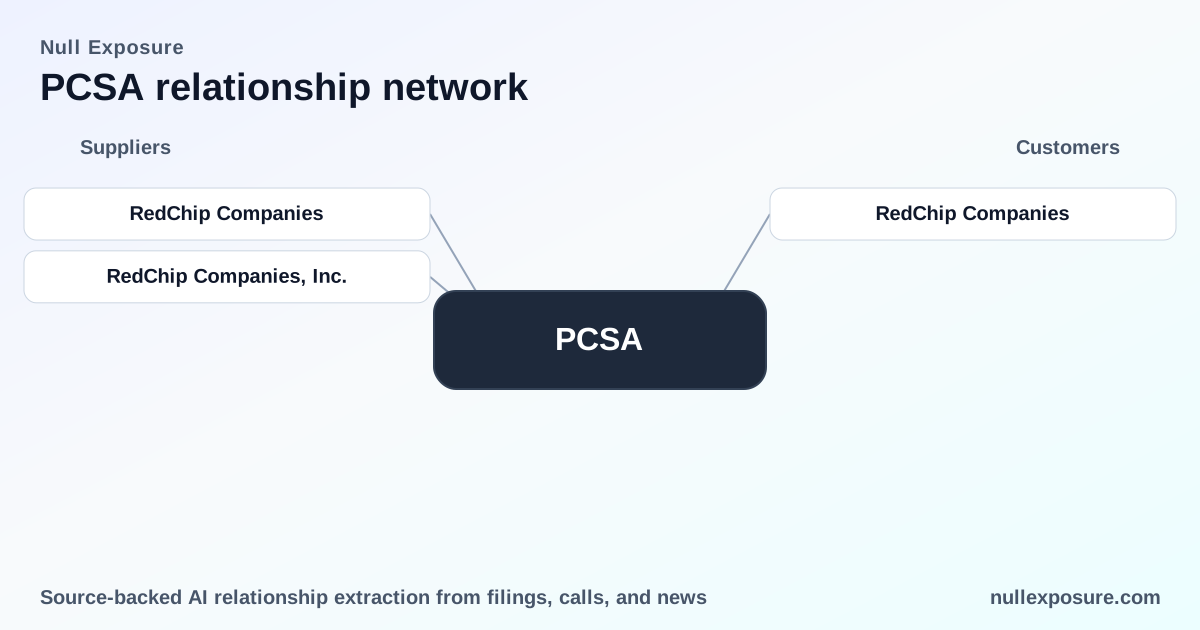
- Processa is listed as a client of RedChip Companies in a March 2026 press release distributed via Marconews; the release announces that interviews with Processa and another issuer will air on a Bloomberg TV program. Source: press release on Marconews (first seen 2026-03-10).
- A Recordonline press release from March 2026 reiterates that Processa and SXTP are clients of RedChip Companies, reflecting a syndicated distribution of the same investor-relations announcement. Source: Recordonline press release (first seen 2026-03-10).
- A March 2026 ReporterNews distribution also names Processa as a RedChip Companies client, mirroring other local press outlets carrying the same IR/PR announcement. Source: ReporterNews press release (first seen 2026-03-10).
- TheStarPress published the same March 2026 press release listing Processa among RedChip Companies’ clients, confirming multi-outlet syndication of the RedChip investor-relations campaign. Source: TheStarPress press release (first seen 2026-03-10).
Each of these items documents the same commercial relationship via syndicated press channels: Processa engaged RedChip Companies for investor communications that were circulated across local and national press outlets in March 2026.
What these relationships imply about Processa’s operating model
The repeated press placements show an active investor-relations program rather than a single isolated announcement. For investors, that translates into three practical implications:
- Visibility strategy: Processa is allocating budget and management attention to market communications, which supports short-to-medium-term capital formation and liquidity by amplifying clinical or corporate milestones.
- Operational dependence: given the company’s small scale and lack of revenue, reliance on external PR/IR providers is a structural element of the go-to-market and financing model — a company-level signal of concentration in a non-core function that is nonetheless critical to fundraising.
- Maturity of engagement: the nature of the hits across multiple outlets suggests a syndicated PR campaign executed through RedChip rather than an ad hoc press mention; this indicates a purposeful outreach cadence appropriate for a firm seeking investor awareness ahead of clinical readouts or financing events.
Constraints and disclosure gaps — company-level signals
The record contains no contractual constraint excerpts tied to any relationship. As a company-level signal, that absence indicates limited publicly disclosed detail on contracting posture, revenue concentration, supplier criticality, or the maturity of vendor agreements. For investors, the practical takeaway is that contractual terms, duration, scope, and any performance-linked compensation for communications vendors are not visible from these public press placements alone — these factors remain material to counterparty and cash-flow risk but require direct filings or management disclosures to quantify.
Financial context that makes these relationships material
Processa’s publicly reported position amplifies why PR/IR is consequential:
- No product revenue and negative EBITDA of approximately $13.99 million place near-term financing at the top of corporate priorities.
- Market capitalization near $7.1 million, small free float and modest institutional ownership intensify the value of investor outreach.
- An analyst target price of $25 (where reported) underscores asymmetric expectations in the market narrative versus the current financial base.
Given those figures, investor relations activity is not peripheral — it is a core operational tactic for preserving access to capital and maintaining trading interest.
Investor takeaway and monitoring checklist
- Takeaway: Processa’s engagement with RedChip Companies in March 2026 is concrete evidence of an active investor-communications strategy intended to raise visibility; this is a rational allocation for a clinical-stage microcap with no revenue and recurring cash burn.
- Risks: PR activity does not substitute for clinical progress, regulatory approvals, or revenue generation; it can increase short-term trading interest but also regulatory and reputational exposure if claims are overstated.
- Monitor: upcoming SEC filings, press releases tied to clinical milestones or partnership deals, cash runway disclosure, and any contracts or material agreements referencing vendor fees or equity-based compensation.
If you want a streamlined tracker of these relationship signals and other market-facing activities for microcap life-sciences issuers, visit https://nullexposure.com/ for curated monitoring and alerts.
Processa’s current PR footprint is a clear signal of capital-market prioritization; investors must weigh that against the hard clinical and financing deliverables that ultimately determine value.