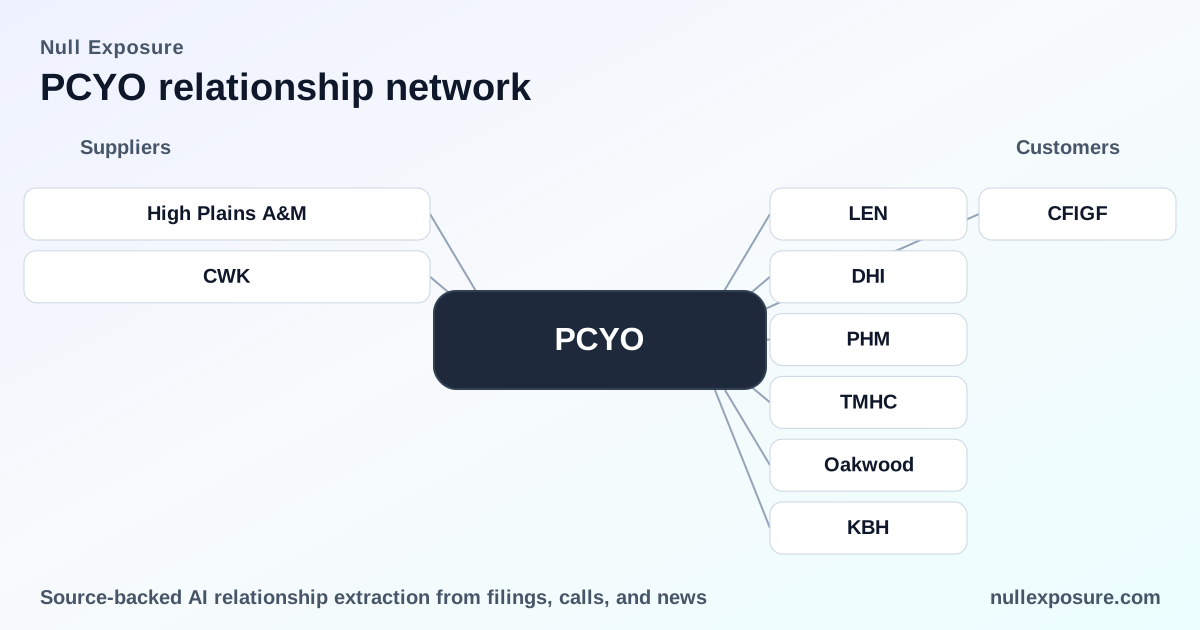
Pure Cycle (PCYO): Customer Map and Investment Implications
Pure Cycle Corporation operates as a vertically integrated water and wastewater provider and land developer on the Colorado Front Range, monetizing through a mix of wholesale service contracts, monthly usage and base service fees, tap fee (connection) revenue, and land-development advances and lot sales. The company supplies treated water and wastewater capacity to local governmental entities and national homebuilders that develop entry-level housing in the Denver metro area, converting infrastructure ownership and financing into recurring service revenue and periodic one-time connection receipts. Learn more at https://nullexposure.com/
Why the customer roster matters to investors
Pure Cycle’s financial profile combines regulated utility-like recurring revenues with developer cash flows tied to housing cycles. Recurring monthly and SFE-based fees provide predictability, while tap fees and lot deliveries introduce episodic revenue volatility. The customer list—dominated by national homebuilders plus municipal/quasi-governmental districts referenced in company materials—directly drives both the timing and scale of revenue recognition and working capital exposures.
A 2026 news sweep shows Pure Cycle expanding its builder roster with national names, supporting both short-term lot sale velocity and medium-term load growth for treated water and wastewater systems. This collection of relationships is a live indicator of pipeline health for tap-fees, lot revenue, and future base-fee customers.
The full customer roster: who’s on the hook and why it matters
Below are all customer relationships surfaced in public reporting and press coverage. Each entry is summarized in plain English with a concise source reference.
-
Pulte Group (PHM) — Pure Cycle confirmed adding Pulte as a national homebuilder customer as part of the Sky Ranch expansion, which increases expected tap fees and lot demand. This addition was reported in company commentary aggregated by GuruFocus (May 3, 2026) and cited in Intellectia (Mar 10, 2026).
-
Oakwood — Oakwood was identified as a new national homebuilder customer alongside Pulte, expanding Pure Cycle’s builder portfolio at Sky Ranch and supporting short-term lot delivery schedules. The addition was noted in the same company quote aggregated by Intellectia (Mar 10, 2026) and mentioned in GuruFocus (May 3, 2026).
-
Lennar (LEN) — Lennar is an existing partner producing entry-level homes in the Denver metro that contributes to recurring water service volumes and scheduled tap fee receipts. Multiple news excerpts recorded this relationship in Intellectia (Mar 10, 2026) and in an earnings-call transcript published by InsiderMonkey (May 3, 2026).
-
D.R. Horton (DHI) — D.R. Horton is listed among the major homebuilder customers; its ongoing production of entry-level units funnels steady base usage revenues and intermittent tap revenue to Pure Cycle. The company’s earnings-call remarks transcribed by InsiderMonkey (May 3, 2026) and aggregated news on GuruFocus (May 3, 2026) reference this partnership.
-
KB Home (KBH) — KB is included as a builder partner active in the Denver developments, contributing to both meter-based monthly revenues and periodic tap fees when new lots connect. This is documented in Intellectia (Mar 10, 2026) and GuruFocus (May 3, 2026).
-
Taylor Morrison (TMHC) — Taylor Morrison appears in Pure Cycle’s described builder portfolio and is a contributor to entry-level home supply in the Sky Ranch area, affecting both short-term lot revenue and recurring service demand. The relationship is cited in Intellectia (Mar 10, 2026) and GuruFocus (May 3, 2026).
-
Challenger (CFIGF) — Challenger is named among the company’s builder partners delivering entry-level housing that drives tap and usage revenues. Coverage of the builder list including Challenger is present in Intellectia (Mar 10, 2026), GuruFocus (May 3, 2026), and an earnings transcript in InsiderMonkey (May 3, 2026).
Each of these relationships was referenced in company commentary as reported in March–May 2026 news coverage; those statements together outline Pure Cycle’s active builder partnerships and the operational demand they create.
How Pure Cycle contracts and revenue mechanics shape investment risk
Public filings and company disclosures provide a clear operating blueprint for revenue recognition and contractual posture at the company level:
-
Contracting posture mixes long-term and usage exposure. Company filing language includes long-term arrangements where infrastructure ownership provisions extend decades (an example citation points to a contractual reversion of specific Lowry Ranch facilities in 2081), alongside monthly usage-based billing tied to metered consumption and an SFE base service fee.
-
One-time spot revenue is material through tap fees. Pure Cycle recognizes tap fee revenue when a customer pays to connect, creating discrete revenue spikes tied to builder lot deliveries.
-
Primary counterparties include government entities. The company markets water rights and provides wholesale services to municipalities and quasi-municipal districts; filings explicitly reference Sky Ranch and Rangeview District structures and the company’s financing advances to those entities.
-
Geographic concentration is high. All operations and customer activity are concentrated in the Denver metropolitan area and adjacent Colorado counties, making regional housing demand a direct driver of top-line variability.
-
Company role is both seller and service provider. Pure Cycle functions as an infrastructure owner/operator that sells capacity and ongoing treated water services while also deploying development capital to accelerate public improvements.
-
Spend and balance-sheet signals. Recent fiscal detail shows total revenue around the $26M range for FY2025 with significant company advances to Sky Ranch CAB totaling approximately $43.8M as of August 31, 2025; commercial water sales to industrial users dropped materially from $6.1M to $1.6M year-over-year, demonstrating sensitivity to single counterparty sectors. These figures indicate meaningful capital movement in the $10M–$100M band for development advances and recurring revenue in the $1M–$10M band for commercial water activity.
All of the above are company-level signals drawn from filings and the evidence excerpts in public reporting; they collectively define Pure Cycle’s hybrid utility/developer profile.
Investment implications and risk checklist
- Revenue composition: A blend of predictable monthly fees and lumpy tap/lot receipts means earnings volatility tracks the local homebuilding cycle.
- Counterparty mix: National homebuilders provide scale but the company’s exposure is regionally concentrated; government/quasi-government customers introduce political and reimbursement timing risk.
- Balance sheet usage: Significant advances to municipal entities convert to counterparty credit and reimbursement risk; investors should monitor note payables, receivables from related parties, and the timing of reimbursements.
- Growth levers: Adding national builders (Pulte, Oakwood) increases the forward tap fee pipeline and supports medium-term throughput growth.
For a concise, investor-focused analysis platform that tracks these customer dynamics and the contractual signals that drive revenue recognition, visit https://nullexposure.com/ for further coverage.
Bottom line: what to watch next
Monitor lot delivery cadence at Sky Ranch, timing of tap fee recognitions, and any changes to advance reimbursements from Sky Ranch CAB and Rangeview District. The combination of long-term infrastructure contracts and episodic connection revenue creates both stability and event-driven upside—yet geographic and sector concentration keep downside risk tied to Denver-area housing cycles.
Key takeaway: Pure Cycle’s customer roster is anchored by major national builders and government entities; that mix converts housing starts into a predictable base of fees plus lumpy, high-value tap revenues that will determine short-to-medium-term cash flow and valuation trajectory.