Pro‑Dex (PDEX) — Customer Relationships Drive Valuation; Concentration Is the Central Risk
Pro‑Dex manufactures powered surgical instruments and monetizes through long-term OEM supply contracts and distributor sales, selling finished handpieces and air motors to medical device original equipment manufacturers and distributors worldwide. The company converts engineering and manufacturing capabilities into repeatable revenue via multi-year supply agreements with a small number of large customers, generating high margin, concentrated cash flow that underpins current earnings and the stock’s valuation. For a concise investor briefing and relationship analytics, visit https://nullexposure.com/.
What the customer map tells investors: concentrated revenue, clear levers
Pro‑Dex’s business model is straightforward: design, develop and manufacture surgical drivers and shavers for OEMs, and sell air motors through distributors and end users. Company disclosures show the model produces high concentration — the top three customers represented 94% of fiscal 2025 sales, with the single largest customer accounting for 75% of revenue. That concentration creates binary operational risk (loss of one customer would be material) while also delivering visibility and negotiating leverage on pricing and capacity when agreements are in place.
- Contracting posture: Pro‑Dex relies on multi‑year supply agreements; management disclosed an amendment that extends supply obligations through calendar 2025 for its largest customer, signaling contractual tenors that provide revenue visibility.
- Concentration and materiality: Top-three customer concentration at 94% is an extreme concentration signal; the largest customer’s 75% share makes customer retention the primary determinant of near-term cash flow.
- Customer roles and channels: The company sells primarily to OEMs for surgical instruments and to distributors for air motors, indicating dual go‑to‑market channels with differing stickiness and price dynamics.
- Geographic reach: Products are used globally across hospitals, labs and manufacturing operations, giving Pro‑Dex a global end‑market footprint despite a concentrated customer base.
- Spending scale: Disclosed spend bands place the largest customer in the $10M–$100M band, with at least one other significant customer in the $1M–$10M band, consistent with the company’s materiality statements.
These features combine into a business that is operationally mature and relationship‑dependent: long-term contracts and established OEM integration reduce short-term sales volatility, but extreme customer concentration increases single‑counterparty risk.
Every named customer relationship in the public record
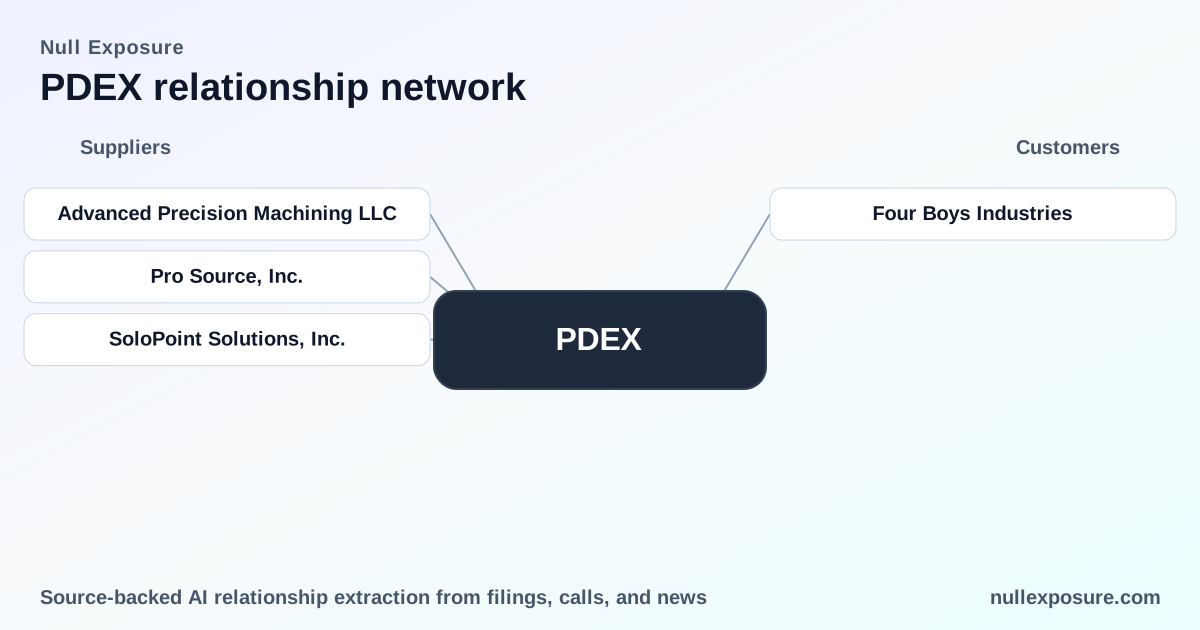
Four Boys Industries
Pro‑Dex sold its Fineline Molds division to Four Boys Industries, a California corporation formed by Mike Bynum, as reported in March 2026. The divestiture communicates a move to sharpen focus on core powered surgical instruments and shed non‑core molding operations. (Source: Medical Design & Outsourcing, March 2026 — https://www.medicaldesignandoutsourcing.com/pro-dex-sells-fineline-molds-division/)
Mako Surgical Corp. (Stryker division)
Company filings and related disclosures reference a long‑standing Supply Agreement dated January 6, 2012 between Pro‑Dex (the borrower) and Mako Surgical Corp., the robotics/orthopedics division of Stryker, indicating an entrenched OEM supply relationship that is material enough to be included in borrowing documents. This contract is cited in recent regulatory summaries. (Source: ADVFN/EDGAR summary, May 2026 — https://br.advfn.com/noticias/EDGAR2/2026/artigo/97825792)
Why these relationships matter to valuation
Pro‑Dex’s income statement and balance sheet metrics validate a supplier that converts relationship concentration into profitability: TTM revenue of roughly $74.6M and an operating margin near 15.5% (latest quarter ended 2026‑03‑31). Return on equity sits at high levels, reflecting a small equity base and profitable operations. The financials indicate the company extracts above‑market margins from deep OEM integration, but those margins are concentrated in a narrow customer base.
- Upside drivers: Renewals or extensions of long‑term OEM contracts preserve cash flows and de‑risk valuation multiples; any expansion into adjacent OEM programs or increased distributor penetration can materially raise revenue without proportionate SG&A increases.
- Primary downside: The loss or material reduction in purchases from the top customer would have a severe, immediate effect on revenue and cash flow given the 75% concentration disclosed for fiscal 2025.
Operational and contractual constraints that shape execution
Pro‑Dex’s public disclosures and extracted constraints establish several company‑level operating characteristics that investors must treat as fundamental:
- Long‑term contract orientation: Management explicitly chronicles amendments that commit supply through specific calendar horizons, producing revenue visibility but also contractual obligations that lock capacity to a few counterparties.
- High customer concentration and materiality: The top three customers account for the overwhelming majority of revenue (94% in fiscal 2025), creating customer concentration risk as the dominant commercial risk factor.
- Distributor channel presence: While OEMs drive the majority of instrument sales, air motors are sold through a broader distributor and end‑user base, offering a modest diversification path and market access outside the largest OEM relationships.
- Active, mature relationships: Management reports no intention to discontinue significant customer relationships and cites no known termination plans, indicating active, ongoing supply arrangements rather than transient spot business.
- Global end‑market exposure: Product placements across hospitals, labs and manufacturing globally insulate demand from single‑market cycles but do not reduce the billing concentration tied to certain OEM accounts.
- Spending bands consistent with enterprise customers: Disclosed customer spend bands place the principal counterparties in the multi‑million dollar range, aligning Pro‑Dex’s client base with mid‑to‑large OEM procurement budgets.
Investment takeaway and risk‑adjusted view
Pro‑Dex presents a classic small‑cap industrial profile for healthcare investors: strong margins and high ROE driven by deep OEM relationships, counterbalanced by extreme customer concentration that elevates single‑counterparty risk. The most actionable factor for an investor is contract durability — extensions, renewals, or program expansions with the top customer will materially stabilize valuation; conversely, any signs of procurement shift away from Pro‑Dex would lead to rapid revenue decline.
For portfolio managers and research analysts, monitor:
- Public disclosures or amendments to major supply agreements.
- Order flow commentary or program wins/losses with Stryker/Mako or other named OEMs.
- Any movement in distributor revenue mix that would reduce single‑customer dependency.
For a structured investor brief or deeper customer‑relationship diligence, see the company summary and relationship analytics on NullExposure: https://nullexposure.com/.
Bold final point: Pro‑Dex’s value hinges on the continuation of a very small number of large supply relationships — that is both the company’s competitive advantage and its primary risk.