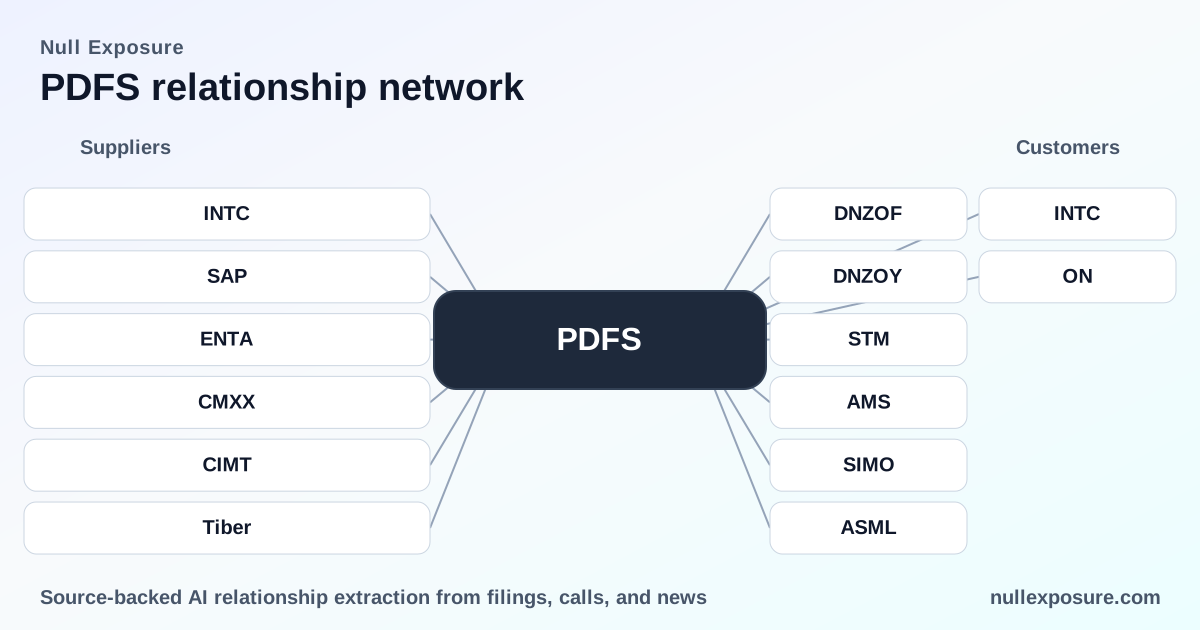
PDF Solutions: customer map and what it means for owners
PDF Solutions monetizes a multi-modal semiconductor-inspection and analytics business: subscription and on-premise software (Exensio, Cimetrix), perpetual licenses, hardware sales (DFI/DFI systems), and project-based Integrated Yield Ramp services with usage‑based gainshare. The company sells into very large global semiconductor players and the revenue mix creates recurring SaaS-like streams plus episodic hardware and services that drive lumpy, high‑margin uplifts. For investors, the takeaways are simple: high enterprise concentration, a diversifying product portfolio that blends recurring and event-driven revenue, and directly measurable operational value to major chipmakers. Visit the firm overview at https://nullexposure.com/ for deeper context.
How customer signals shape PDFS’s operating profile
PDF Solutions runs a hybrid contracting posture. The company recognizes revenue under subscriptions (straight-line SaaS recognition), usage-based royalties (Gainshare) recorded in the period of usage, and perpetual licensing for elements like Cimetrix — a mix that produces both predictability and upside tied to customer throughput. The customer base is explicitly global and enterprise-grade, reflecting offices and sales across North America, Asia, and Europe. The company-level data also shows material concentration: a small number of customers drive a large share of receivables and revenues, which increases revenue volatility but amplifies upside when top customers expand deployments.
Operationally, this implies:
- Contracting posture: long-term, multi-product engagements combining SaaS, licenses, and professional services.
- Concentration risk: meaningful revenue exposure to a handful of large customers (company disclosure: four customers = 57% of gross receivables; two customers = 31% of 2024 revenues).
- Customer criticality: enterprise customers rely on Exensio in production flows (IGBTs, advanced nodes), making PDFS a mission‑critical provider for yield and throughput.
- Maturity and stage: relationships are active and multi-year, with project-based Integrated Yield Ramp engagements alongside ongoing analytics subscriptions.
Bold conclusion: PDFS is not a one-off tools vendor — it is a strategic analytics and yield partner to top semiconductor manufacturers, operating a blended monetization model that balances annuity revenue with high-margin project upside. If you want a company-level view, see https://nullexposure.com/.
Line-by-line customer mentions and what they mean for investors
DNZOF (QuiverQuant, FY2025 mention)
QuiverQuant reported on March 10, 2026 that PDF Solutions’ Exensio analytics software significantly benefited long-time customer DENSO CORPORATION’s 300mm IGBT manufacturing operations, illustrating tangible production improvement value from Exensio (source: QuiverQuant news, Mar 10, 2026).
DENSO CORPORATION (QuiverQuant, FY2025 mention)
The same QuiverQuant item highlights DENSO as a long-standing PDFS customer receiving measurable efficiency gains from Exensio in IGBT fabrication, underscoring customer-level operational dependency on analytics tools (source: QuiverQuant news, Mar 10, 2026).
DENSO (GlobeNewswire, FY2026 mention)
In its Feb 12, 2026 press release, PDF Solutions cites DENSO acknowledging Exensio’s contribution to IGBT yield and performance, reinforcing that DENSO is a strategic, revenue‑driving customer across multiple reporting periods (source: GlobeNewswire press release, Feb 12, 2026).
DNZOY (GlobeNewswire, FY2026 mention)
A GlobeNewswire entry mirrors the DENSO acknowledgement and appears under an alternate ticker inference, again reporting Exensio’s role in DENSO’s manufacturing improvements — the recurrence across company press materials confirms repeated, high‑value engagements (source: GlobeNewswire press release, Feb 12, 2026).
STMicroelectronics (QuiverQuant, FY2025 mention)
PDF Solutions’ users conference listed STMicroelectronics as a customer presenter, a signal that STMicro leverages PDFS tooling publicly and acts as a reference account for advanced manufacturing use cases (source: QuiverQuant news, Mar 10, 2026).
onsemi (QuiverQuant, FY2025 mention)
onsemi appeared on the same users conference agenda as a presenting customer, indicating active deployment and willingness to showcase PDFS solutions to the industry — a commercial endorsement for potential enterprise buyers (source: QuiverQuant news, Mar 10, 2026).
OSRAM AMS (QuiverQuant, FY2025 mention)
OSRAM AMS was listed among customer presenters, suggesting PDFS cross‑sells into analog/optical semiconductor ecosystems beyond pure foundry/IDM channels (source: QuiverQuant news, Mar 10, 2026).
Silicon Motion (QuiverQuant, FY2025 mention)
Silicon Motion’s inclusion among presenting customers signals engagement from fabless design and controller vendors, demonstrating PDFS reach into design-to-manufacturing workflows (source: QuiverQuant news, Mar 10, 2026).
STM (QuiverQuant, FY2025 mention)
A second listing under the STM ticker reiterates STMicroelectronics’ participation at PDFS events; multiple mentions across event materials indicate an established, visible relationship used for marketing and customer reference (source: QuiverQuant news, Mar 10, 2026).
ASML (QuiverQuant, FY2025 mention)
ASML’s presence as a customer presenter is strategically noteworthy: ASML is a critical equipment supplier in lithography, and their public association with PDFS suggests collaboration at the equipment‑integration level or co‑innovation with analytics workflows (source: QuiverQuant news, Mar 10, 2026).
INTC (QuiverQuant, FY2025 mention)
Intel was listed in customer presentations; a public Intel engagement demonstrates PDFS penetration into leading IDM stacks where yield optimization directly impacts large-scale production economics (source: QuiverQuant news, Mar 10, 2026).
Intel (QuiverQuant, FY2025 mention)
A repeat Intel listing reinforces that the company is an active, named customer and reference, solidifying PDFS’ position inside major integrated device manufacturers (source: QuiverQuant news, Mar 10, 2026).
Implications for investors and operators
- Revenue mix complexity: Subscription, usage-based Gainshare, perpetual licenses, hardware and professional services collectively reduce single-source risk while creating forecasting complexity.
- High customer concentration: A small set of large customers drives material revenue and receivables, so investor focus should be on contract renewals and expansion within those accounts.
- Strategic differentiation: Public customer presentations (ASML, Intel, STMicro, onsemi) and DENSO acknowledgements indicate PDFS delivers measurable manufacturing gains that translate into commercial stickiness.
- Operational priorities for management: protect and expand enterprise relationships, convert hardware/service wins into recurring analytics subscriptions, and maintain global delivery capability for Integrated Yield Ramp projects.
Bottom line: PDF Solutions is a specialized, enterprise‑oriented vendor whose customer list reads like a who’s‑who of semiconductors; that client roster validates the product-market fit and sets the terms for both concentrated upside and exposure to a few large counterparties. Learn more company-level insights at https://nullexposure.com/.
If you want a focused memo on which customer conversions would most affect PDFS’ revenue runway, I can prepare a prioritized impact assessment.