Pebblebrook Hotel Trust (PEB): Asset-light disposition engine with steady F&B and retail exposure
Pebblebrook Hotel Trust operates and monetizes by owning and selectively selling urban and resort lifestyle hotels and adjacent retail/parking assets; revenue derives from hotel operations (rooms, food & beverage, events) and capital recycling via targeted property dispositions. The company is an active seller in gateway markets, monetizing value through asset sales to specialist buyers while retaining an operating profile concentrated in full‑service, upper‑upscale properties. For a concise investor view of commercial counterparties and disposition activity, visit https://nullexposure.com/.
What investors need to know up front
Pebblebrook is an internally managed REIT focused on major U.S. gateway and resort markets, with a business model that blends operating cash flow from hotels and F&B with opportunistic sales of non-core assets. That hybrid creates predictable operations but introduces execution and market-timing risk tied to disposition partners and urban retail tenants. Key balance-sheet and valuation signals (EV/EBITDA ~13.5; Price/Book ~0.66) align with a strategy that relies on active asset rotation rather than passive hold-only cash flow.
Operating-model constraints that shape counterparty risk
- Geographic concentration: Pebblebrook targets properties “primarily in major United States cities and resort properties” with emphasis on gateway coastal markets — this is a company-level signal that concentrates economic exposure in a handful of high‑value urban markets (company filings, FY2026 disclosure).
- Role as seller/operator: Pebblebrook functions both as an owner-operator and as an active seller of real estate assets, making transaction counterparties material to capital recycling and liquidity (company asset descriptions, FY2026).
- Service-heavy asset base: The portfolio is focused on branded and independent full‑service, upper‑upscale hotels that generate material revenue from lodging, food & beverage, meetings and lifestyle amenities; tenant and concession relationships are therefore commercially significant to operating income (company disclosure, FY2026).
These constraints imply a contracting posture that is transactional and portfolio-rotational, counterparty concentration around gateway buyers is consequential for realized proceeds, and revenue criticality from F&B/retail tenants is non-trivial given Pebblebrook’s service mix.
For a deeper scan of current counterparties and disposition buyers, see the Pebblebrook customer relationships below — each cited to the originating press coverage.
Recent counterparties and disposition buyers — point-by-point rundown
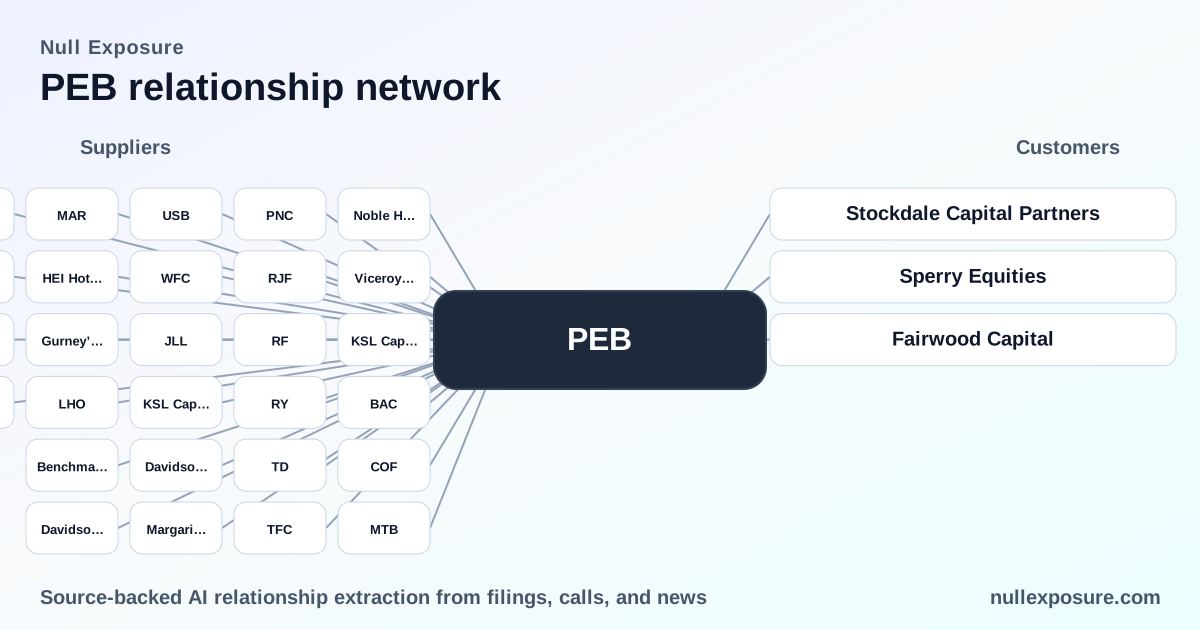
Sperry Equities — Pebblebrook sold the Retail and Parking at Marina City to Sperry Equities, with JLL representing Pebblebrook in the transaction for the River North Chicago asset. This disposal highlights Pebblebrook’s use of third‑party brokerage to execute urban retail/parking sales. Source: JLL newsroom, May 2026 (jll.com) and REJournals coverage, March 2026.
Stockdale Capital Partners — Stockdale acquired The Marker hotel in San Francisco from Pebblebrook for $77 million, representing Pebblebrook’s continued disposition of San Francisco assets during its portfolio reshaping. Source: Hotel Management, March 2026 (hotelmanagement.net).
10Pin — 10Pin is listed among the retail tenants in Marina City’s retail podium that Pebblebrook marketed and sold, indicating Pebblebrook’s exposure to F&B and leisure tenants in gateway retail envelopes. Source: JLL newsroom, May 2026 (jll.com).
Jefferson Beach Yacht Sales — Jefferson Beach Yacht Sales was named as a prominent retail tenant at Marina City, underscoring Pebblebrook’s tenant mix that includes specialty retail leveraging tourist foot traffic. Source: JLL newsroom, May 2026 (jll.com).
Legal Sea Foods — Legal Sea Foods appears as a lead restaurant tenant in the Marina City retail block, illustrating how branded F&B leases contribute to property-level cash flow prior to disposition. Source: JLL newsroom, May 2026 (jll.com).
Smith & Wollensky — Smith & Wollensky is identified among Marina City’s flagship dining tenants, reflecting the premium F&B positioning common to Pebblebrook’s full‑service properties. Source: JLL newsroom, May 2026 (jll.com).
Yolk — Yolk (breakfast/quick-service) is listed among Marina City retail tenants, indicating a mix of casual and premium food operators in Pebblebrook’s retail footprints. Source: JLL newsroom, May 2026 (jll.com).
Fairwood Capital — An affiliate of Fairwood Capital purchased Pebblebrook’s Hotel Spero in San Francisco, a prior example of Pebblebrook’s market-by-market selloff strategy in high-cost urban markets. Source: The Real Deal, July/August 2022 coverage (therealdeal.com).
Harley‑Davidson (HOG) — Harley‑Davidson executed a lease as a new tenant in the retail corridor at Hotel Zephyr Fisherman’s Wharf, demonstrating Pebblebrook’s practice of leasing tourist-facing retail at its San Francisco properties. Source: San Francisco Business Journal, February 2022 (bizjournals.com).
Tortoise Supper Club — Tortoise Supper Club appears among the Marina City tenant roster, again signaling Pebblebrook’s reliance on destination dining to underpin retail valuations prior to sale. Source: JLL newsroom, May 2026 (jll.com).
Patxi’s Pizza — Patxi’s Pizza signed a lease in the Zephyr Walk retail corridor at Hotel Zephyr, reinforcing the mix of regional restaurant operators in Pebblebrook’s retail assets. Source: San Francisco Business Journal, February 2022 (bizjournals.com).
Spin (SPND) — Spin is named among Marina City’s retail tenants, part of the tenant ecosystem that supports Pebblebrook’s retail and parking valuations ahead of disposition. Source: JLL newsroom, May 2026 (jll.com).
How these relationships translate to investor risks and opportunities
- Asset-rotation upside: Dispositions to specialist buyers (Sperry Equities, Stockdale, Fairwood) provide liquidity and crystallize gains that can be redeployed into higher‑return assets or returned to shareholders. This is a primary monetization driver.
- Operating sensitivity to retail/F&B tenants: The company’s hotel revenues and property valuations depend on the health and continuity of branded and independent dining/retail tenants; vacancies or weak lease economics reduce property sale proceeds and operating cash flow. Tenant mix is therefore a critical operational lever.
- Market and execution risk: Reliance on gateway markets concentrates exposure to local demand shocks and pricing cycles; successful monetization depends on timing and counterparty appetite from capital buyers. Disposition counterparties are thus strategic partners for PEB’s capital strategy.
Investment takeaway and next steps
Pebblebrook runs a dual monetization model: operating full‑service hotels for recurring cash flow while actively selling non-core or opportunistic assets to specialized buyers. That approach supports capital recycling but concentrates risk in gateway markets and retail/F&B tenant performance.
For an ongoing feed of counterparty and disposition intelligence, visit https://nullexposure.com/ — the platform tracks buyer and tenant activity that is material to REIT asset‑rotation strategies.
Bold, deal-driven portfolio management defines Pebblebrook’s thesis: operational cash flow from hotels plus opportunistic sales to buyers like Sperry, Stockdale and Fairwood is the engine; tenant mix and market timing are the levers investors must monitor closely.