Pebblebrook Hotel Trust (PEB-P-E): Customer Activity and What the Westin Sale Signals for Preferred Holders
Pebblebrook Hotel Trust is a specialized hospitality REIT that acquires and redevelops upscale, full‑service hotels in prime U.S. urban and resort locations and monetizes through a mix of hotel operations, value‑add capital improvements, strategic dispositions and capital markets issuance (including preferred equity such as the 6.375% Series E). For investors in PEB‑P‑E, the firm’s transactional cadence—asset sales, recapitalizations and targeted redeployments—drives liquidity and supports preferred dividends by managing balance sheet risk and unlocking embedded property value. Explore related coverage at https://nullexposure.com/.
A single transaction that matters: portfolio rotation is active and disciplined
Pebblebrook’s disposition activity is purposeful capital recycling, not random trimming. The sale of the Westin Michigan Avenue Chicago is a clear example: a 752‑room urban flagship disposed for $72 million, generating cash to either pay down debt, fund redevelopments elsewhere, or support shareholder distributions. This transaction underlines Pebblebrook’s operating playbook—acquire, invest, and selectively divest to optimize portfolio returns.
Key takeaway: active monetization of mature or non‑core assets supports preferred security stability by improving balance sheet flexibility and demonstrating access to capital markets and debt arrangers.
Notable customer / counterparty relationships in the record
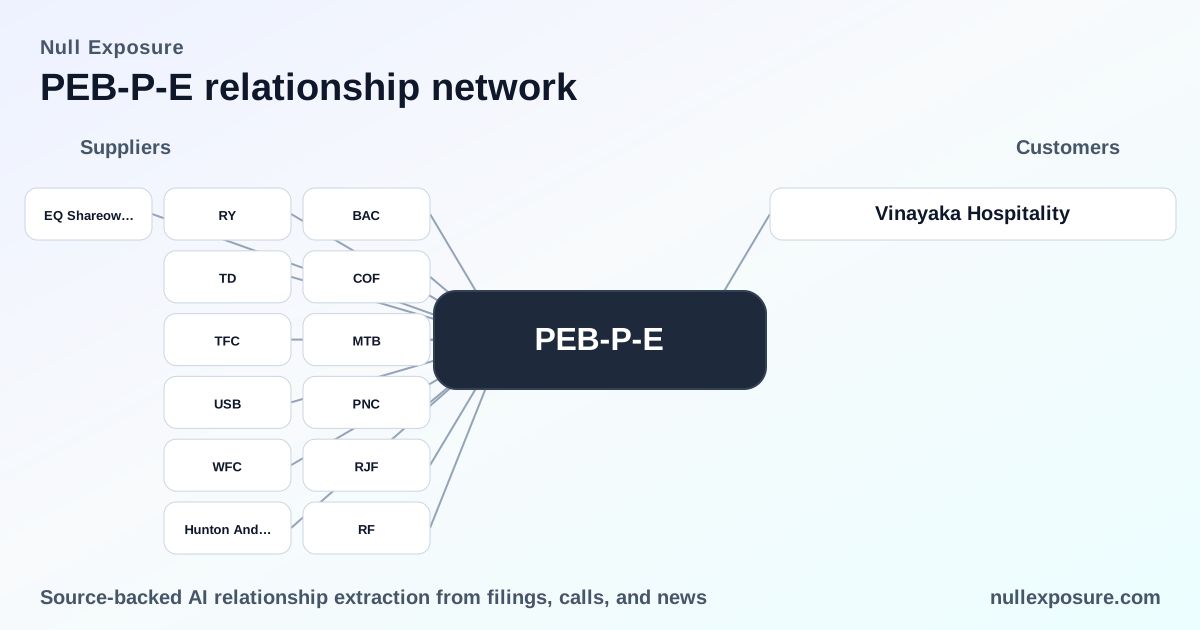
Vinayaka Hospitality — buyer of the Westin Michigan Avenue Chicago
Pebblebrook sold the 752‑room Westin Michigan Avenue Chicago to Vinayaka Hospitality for $72 million, with Draper and Kramer’s Mark Perkowski arranging a $54 million acquisition loan for the buyer. According to a REBusiness Online report published March 10, 2026, the transaction closed as part of Pebblebrook’s FY2025 disposition activity (REBusiness Online, March 2026: https://rebusinessonline.com/pebblebrook-hotel-trust-sells-westin-michigan-avenue-chicago-hotel-for-72m/).
What this single customer interaction reveals about counterparty dynamics
- Counterparty type: The buyer is a private hospitality investor/operator. Pebblebrook’s counterparties for hotel sales are primarily buyers seeking operating upside or portfolio add‑ons rather than institutional RE investors buying stabilized cash flow assets.
- Capital stack interaction: The presence of an arranged acquisition loan for the buyer indicates third‑party finance is central to closing flows, which creates intermediation points (lenders and arrangers) that influence timing and pricing of dispositions.
- Transaction scale vs. asset base: The sale figure and property scale demonstrate Pebblebrook’s willingness to move major assets at single‑asset materiality, which materially changes portfolio composition and liquidity when executed.
Operating model constraints and business model signals
Pebblebrook’s company‑level profile yields several clear operating constraints and strategic characteristics:
- Contracting posture — asset‑intensive and counterparty‑driven. Pebblebrook operates in a capital‑heavy industry where asset sales, management contracts and refinancing agreements drive cash flow timing. The firm’s flexibility depends on execution in capital markets and the availability of buyers and lenders for large hotel assets.
- Concentration — portfolio strategy focused on upscale full‑service hotels. The company concentrates risk in a specific hospitality segment and in prime urban/resort geographies, which benefits yield when demand is strong and increases sensitivity to cyclical downturns in urban business and group travel.
- Criticality — single‑asset transactions have portfolio‑level impact. Individual hotel sales materially shift balance sheet metrics and liquidity; each disposition can change leverage and preferred‑coverage dynamics in a single event.
- Maturity — a portfolio and capital‑markets savvy operator. Pebblebrook demonstrates a mature capital allocation approach: refurbish or reposition assets, then monetize when value is realized. That maturity supports predictable uses of proceeds for deleveraging or shareholder return, enhancing the preferred instrument’s credit posture.
These signals are company‑level and not assigned to any individual relationship unless explicitly noted in source material.
Implications for preferred shareholders (PEB‑P‑E)
- Dividend support through capital recycling. The sale to Vinayaka Hospitality demonstrates capacity to convert illiquid hotel holdings into cash, which preserves the company’s ability to meet preferred distributions under strained conditions.
- Refinancing dependency creates execution risk windows. While dispositions provide liquidity, the execution depends on buyer demand and lender appetite (the $54 million acquisition loan arranged for the buyer underlines the role of third‑party credit). Liquidity events remain contingent on external capital supply.
- Asset mix and concentration remain important value drivers. Preferred investors should monitor ongoing asset sales and redeployments because sizeable single‑asset transactions change the firm’s risk profile and the capital buffer behind preferred securities.
What to watch next
- Track subsequent disposition announcements and use‑of‑proceeds disclosures to see whether proceeds are applied to debt reduction, cap‑ex, or distributions—each trajectory affects preferred security risk differently.
- Monitor the flow of buyers—are they private operators like Vinayaka Hospitality or institutional acquisition funds? Buyer composition influences sale pricing, speed, and the probability of successful capital recycling.
- Watch lender involvement and structure on buyer financings; seller health can be indirectly affected by the financing terms that buyers secure.
For a broader mapping of Pebblebrook’s commercial relationships and how these flows affect preferred securities, visit https://nullexposure.com/.
Final read: confident, active capital management supports income profile
Pebblebrook’s transaction with Vinayaka Hospitality is a concrete instance of capital recycling in action—a large urban hotel sold to a private operator with acquisition financing arranged, producing immediate liquidity and recasting portfolio exposure. For investors in PEB‑P‑E, the firm’s disciplined asset management and demonstrated market access are positive underpinnings for the preferred’s income profile, while buyer and lender dynamics remain the operational levers that determine how effectively proceeds shore up preferred dividend coverage.