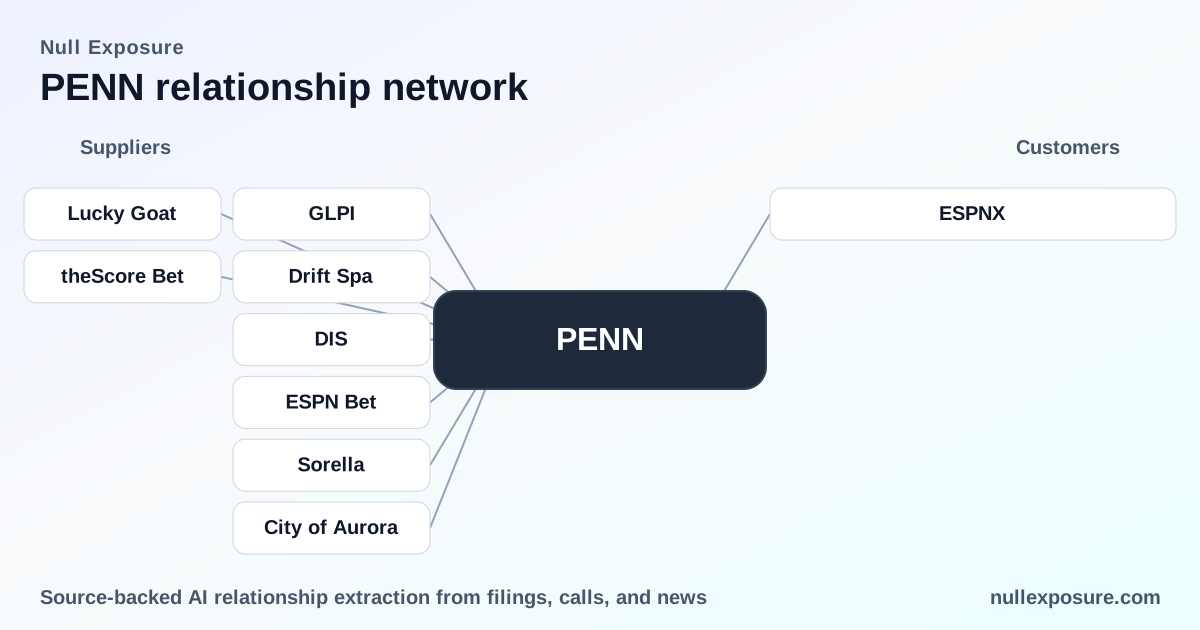
PENN and ESPN: A strategic sportsbook tie that reshapes distribution for gaming
Penn National Gaming operates and monetizes through a hybrid land-based and digital gambling model: a portfolio of casinos and racetracks generates retail gaming and hospitality cash flow while online products—sportsbook and iCasino—capture recurring, higher-margin turnover through branded distribution alliances. The company leverages partner brands and loyalty flows to scale customer acquisition for its ESPN BET and theScore BET platforms, earning net gaming revenue and platform-level economics from wager handle, promotional margins, and cross-sell into property-level services.
Learn more about how Penn structures customer relationships and disclosure signals at https://nullexposure.com/
Why the ESPN relationship matters for investors
The August 2023 Sportsbook Agreement with ESPN is a strategic distribution and marketing contract that moves Penn from purely internal brand growth toward third-party brand-led acquisition. For investors, this is a capital-light approach to scale online handle without proportionate retail-capex investment: brand reach and content synergies become a de facto customer acquisition engine. According to Penn’s FY2024 Form 10‑K, the Sportsbook Agreement establishes a long-term strategic relationship between the companies focused on U.S. online sports betting (Penn’s 2024 Form 10‑K).
How to read this deal in commercial terms
- Contracting posture: long-term and strategic, not a short-term marketing arrangement—this implies recurring revenue potential tied to ESPN’s audience.
- Criticality: high for Penn’s digital distribution, as ESPN’s media channel can materially reduce customer acquisition cost per bettor relative to owned media.
- Concentration: ESPN is a major third-party brand partner but not the sole distribution channel; Penn still operates a broad retail and digital footprint.
- Maturity: The agreement is recent (effective August 8, 2023) but structured as a long-term commercial relationship in FY2024 disclosure.
Full list of disclosed customer relationships
Below are every relationship pulled from Penn’s FY2024 disclosure in the provided results — each entry includes a concise description and source reference.
-
ESPN
Penn entered a long-term Sportsbook Agreement with ESPN on August 8, 2023, establishing a strategic relationship to deliver online sports betting in the United States under ESPN-branded distribution and content integration. According to Penn’s FY2024 Form 10‑K, the agreement provides for a long-term strategic relationship relating to online sports betting (Penn 2024 Form 10‑K). -
ESPNX
The filing also records the relationship under the inferred name “ESPNX,” reiterating the August 8, 2023 Sportsbook Agreement and Penn’s commercial tie to ESPN for U.S. online sports betting distribution. The same language is documented in Penn’s FY2024 Form 10‑K (Penn 2024 Form 10‑K).
Note: both entries reference the same Sportsbook Agreement disclosed in Penn’s FY2024 10‑K; they reflect separate indexed mentions in the filing rather than distinct third parties.
Company-level constraints and what they signal about operating risk
Penn’s public disclosures and excerpted constraint text deliver two important company-level signals that shape the operating and risk profile for investors.
-
North American footprint and regulatory diversity: Penn describes itself as “North America’s leading provider of integrated entertainment, sports content, and casino gaming experiences,” operating in 28 jurisdictions across North America. This geography signal implies regulatory and market diversification across U.S. states and Canadian provinces, reducing single-jurisdiction revenue concentration while increasing regulatory complexity and compliance cost (company 10‑K narrative, FY2024). For investors, this is a de-risking signal on revenue concentration but a reminder of multi-state regulatory variability.
-
Consumer-facing revenue recognition dynamics: Penn’s excerpted revenue accounting language highlights that individual retail patrons receive inducements (free food, hotel stays, loyalty redemptions) that are recorded as standalone revenue categories with offsets against gaming revenue. This indicates a business model heavily oriented to individual customers and loyalty mechanics, which affects margins and promotional spending visibility. It also underscores Penn’s operational focus on retention through hospitality economics, not purely transactional wagering margins.
Together, these signals show a company that is broadly diversified geographically, intensely retail- and loyalty-driven, and actively pursuing brand distribution partnerships to capture digital growth.
Investment implications: opportunities and risks
-
Opportunity — scalable customer acquisition without proportional capital: The ESPN arrangement turns paid media and editorial channels into distribution for Penn’s sportsbook, supporting faster online growth while preserving capital for property investments. If ESPN’s audience monetizes at expected conversion rates, Penn captures incremental margin with limited incremental capex.
-
Risk — partner concentration and brand dependency: While ESPN is a powerful distribution partner, reliance on a major third-party brand introduces dependency risk—changes in contract economics, audience behavior, or content strategy could materially impact online customer flows.
-
Operational complexity — multi-jurisdictional execution: Operating in 28 jurisdictions provides diversification but increases compliance and product-launch friction. State-by-state regulatory timelines will shape the pace at which ESPN-driven demand converts into on-platform revenue.
-
Margin signaling — retail economics and promotional offsets: The company’s revenue recognition around inducements indicates that headline gaming revenue masks underlying promotional and hospitality offsets, which investors should consider when modeling net margins from incremental bettors.
Bottom line and next step for the research desk
Penn’s strategic move with ESPN reorients its go‑to‑market for online sports betting from house-branded acquisition to partner-led distribution, preserving capital and accelerating scale if conversion economics hold. The FY2024 10‑K codifies this long-term relationship and positions Penn to monetize ESPN’s audience while maintaining a broad retail base across North America.
For a deeper review of Penn’s partner disclosures and to compare counterparty relationships across gaming operators, visit NullExposure’s primary research hub: https://nullexposure.com/
Sources: Penn National Gaming, Inc., FY2024 Form 10‑K disclosure (documenting the Sportsbook Agreement with ESPN, August 8, 2023) and company disclosure language on operations across 28 North American jurisdictions (Penn 2024 Form 10‑K).