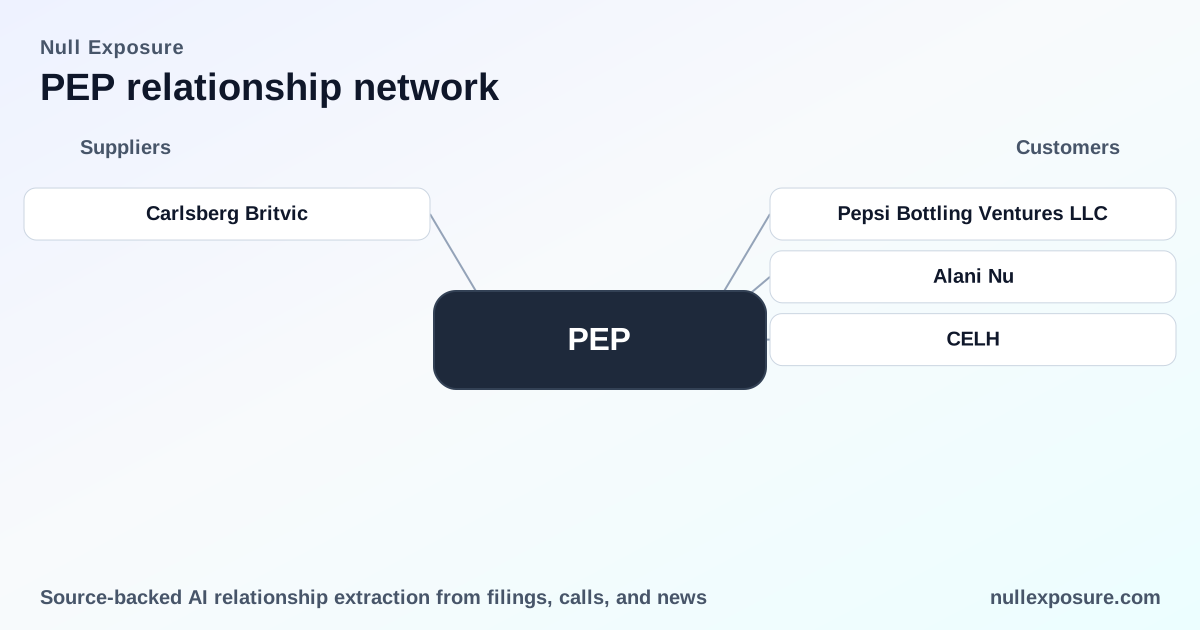
PepsiCo customer relationships — what investors need to know
PepsiCo operates a global, brand-led food and beverage platform that monetizes through product sales, licensing and distribution partnerships. The company manufactures core brands, grants regional bottling and licensing rights, and funds trade and marketing programs that drive shelf presence and velocity; these arrangements generate high-margin brand royalties at scale while concentrating execution risk in distributors and retail customers. For investors, the thesis is simple: durable brand economics plus outsourced execution equals predictable cash flows, but execution dependency on third parties is a core operational risk. For a deeper look at data and relationship signals, visit the Null Exposure homepage: https://nullexposure.com/
Why the customer map matters for valuation and risk
PepsiCo’s route-to-market is complex: direct manufacturing in some categories, exclusive bottler manufacturing rights in others, and a mosaic of distributors, resellers and retail partners worldwide. That structure produces steady revenue and robust margins while concentrating operating risk in a few areas — bottlers, major grocery and mass retailers, and strategic distribution tie-ups for high-growth brands. Key investor takeaways:
- Contracting posture is largely short-term and programmatic for bottler incentives, so execution depends on annual negotiations and funding cycles.
- PepsiCo is global and diversified by geography, operating across more than 200 countries and territories, which lowers country-specific revenue volatility but raises cross-border execution complexity.
- Customer relationships are material to execution: consolidation in retail and growth of e-commerce increase the importance of major accounts for shelf placement and promotional effectiveness.
- Roles are mixed: customers act as distributors, manufacturers (independent bottlers), resellers and sellers across regions, which creates multiple exposure vectors for operational disruption.
These characteristics drive both the margin resilience and the concentration risks that should be reflected in any relative valuation or scenario analysis.
Relationships in the filings and press — a company-by-company tour
Below I list every relationship surfaced in the recent coverage and filings, with a concise investor-oriented summary and source reference.
Pepsi Bottling Ventures LLC
PepsiCo continues to have senior employees on the boards of certain independent bottlers, including Pepsi Bottling Ventures, highlighting close governance and strategic alignment with regional bottlers that execute manufacturing and distribution. Source: PepsiCo 2025 10‑K (FY2025 filing).
Royal Unibrew A/S
Royal Unibrew announced the end of a regional licensing deal with PepsiCo, triggering a material share-price reaction; the termination underscores how regional licensing shifts can create near‑term distribution and revenue disruptions. Source: Sharecast news report (May 2026).
Britvic
Britvic is referenced as a PepsiCo bottler and soft‑drinks partner in the UK and Ireland, reflecting the company’s reliance on large regional bottlers for European execution and own‑brand competition dynamics. Source: IndexBox commentary (May 2026).
Tractor Supply Company (TSCO)
PepsiCo partnered with Tractor Supply’s Animal Days initiative with charitable contributions, illustrating PepsiCo’s retail marketing and community engagement with nontraditional retail partners to boost brand presence. Source: local and company press coverage (March 2026).
Celsius Holdings, Inc. (CELH)
Celsius is an 11% PepsiCo equity-held partner that uses PepsiCo’s distribution network in the U.S. and Canada; that relationship materially accelerated sales for brands like Alani Nu and Rockstar, and gives PepsiCo both distribution leverage and board influence. Source: multiple press reports and company filings (Q4 2025–FY2026 coverage).
Alani Nu
Alani Nu transitioned into PepsiCo’s distribution system after its acquisition by Celsius, producing a material lift in net sales and demonstrating PepsiCo’s ability to scale emerging beverage brands through its route‑to‑market. Source: Celsius and analysts’ coverage (Q4 2025 reporting).
CCU (Compañía Cervecerías Unidas)
CCU integrated PepsiCo beverage and snacks distribution in Paraguay (and previously in Chile), reflecting PepsiCo’s use of regional licensees to expand presence in Latin America and share regional retail footprints. Source: CCU press reports and regional news (FY2024–FY2026 coverage).
Madison Square Garden Entertainment Corp. (MSGE) and Sphere Entertainment (SPHR)
PepsiCo renewed and expanded an official partnership with the MSG family and Sphere, becoming an exclusive supplier of multiple PepsiCo food and beverage brands across venues — a strategic sponsorship and direct‑to‑consumer sales channel. Source: MSG/PEPSICO press release and Sphere announcement (2025–2026).
Buffalo Rock Company
Buffalo Rock is identified as a major regional Pepsi bottler in the U.S. Southeast, underscoring PepsiCo’s reliance on large regional bottlers for market coverage outside company‑owned manufacturing. Source: industry commentary (May 2026).
Fat Brands / FATBV (Pretzelmaker Cheetos collaboration)
Regional foodservice or franchise partners leveraged PepsiCo IP to launch co‑branded items (Cheetos Pretzel Bites), demonstrating brand licensing and cross‑sell opportunities in foodservice channels. Source: Snack & Bakery industry article (FY2024 press).
Golden Entertainment (GDEN)
Golden Entertainment’s STRAT venue features MTN DEW branded attractions and concessions, illustrating experiential marketing tie‑ups and venue‑level brand placement. Source: company press material (FY2020 context).
Ambev (ABEV)
Ambev markets products under a lineup that includes PepsiCo brands in some Latin American markets, reflecting multinational licensing and co‑marketing agreements that extend PepsiCo’s footprint through regional brewers and beverage groups. Source: Ambev earnings commentary (Q4 2025).
SW (10‑K reference)
An entity identified as SW noted winning PepsiCo’s Supplier of the Year award; this signals supplier relationships and procurement recognition within PepsiCo’s vendor ecosystem. Source: SW 2024 10‑K (filed FY2024).
Yum! Brands (YUM)
Yum Brands references proprietary menu platforms linked to PepsiCo brands (for example, Baja Blast in QSR channels), illustrating the critical role of restaurant partnerships in beverage distribution and product innovation. Source: Yum earnings call transcript (Q1 2026).
Bielsko‑Biała (Central Europe bottling mention)
Bielsko‑Biała is cited as a Central Europe bottling focus area for PepsiCo, pointing to localized bottler partners that cover Central European markets and reinforce regional manufacturing/distribution hubs. Source: IndexBox commentary (May 2026).
Boston Beer Company (SAM)
PepsiCo and Boston Beer collaborated on Hard MTN DEW with Boston Beer developing the product and PepsiCo managing marketing and advertising, an example of co‑development and channel specialization across alcohol/non‑alcohol boundaries. Source: industry press (historical FY2021 announcement).
How the constraints shape operating risk and upside
PepsiCo’s customer relationships are framed by several company‑level constraints that investors should fold into forecasts:
- Short‑term contracting posture for bottler funding and trade incentives (high confidence): independent bottler incentives and trade funding are negotiated annually, which makes promo spend and execution subject to year‑by‑year funding discretion from PepsiCo and partners.
- Global footprint (high confidence): operations and partner relationships span more than 200 countries and territories, which diversifies revenue but elevates cross‑border execution complexity and geopolitically correlated risk.
- Customer materiality (moderate confidence): retail consolidation, e‑commerce growth and the strategic importance of major distributors make a subset of customers disproportionately important to execution and revenue performance.
- Mixed relationship roles (strong signals): partners function as distributors, manufacturers (via exclusive bottler manufacturing rights), resellers and sellers depending on geography and product line — this multiplicity of roles creates varied counterparty exposures.
These constraints explain why PepsiCo’s business model balances scale and outsourcing: brand economics drive margins, while third‑party execution controls growth. Investors should model stable core cash flows but include scenario risk for bottler negotiations, licensing shifts and large partnership restructurings.
Investment implications and final takeaways
- Core thesis remains intact: PepsiCo’s brands and global reach generate predictable cash flows, supported by diversified product categories and multiple go‑to‑market channels.
- Execution is the principal risk: bottler funding cycles, licensing terminations (as with Royal Unibrew), or distribution shifts for challenger brands (Celsius/Alani Nu) can produce outsized near‑term revenue variance.
- Catalyst watchlist: monitor bottler negotiations, major licensing renewals, and distribution rollouts for new or acquired brands — these events will move operational leverage and margin profiles.
For a structured view of partner exposures and to track new relationship signals as they appear, explore Null Exposure’s relationship intelligence for PepsiCo: https://nullexposure.com/
Bold final takeaway: PepsiCo’s cash‑flow durability is real, but the company’s outsourced distribution and licensing architecture is the single largest axis of operational risk and upside — price that into multiples and scenario analyses.