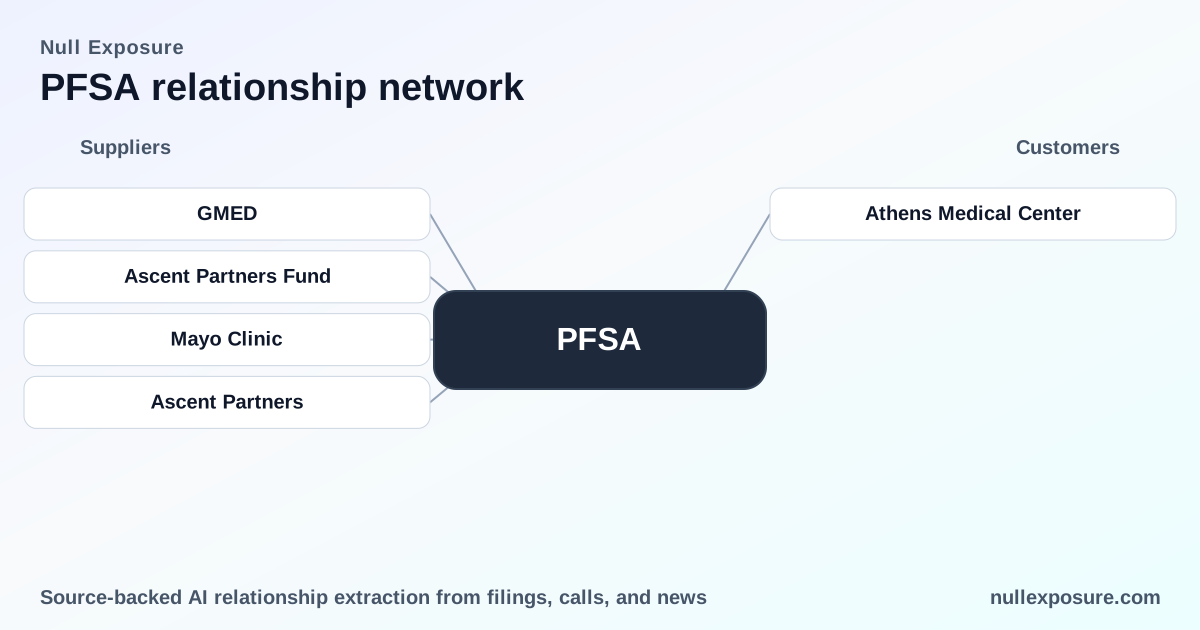
Profusa (PFSA) Customer Map: Early Commercial Footprint and a Targeted European Push
Profusa develops implantable, tissue-integrating biosensors (the Lumee system) that continuously transmit clinical-grade physiological signals. The company monetizes through device sales and regional distribution agreements, while bridging commercial gaps with short-term financing and convertible capital to fund rollout and regulatory activities. For a focused view of the customer and commercial relationships impacting near-term execution, see full coverage at https://nullexposure.com/.
Why these relationships matter to investors
Profusa is in commercial infancy: product commercialization is driven by selective clinical partnerships and third‑party distributors rather than broad direct sales. That structure produces a contracting posture that is partner‑centric and distribution‑dependent, with revenue concentration and commercial scale still nascent. Profusa’s choice to work through regional distributors accelerates market access but also shifts execution risk — training, reimbursement advocacy, and clinical adoption — onto external partners. The company has supplemented commercial runway with convertible financing, which signals capital dependence while preserving growth optionality.
Company-level operating signals (what’s implied by the record)
- No explicit contractual constraints were recorded in the customer‑relationship feed, which is a company‑level signal that there are no documented exclusivity or lock‑in terms visible in these sources. That absence indicates Profusa is operating with flexible contracting, favoring distributor reach over exclusive long‑term lock‑ins.
- Commercial concentration is high by design: a small roster of channel partners and clinical adopters will determine early revenue momentum.
- Criticality to customers is emerging — the technology targets specialty clinicians (e.g., vascular surgeons) where a handful of cases demonstrate clinical value, but broad criticality across markets requires scale and reimbursement traction.
- Maturity is early: relationships and financing events indicate the firm is still establishing its commercial go‑to‑market and funding model rather than generating material recurring revenue.
Customer and partner relationships in the public record
Athens Medical Center — a clinical entry in Greece
Profusa announced the addition of the Vascular Surgery Clinic at Athens Medical Center to its network, highlighting the onboarding of Dr. Bisdas as a vascular surgeon using Profusa’s system. According to a GlobeNewswire press release dated January 8, 2026, the company framed this as part of expanding its European clinical roster and clinician adoption efforts. (GlobeNewswire, Jan 8, 2026)
MedSell / Medsell CI — French distribution to scale Europe
Profusa has engaged MedSell (Medsell CI) as a distributor to expand its Lumee system into France, representing a deliberate push to build European sales through local commercial partners. Multiple business wires in May 2026 reported that Profusa added this French distributor to broaden its European reach. (Investing.com, Marketscreener, May 2026)
Ascent Partners Fund — financing that supports commercialization
Profusa completed a closing of a secured convertible note with Ascent Partners Fund, raising $1.0 million under terms that include a 12% interest rate and conversion at $0.50 per share, with maturity in April 2027. The transaction is an explicit capital infusion tied to near‑term working capital needs and commercialization activities. (TradingView report summarizing company filings, May 2026)
What each relationship implies for execution risk and upside
-
Athens Medical Center: Clinical adoption by a recognized vascular surgery clinic in Greece is an important early commercial validation in a specialty use case; however, this is a single‑clinic proof point rather than broad market penetration. (GlobeNewswire, Jan 2026)
-
MedSell / Medsell CI: Partnering with a local distributor is the fastest route to market access in France, but it transfers execution responsibility for sales, training, and reimbursement strategy to the distributor, increasing operational reliance on third parties. (Investing.com; Marketscreener, May 2026)
-
Ascent Partners Fund: The convertible note provides immediate capital but introduces dilution risk on conversion and a debt dynamic until conversion or maturity; the structure signals near‑term liquidity management rather than long-term capital stability. (TradingView summary of financing, May 2026)
Commercial strengths and material risks — investor checklist
-
Strengths
- Targeted clinical partnerships allow focused evidence generation in specialty settings, which supports reimbursement and physician adoption.
- Distribution strategy accelerates geographic access with lower fixed sales cost than building a direct European sales force.
-
Risks
- Revenue immaturity and concentration: public financials show zero trailing revenue and continuing losses, so outcomes hinge on a small number of commercial relationships converting to repeatable sales.
- Capital dependence: recent convertible financing underscores ongoing liquidity needs until commercial ramp or larger equity/debt financing is secured.
- Execution risk with distributors: reliance on local partners can slow rollouts if partners underinvest in training or reimbursement efforts.
Strategic implications for operators and investors
For operators, focus execution on converting the MedSell relationship into measurable sales and payer engagement in France; demonstrate repeat orders and documented clinical outcomes at early sites such as Athens Medical Center. For investors, the key drivers to watch are order cadence from distributors, documented reimbursement wins, and the company’s capital plan to extend runway beyond the Ascent note maturity.
If you’re tracking Profusa at a portfolio or operating level, prioritize updates on distributor performance metrics (training completions, first commercial orders, payer discussions) and any material changes to capital structure before the April 2027 note maturity.
For ongoing monitoring and deeper comparative coverage, visit https://nullexposure.com/.
Bottom line
Profusa is executing a classical early‑stage medical‑device commercialization playbook: selective clinical validation plus regional distributors to buy time and reach, while relying on convertible capital to sustain operations. The upside is meaningful if distributors convert pilot clinics into recurring revenue; the downside is concentrated commercial exposure and near‑term capital risk. Investors should treat near‑term news on distributor order flow and any follow‑on financing as the pivotal catalysts for valuation trajectory.