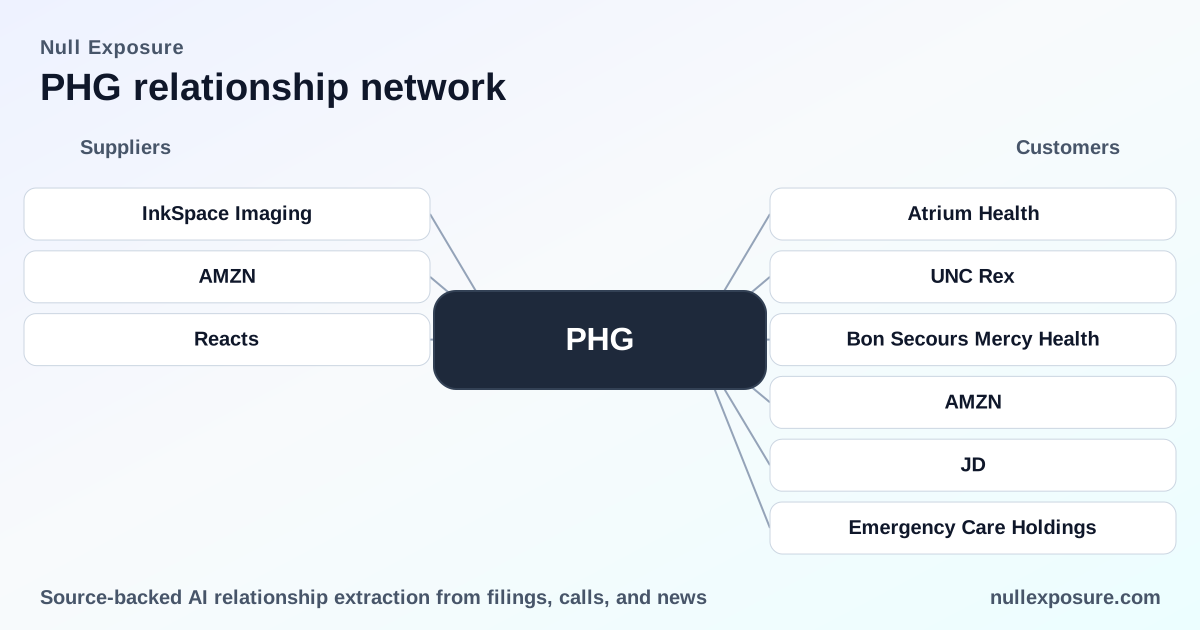
Philips (PHG) — customer map and what it means for investors
Philips monetizes by selling hospital-grade imaging, monitoring and diagnostic equipment together with increasingly important multi-year software and services contracts that embed its technology into clinical workflows; revenue is a mix of upfront capital sales and recurring service/software streams that deepen customer lock-in. Long-term strategic partnerships with large health systems and targeted divestitures to refocus the portfolio define the company’s current go-to-market posture. For a navigable, investor-grade view of customer relationships, visit https://nullexposure.com/.
How Philips sells and why customer relationships matter for valuation
Philips operates a hybrid commercial model: capital equipment sales plus annuity-like service and software contracts. The company pushes toward longer-duration, system-wide deployments — patient monitors and image-guided therapy suites that become standards across hospital networks — which convert one-off installations into multi-year revenue streams and maintenance margins. That contracting posture supports predictability but concentrates risk where a handful of large health systems drive outsized revenue and service commitments. Strategic asset sales and partnerships also signal active portfolio management rather than a static device vendor profile.
- Contracting posture: Philips is pursuing longer-term, system-wide agreements that increase lifetime value per customer.
- Concentration: Customer wins are concentrated among large U.S. and EU health systems, amplifying both upside and risk.
- Criticality: Products cited — patient monitors, image-guided therapy, digital pathology — are operationally central in hospitals, increasing switching costs.
- Maturity / strategic reset: Recent divestitures and cloud-enabled product launches position Philips as moving from pure hardware to integrated hardware+software solutions.
Customer relationships disclosed in the recent cycle
Below I cover every named customer or partner referenced in the collected results, with a concise plain-English summary and the original source context.
Bon Secours Mercy Health
Philips expanded an Image‑Guided Therapy relationship into a 10‑year collaboration covering 80+ interventional labs, signaling a deep, long-term implant of Philips’ systems into cardiac care delivery, and separately secured a major multi‑year patient monitoring partnership across 49 hospitals to standardize monitoring solutions. These announcements were disclosed on the Q4 2025 earnings call and in a Philips press communication (press coverage tied to FY2026 commentary). (Q4 2025 earnings call; Philips press release, referenced in 2024/2026 company materials.)
UNC Rex
Philips cited UNC Rex as one of several strategic partnerships signed during the quarter with leading U.S. health systems, suggesting network-wide initiatives rather than one-off purchases. (Q4 2025 earnings call.)
Atrium Health
Atrium Health was named alongside other leading systems in multiple strategic partnerships announced in the quarter, consistent with Philips’ push for system-level rollouts and managed‑service engagements. (Q4 2025 earnings call.)
Grand Hôpital de Charleroi
Philips will supply patient monitors for the new Grand Hôpital de Charleroi in Belgium, reflecting continued EU government/institutional procurement of Philips monitoring equipment. (Philips press release on Q2 2024 results page, reported in FY2026 context.)
Amazon (AMZN)
On the Q4 2025 earnings call Philips signaled that it partners with major global winners such as Amazon as part of a broader commercial strategy to work with leading platforms and distributors. The comment frames Amazon as a distribution or strategic channel partner rather than a clinical customer. (Q4 2025 earnings call.)
JD
Philips referenced JD in the same earnings‑call remark alongside Amazon, indicating similar channel or partner relationships with large e‑commerce platforms that expand reach in key markets. (Q4 2025 earnings call.)
NYU Langone Health
NYU Langone Health committed to adopt Philips health‑technology solutions in a multi‑year partnership focused on patient safety, quality and outcomes, notably around digital pathology and cloud-enabled solutions. This was publicized in a Philips press release originally announced in November 2023 and referenced in subsequent company communications. (Philips press release, Nov 16, 2023 / FY2026 references.)
ONRAD, Inc.
Industry reporting noted that ONRAD, Inc. acquired Direct Radiology, LLC from Philips, a transactional detail that illustrates Philips’ active portfolio reshaping and sale of non-core imaging services. (SimplyWallStreet summary noting a Jan 7 transaction; referenced in FY2026 aggregation.)
Emergency Care Holdings
Multiple March 2026 press items reported that Emergency Care Holdings acquired Philips’ Emergency Care business, a divestiture that aligns with Philips’ strategy to concentrate on core clinical informatics, monitoring and imaging lines. (News reports, March 2026.)
What these relationships imply for revenue quality and operational risk
- Recurring revenue tailwinds: The emphasis on multi‑year, system‑wide agreements (monitors, imaging suites, digital pathology) increases predictability and protects margins compared with single‑unit capital sales. Long contracts materially raise lifetime customer value.
- Concentration risk: Because material wins are with large health systems, a small number of customers can meaningfully influence revenue trajectories in a given region or product line; this requires monitoring of renewals and budget cycles at those systems.
- Business model transition: Disposals such as the Emergency Care business and the sale of Direct Radiology indicate portfolio focus and balance‑sheet management, shifting Philips toward higher‑margin, software‑enabled clinical offerings.
- Channel diversification: References to global platforms like Amazon and JD highlight non-traditional go‑to‑market routes that can accelerate scale but also create dependency on third‑party distribution ecosystems.
Investment implications and near‑term checklist
- Positive: System-wide, long-duration contracts increase revenue visibility and create service attach opportunities that raise margins over time. Recent strategic deals and cloud product launches support multiple levers for growth.
- Watchlist: Track renewal timing and contract terms for major health systems, integration success of cloud and pathology offerings, and whether divestitures free capital to accelerate high‑ROI product investments. For ongoing monitoring of customer relationships and commercial concentration, see the company overview portal at https://nullexposure.com/.
Philips’ customer disclosures in this cycle show a conscious shift toward fewer, deeper, and longer-term relationships with health systems and selective partnership/channel plays, which is central to assessing revenue durability and operational risk for PHG.