PHINIA’s OEM Exposure: How customer concentration and long-term supply posture shape the investment case
PHINIA Inc. designs and manufactures gasoline and diesel fuel injection components and systems and monetizes through product sales to OEMs, Tier‑One suppliers and aftermarket channels, plus recurring service revenue. Revenue derives from negotiated long‑term supply arrangements and annual contracts, with service (OES/IAM) representing a material recurring mix, creating a business model that blends program-based manufacturing cash flows with aftermarket durability. For investors, the core thesis is straightforward: PHINIA generates predictable program revenue from major vehicle platforms while concentration among top OEM customers creates both earnings leverage and execution risk; the valuation rests on stable OEM content wins and sustained aftermarket penetration. For a broader view of customer relationships and risk, see https://nullexposure.com/.
What the filings say about PHINIA’s customers — the headline numbers
PHINIA’s public disclosures present a clear customer profile: large enterprise OEMs, global sales footprint, and notable concentration among top customers. PHINIA’s FY2025 Form 10‑K frames the company as a global supplier to major OEMs with a typical contract tenor of three to seven years and service sales representing roughly a third of revenue. These structural features drive revenue visibility on awarded programs while leaving room for volume and price variability as platforms evolve.
Customer disclosures: how PHINIA reports its relationship with General Motors
-
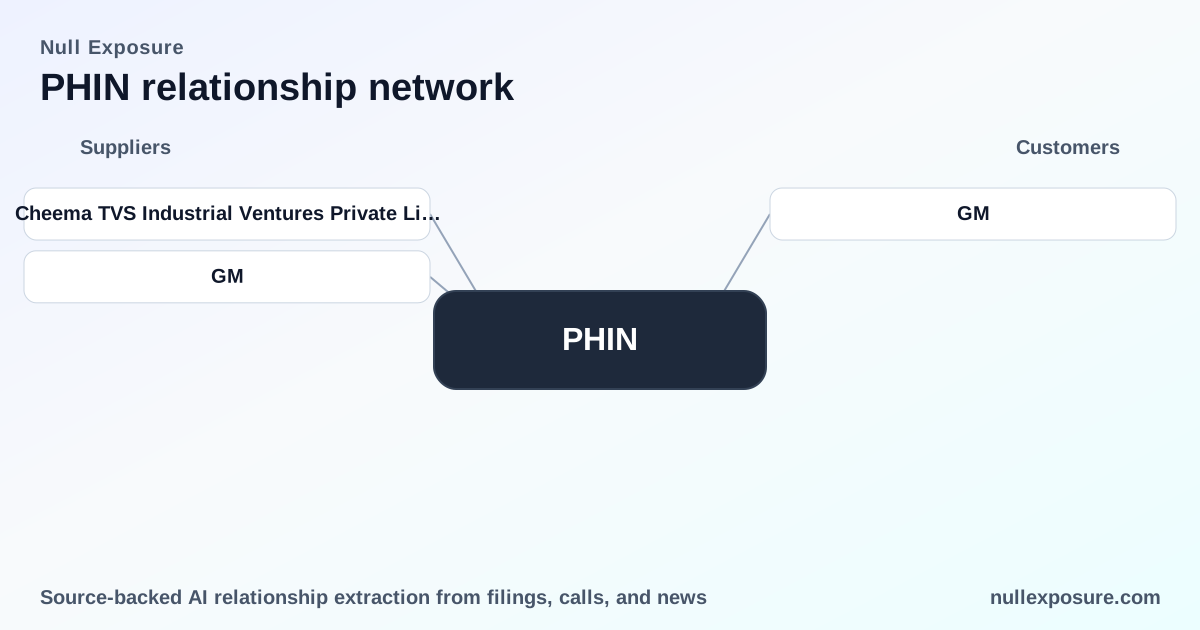
General Motors Company. PHINIA’s FY2025 10‑K states that worldwide net sales to General Motors Company were 18% of net sales in FY2025 (17% in 2024 and 16% in 2023), signaling GM is a top single customer and a material revenue contributor. According to PHINIA’s FY2025 Form 10‑K (filed Feb 2026), this level of exposure positions GM as a meaningful source of program revenue and demand for fuel‑system content.
-
GM (duplicate mention). The same FY2025 filing repeats that sales to GM represented 18% of net sales for the year ended December 31, 2025, reinforcing the company’s disclosure that GM is a major customer across reporting periods. PHINIA’s FY2025 10‑K reiterates GM’s contribution to consolidated revenue (phin-2025-12-31, filed 2026).
How the company-level constraints inform the customer picture
PHINIA’s operational constraints and corporate disclosures provide the context investors need to evaluate these customer relationships:
-
Contracting posture: long‑term, program‑based supply. PHINIA states it commonly engages in long‑term supply arrangements with OEMs, typically three to seven years, although prices and volumes are fixed only when contractual volumes are known; revenue is recognized over the contract term as products ship. This structure gives PHINIA contract-level visibility on awarded programs while leaving room for renegotiation or volume variability as vehicle production ramps.
-
Counterparty profile: large enterprise OEM buyers. PHINIA describes itself as a global supplier to most major OEMs and sells directly to OEMs as well as to Tier‑One systems suppliers; this places the company in a negotiated, high‑touch supply role that depends on engineering collaboration and program content wins.
-
Geographic exposure: global revenue mix. In FY2025 approximately 37% of net sales were in the United States and 63% outside the U.S., which diversifies end markets but increases FX and regional demand sensitivity.
-
Concentration and criticality: top customers are material. Sales to the top five customers represented 37% of revenue in FY2025, signaling material concentration that creates both revenue visibility if platforms succeed and downside risk if a major OEM reduces content or switches suppliers.
-
Relationship maturity and structure: active account management. PHINIA assigns account managers to serve specific customers, who maintain direct contact with purchasing and engineering teams, suggesting active, ongoing program engagement rather than transactional sourcing.
-
Revenue mix: meaningful service and aftermarket component. Approximately 35% of FY2025 net sales were for Service (OES and IAM), which provides recurring aftermarket cash flow that partially offsets program cyclicality.
These are company‑level signals drawn from PHINIA’s 2025 10‑K and should be read as the framework that governs all OEM customer relationships disclosed by PHINIA.
What this means for investors — risks and upside
-
Revenue stability and predictability. Long‑term program contracts and recurring aftermarket sales support predictable topline for the life of awarded platforms, reducing volatility relative to pure aftermarket players. The FY2025 10‑K’s description of three‑to‑seven‑year arrangements explains how PHINIA converts engineering wins into multi‑year revenue streams.
-
Concentration risk. GM’s 18% share of FY2025 sales and the top‑five customer concentration at 37% are material; a meaningful share of PHINIA’s revenue depends on maintaining content on a small set of platforms. Investors should monitor program renewals, content per vehicle, and any shifts in OEM sourcing strategies.
-
Negotiating leverage and margin dynamics. As a supplier to global OEMs, PHINIA operates in a negotiated pricing environment where margins depend on program content, scale, and manufacturing efficiency. The company’s FY2025 results (reported in the 10‑K) show operational scale but also highlight that prices and volumes are not always fixed until contractual volumes are known.
-
Geographic and currency exposure. With roughly 63% of sales outside the U.S., PHINIA benefits from diversified demand but carries translation and transaction FX risk and exposure to regional production cycles.
Monitoring checklist — what to watch next quarter to twelve months
- Program content wins and platform ramps for major OEMs, particularly GM, as reflected in quarterly commentary and backlog metrics.
- Changes in top‑customer percentages in subsequent 10‑Q/10‑K filings that indicate increasing or decreasing concentration.
- Aftermarket service trends and parts‑in‑use growth that support the 35% service revenue base.
- Any disclosed revisions to contract tenors or changes in pricing mechanisms for long‑term supply agreements.
- FX and geographic sales shifts that could compress or expand reported margins.
Conclusion: concentrated cash flows with program risk — a clear, active bet
PHINIA sells high‑intensity fuel‑system content to large OEMs and extracts value through multi‑year program revenue plus a sizable aftermarket stream, a combination that produces stable but concentration‑sensitive cash flows. GM is a material customer at 18% of FY2025 sales and top‑five customers account for 37%, so upside depends on content gains and operational execution, while downside is tied to OEM sourcing decisions and platform volumes. For a concise dashboard of customer concentration and contract posture that investment teams can act on, visit https://nullexposure.com/.
For investor teams that need continuous situational awareness on PHINIA’s customer relationships and disclosures, the platform aggregates filings and extracts the exact language investors rely on to assess concentration, contract terms, and revenue recognition.