Phio Pharmaceuticals (PHIO): Financing-driven relationships define near-term value
Phio Pharmaceuticals operates as a development-stage biotechnology company that funds early-stage clinical activities primarily through equity financings and investor purchase agreements rather than commercial revenues. The firm reports zero trailing twelve‑month revenue and negative operating results, so the company’s ability to execute its R&D strategy and preserve equity value is tightly coupled to access to capital and the terms of financing counterparties.
For research and transaction monitoring, readers can review our investor-focused coverage and filings at Null Exposure. Visit https://nullexposure.com/ for more context and primary-document references.
The business reality: development-stage biotech with financing at the core
Phio’s public financials show a non‑revenue, cash‑consuming operating profile: trailing revenue is zero, gross profit is negative, EBITDA is negative, and diluted EPS is -1.48 for the latest reported period. Market capitalization sits in the low double‑digit millions while shares outstanding are about 11.6 million — a profile consistent with a small, highly dilutive financing runway. An analyst consensus (limited coverage) shows a single Buy rating and an analyst target of $14, juxtaposed against a 52‑week trading range of $0.813–$3.48, which underscores a wide valuation gap between speculative upside and current market pricing.
This operating posture makes investor relationships and purchase agreements critically material to the company’s short- and medium‑term survival and strategic optionality.
One disclosed counterparty relationship — financing, not a customer
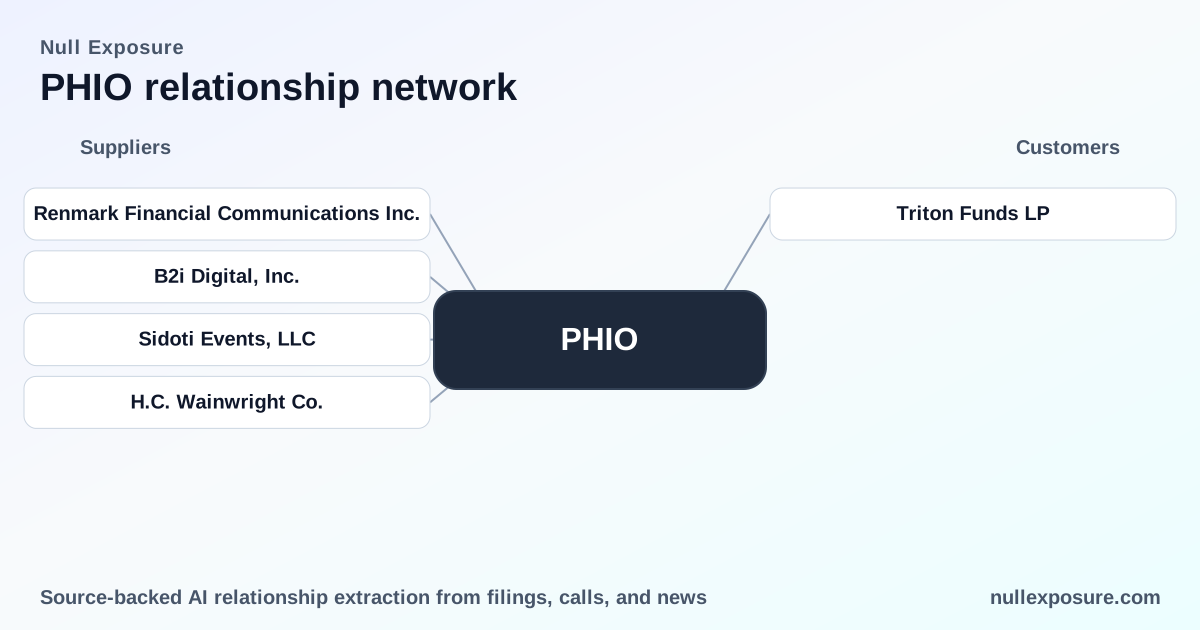
Phio’s public customer-relationship search returns a single explicit counterpart: Triton Funds LP. On May 16, 2024 Phio entered into a purchase agreement that allows Triton to buy, at the company’s request in one or more transactions, up to 862,500 shares at $0.72 per share for total potential proceeds of up to $621,000. This is a classic registered direct / at‑the‑market style equity facility that provides on‑demand capital subject to the company’s issuance decisions. The transaction is documented in Phio’s Form 10‑K for FY2024. (Company 10‑K, fiscal year ended Dec 31, 2024.)
Why this matters: the disclosed relationship is a capital-supply mechanism rather than a revenue‑generating customer, and it directly impacts dilution, liquidity, and runway.
All disclosed relationships, in plain English
- Triton Funds LP — Phio has a May 16, 2024 purchase agreement permitting Phio to sell up to 862,500 common shares to Triton at $0.72 per share for up to $621,000 in gross proceeds; this is recorded in the company’s FY2024 Form 10‑K. (10‑K, FY2024)
That is the full set of counterparties returned by the customer-scope search; no other customer or commercial counterparty agreements are disclosed in the provided results.
What the absence of additional customer disclosures signals
The search returned no other customer contracts or constraints. That company‑level signal is meaningful: Phio discloses no material commercial customers or revenue contracts in this scope, which confirms the firm’s status as a development‑stage biotech reliant on financing and potential future licensing or milestone agreements for monetization. This absence should be read as an operational characteristic rather than a neutral data gap — no disclosed customers means commercial traction is not currently a driver of value for investors.
From an investor and operator standpoint, this implies:
- Contracting posture: The company’s publicly disclosed counterparties are financing providers, not commercial buyers; Phio’s posture is that of a capital-seeking issuer.
- Concentration: With no customer base and limited disclosed financing partners, counterparty concentration risk is high; single‑counterparty financing facilities can become binding constraints on runway and dilution dynamics.
- Criticality: Financing relationships are critical to operations; each equity facility directly affects the firm’s ability to continue R&D and meet milestones.
- Maturity: Financial and commercial maturity is low — Phio is pre‑revenue and demonstrates typical small‑cap biotech characteristics (negative EBITDA, reliance on capital markets).
Key risk/reward considerations for investors and operators
- Liquidity and dilution risk are the primary near‑term concerns. The Triton purchase agreement sets a low price ($0.72/share) relative to historical highs and any analyst target, which implies potential dilution if equity is issued at that level.
- Operational execution remains the value driver. With no revenues, upside depends entirely on therapeutic progress, licensing outcomes, or strategic partnerships that would change the company’s contracting posture from financing to commercial.
- Limited institutional ownership increases volatility. With institutions owning approximately 8.1% and insiders around 6%, float dynamics can exacerbate price swings on small capital raises or announcements.
- Analyst coverage is sparse but shows asymmetric expectations. A single analyst target of $14 signals a high-tech speculative upside scenario that requires substantial fundamental change to realize.
Tactical monitoring checklist for investors and operators
- Watch for additional financing facilities or amendments to the Triton agreement that change size, price, or issuance mechanics.
- Monitor SEC filings (10‑Q / 8‑K) for new licensing or collaboration agreements that would create customer‑style revenue streams.
- Track cash runway disclosures and R&D milestone timelines that could precipitate dilutive financings.
- Assess insider activity and institutional buying/selling to gauge confidence in execution.
For ongoing tracking and an organized feed of filings and counterparty relationships, see our coverage at Null Exposure: https://nullexposure.com/.
Bottom line
Phio’s disclosed public relationship set confirms a financing‑centric operating model with limited commercial engagement. Capital providers — not customers — are the near‑term value levers, and any change in that dynamic (a licensing deal, a material collaboration, or successful clinical progress) would be the primary catalyst for re‑rating. Investors should prioritize monitoring financing terms, dilution outcomes, and any new agreements that would convert prospective value into revenue or non‑dilutive funding.