Park Hotels & Resorts: Asset sales reshape customer relationships and strategic exposure
Park Hotels & Resorts operates as a public REIT that owns and leases upper-upscale hotels, monetizing through room rentals, food & beverage, ancillary services and a portfolio strategy that uses leases and third‑party management to extract steady cash flow from premium locations. Recent disposals and the company’s franchise and leasing posture are driving a more concentrated, service‑oriented counterparty profile that investors should price into valuation and liquidity assumptions. For a focused review of counterparties and implications, see Null Exposure for an expanded investor briefing: https://nullexposure.com/
What changed in the field: two buyers take marquee San Francisco assets
In FY2025 Park executed a notable transaction in San Francisco, selling two large city hotels that historically anchored its urban exposure. These asset sales reduce direct operating leverage in gateway markets and shift Park’s counterparty set toward institutional buyers and opportunistic hotel investors.
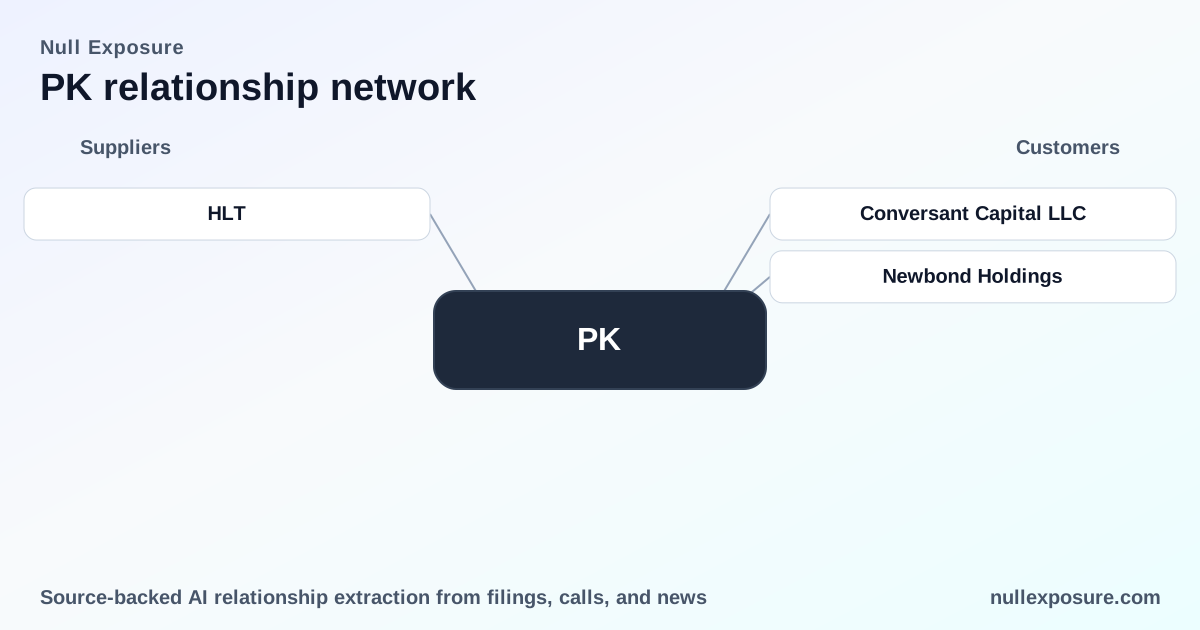
Conversant Capital LLC — buyer of Hilton Union Square
Conversant Capital LLC completed the acquisition of the 1,921‑room Hilton Union Square from Park Hotels & Resorts as part of the FY2025 transaction run. This transaction positions Conversant as an institutional buyer taking operational responsibility for a flagship urban hotel that Park previously owned. (Source: Simply Wall St coverage of FY2025 transactions.)
Newbond Holdings — buyer of Parc 55
Newbond Holdings completed the acquisition of the 1,024‑room Parc 55 from Park Hotels & Resorts in the same FY2025 deal. Newbond’s purchase captures Park’s formerly owned Parc 55 asset, converting Park’s exposure in San Francisco into sale proceeds and an altered customer/counterparty landscape. (Source: Simply Wall St coverage of FY2025 transactions.)
How the relationships fit Park’s operating model and what that implies for investors
Park runs a lease-and-license centric operating model rather than a pure operator model. Company filings and public disclosures describe a structure where Park leases most hotels to TRS (taxable REIT subsidiary) lessees, which then engage independent managers under management agreements, and Park holds limited, non‑exclusive franchise licenses for brand names and systems. The net effect is a capital‑light operational footprint with dependence on third‑party operators and brand franchisors for revenue capture and guest experience.
- Contracting posture: Park’s position is that of a capital owner and licensor. Franchise agreements grant Park a limited, non‑exclusive right to use franchisor brands, while operational responsibilities are delegated through management contracts and TRS leasing structures. This produces predictable cash flows from rents and ancillary revenue while offloading day‑to‑day operating risk.
- Concentration: Geographic concentration in the U.S. is material and intentional — Park reports that approximately 87% of rooms are in the U.S. and its territories, and comparable performance drivers are focused in Orlando, Key West, New York, Chicago and Boston. That concentration amplifies market‑specific demand cycles and regulatory risk.
- Criticality: Brand franchisors and third‑party managers are critical suppliers to Park’s income generation; disruptions to franchise relationships or management agreements would directly affect room revenue and ancillary streams.
- Maturity: The company’s franchise and lease arrangements are long‑standing and standardized across the portfolio, indicating a mature contracting posture that supports stable cash generation but limits operational upside from active hotel management.
These characteristics are drawn from Park’s public filings and management commentary around FY2024–FY2025 and are reflected in its corporate disclosures about franchise licenses, leasing strategy and market performance.
Portfolio and counterparty implications of the San Francisco disposals
The sale to Conversant and Newbond accomplishes three practical objectives for Park: crystallize urban asset value, redeploy capital for debt reduction or returns, and reduce operating concentration in a single gateway market. For investors, the trades convert operating assets into cash or alternative capital exposures and increase the proportion of institutional counterparties in Park’s transactional history.
- Balance sheet effects: Conversion of large urban hotels to sale proceeds improves liquidity options and reduces asset concentration in San Francisco.
- Counterparty profile: Park’s buyers are institutional investors and hotel investment firms rather than franchise brand operators, indicating Park is attracting sale interest from capital buyers rather than operator‑buyers.
- Operational risk transfer: By selling these assets, Park transfers day‑to‑day operational risk and manager relationships to the buyers, consistent with Park’s asset‑management REIT model.
Financial posture and what to watch next
Park reported TTM revenue of approximately $2.538 billion and EBITDA around $575 million, with a dividend yield near 8.81% on recent figures — metrics that reflect both scale and the yield orientation of the business. Investors should watch three items closely:
- Deployment of proceeds from FY2025 sales — whether Park uses proceeds for repurchases, debt reduction, or new acquisitions will reveal the strategic emphasis between yield preservation and growth.
- Franchise and management renewals — given the company’s role as licensee and lessor, the terms and renewal cadence of franchise agreements and management contracts will materially affect future margins.
- Market concentration and demand cycles — Portfolios concentrated in U.S. gateway and resort markets will see asymmetric upside and downside tied to travel recovery and local market fundamentals.
For a tactical update and continuing monitoring, review Null Exposure’s investor notes and counterparty mappings: https://nullexposure.com/
Bottom line: a refined asset owner with concentrated U.S. exposure and institutional counterparties
Park Hotels & Resorts operates as a capital‑light hotel REIT—it monetizes primarily through room rentals, F&B and leasing structures while relying on franchise and management partners for operations. The FY2025 disposals to Conversant Capital LLC and Newbond Holdings demonstrate an active asset‑optimization strategy that reduces direct operational exposure in San Francisco and increases capital flexibility. Key investor takeaways: asset‑sale proceeds, U.S. concentration, and dependence on franchise/license and TRS leasing arrangements are the dominant drivers of Park’s near‑term risk/reward profile.